Shifting Dynamics: Analyzing the GTA and Hamilton Housing Markets in Mid-2024
The Greater Toronto Area (GTA) housing market is currently navigating a significant period of adjustment, marked by a noticeable decline in bidding competition. This trend, which saw a fourth consecutive month of reduction in July, according to the latest analysis from Wahi, signals a pivotal shift in market power. For potential homebuyers, this evolving landscape presents an opportune moment, offering increased choices and enhanced negotiation leverage that has been largely absent in recent years.
In July, the proportion of GTA neighbourhoods experiencing overbidding activity fell dramatically to just 14%, a stark contrast to 27% recorded in June. This significant cooling is primarily attributed to a substantial surge in active listings, with nearly 10,000 more properties available on the market compared to the same period last year. This expanded inventory is providing a much-needed breath of fresh air for buyers who have long grappled with limited options and intense competition, transforming what was once a fierce seller’s market into a more balanced environment.
Benjy Katchen, CEO of Wahi, aptly summarized the current state, noting, “The spring selling season that never was has been followed by a slower-than-usual summer.” He further emphasized the beneficial implications for purchasers, stating, “Homebuyers have a lot of choice, which is helping more buyers negotiate better deals and purchase homes below-asking.” This expert insight highlights a critical juncture for individuals aiming to enter the highly competitive Toronto real estate market or upgrade their existing residences, as strategic buying becomes increasingly viable.
GTA Housing Market: Key Trends and Performance Indicators
Sales Volume and Price Adjustments: A Closer Look
July’s market performance in the GTA reflected a broader cautious sentiment among both buyers and sellers. The region experienced a 12% year-over-year drop in sales, with a total of 4,991 homes changing hands. This reduction in transaction volume suggests that potential buyers are exercising greater prudence, influenced by factors such as fluctuating interest rates and broader economic uncertainties. Concurrently, the median price of a home in the GTA saw a modest decrease of 2.0%, settling at $960,000. While this adjustment is not indicative of a steep market correction, it signifies a departure from the rapid, almost relentless price escalations that characterized the market in the immediate post-pandemic era, moving towards more sustainable and stable valuations.
Beyond sales figures, the pace of the market also decelerated noticeably. Homes in the GTA remained on the market for an average of 24 days in July, a significant increase from 17 days recorded in July of the previous year. This extended “days-on-market” (DOM) metric is a crucial indicator of reduced buyer urgency and heightened buyer discernment. It allows prospective purchasers ample time for thorough property inspections, careful financial planning, and more thoughtful decision-making, effectively transitioning the market from a rushed, aggressive environment to one that supports more deliberate and informed transactions. This shift empowers buyers to conduct due diligence without the immense pressure of immediate offers, a welcome change for many.
The Decline of Bidding Wars: Overbidding and Underbidding Dynamics
The prevalence of overbidding neighbourhoods in the GTA has experienced a dramatic downturn on a year-over-year basis. In July 2023, more than a third (38%) of neighbourhoods were firmly entrenched in overbidding territory, a clear sign of a seller-driven market. However, by July 2024, this share had plummeted to just 14%, reaching its lowest point since January, which remarkably saw zero percent of neighbourhoods engaging in overbidding. This profound transformation in bidding intensity underscores a significant rebalancing of market power, moving away from frantic bidding wars towards an environment that is considerably more advantageous for buyers, granting them greater influence over purchase terms and prices.
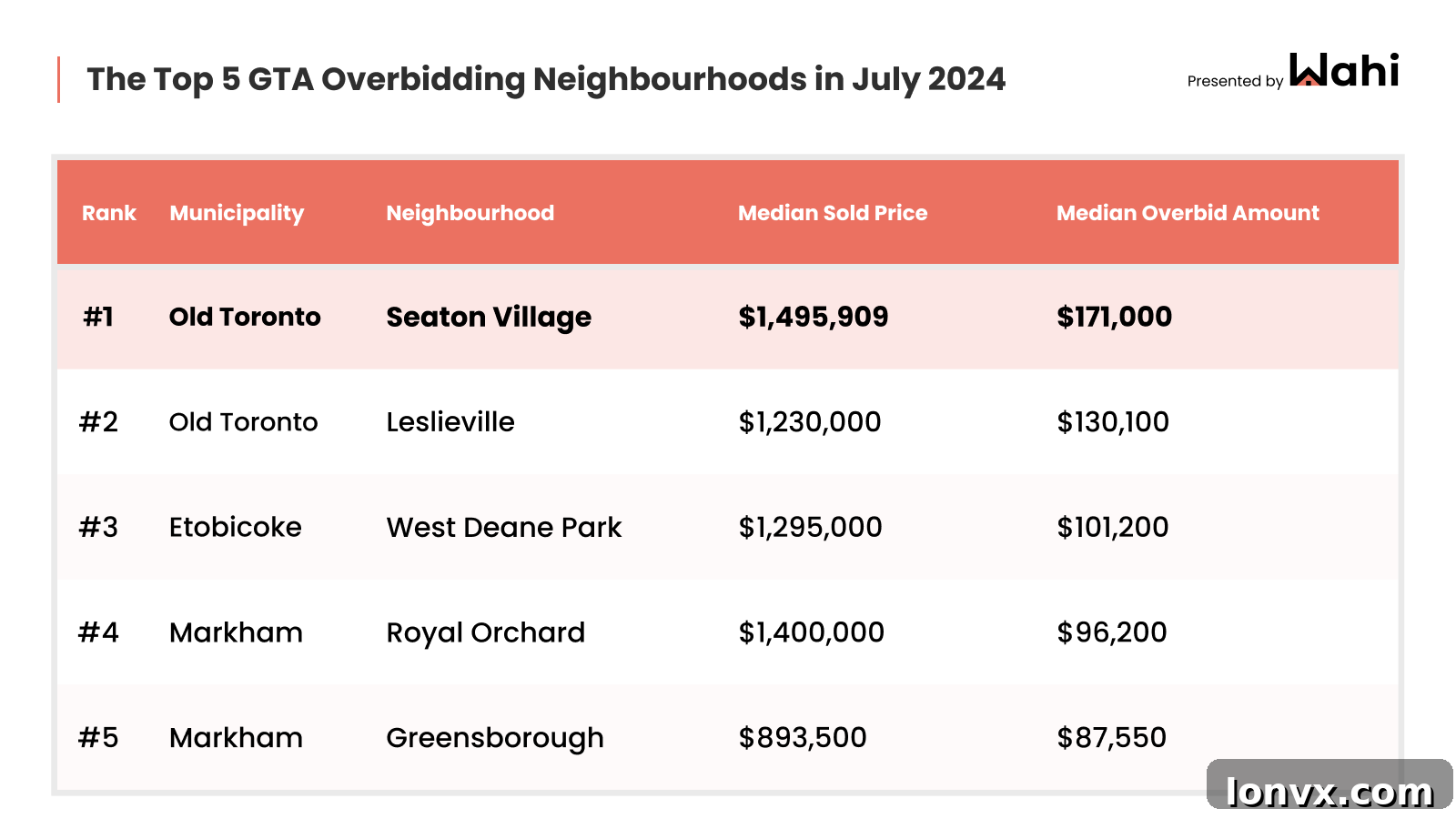
A granular examination of specific housing categories reveals interesting variations in competitive dynamics. Single-family homes, often representing premium property segments, still saw 23% of neighbourhoods experiencing overbidding, indicating that demand for detached housing remains resilient in certain desirable areas. In stark contrast, the condominium market exhibited much lower competitive intensity, with only 6% of neighbourhoods registering overbids. This significant disparity suggests that while specific pockets for single-family homes may still witness some competition, the condo sector offers even more expansive opportunities for buyers to secure properties at or even below the listed price, making it an attractive option for first-time buyers or those seeking more affordable entry points into the GTA market.
Conversely, the persistent trend of underbidding remains a notable characteristic in certain local markets. For the 14th consecutive month, Oakville’s Eastlake neighbourhood consistently appeared in the top five areas for underbidding, notably being the sole carryover from June’s list. This consistent presence of Oakville’s Eastlake in the underbidding category underscores specific areas where buyers are consistently successful in negotiating prices below the initial asking price. This trend highlights sustained buyer advantage in these particular locales, reflecting a more strategic approach to purchasing and a market segment where sellers may need to be more flexible with their pricing expectations.
Hamilton’s Real Estate Market: A Beacon of Resurgence and Growing Competition
In a compelling counter-narrative to the cooling trends observed in the GTA, Hamilton’s housing market is currently experiencing a robust resurgence in buyer competition. The latest market pulse report from Wahi indicates that 18% of Hamilton neighbourhoods were in overbidding territory during the second quarter of 2024. This marks a significant jump from just 7% in the first quarter, firmly positioning Hamilton as an increasingly active and competitive real estate hub within Ontario. The city’s growing appeal stems from its relative affordability compared to Toronto, coupled with ongoing urban development and a vibrant community atmosphere.
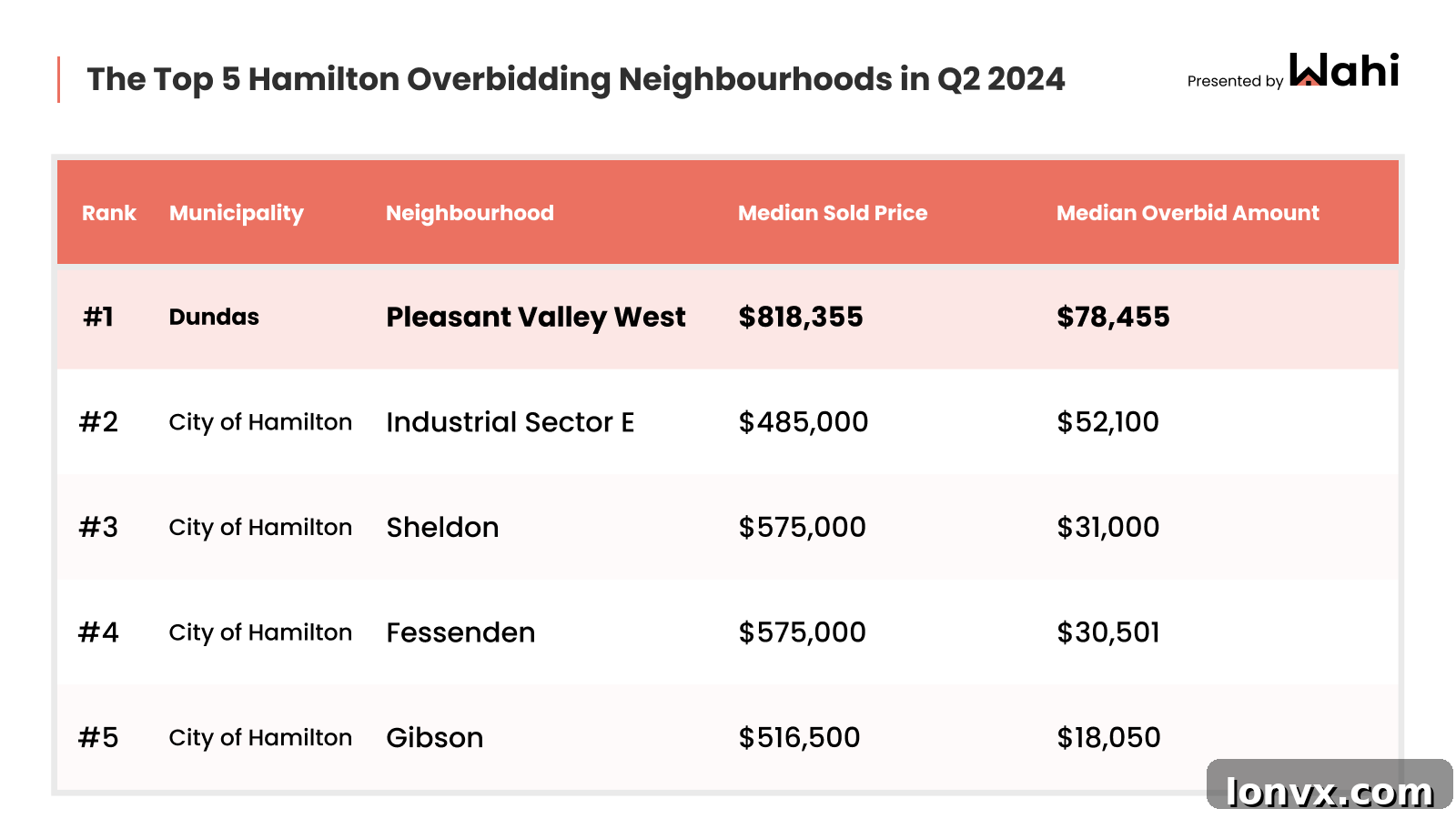
Within Hamilton, Central Hamilton neighbourhoods particularly distinguished themselves with exceptionally strong bidding activity. The majority of neighbourhoods experiencing overbidding, including an impressive four out of the top five, were concentrated within this dynamic urban core. This surge in competitive buying suggests a heightened interest in Hamilton’s downtown and surrounding areas, likely propelled by strategic investments in infrastructure, a burgeoning arts and culture scene, and its strategic location providing excellent transit links and access to major highways. These factors collectively contribute to Hamilton’s growing allure as an attractive and accessible alternative to the more expensive GTA market.
During this period, Hamilton’s market recorded 2,221 home sales, with a median price point of $780,000. While these figures represent a healthy and active market, the renewed intensity of bidding competition strongly suggests strengthening demand, which could foreshadow upward pressure on future property values. Benjy Katchen further elaborated on this positive trajectory, observing, “Hamilton is showing more signs of life than some Ontario cities.” He also articulated a keen interest in monitoring how the Bank of Canada’s recent July rate cut might influence the market, speculating on its potential to further stimulate bidding competition and foster a more vibrant buying environment throughout the third quarter.
Key Factors Shaping the Current Ontario Real Estate Landscape
Interest Rates and Evolving Buyer Sentiment
The Bank of Canada’s monetary policy decisions remain a dominant force in shaping the trajectory of the Canadian real estate market. The cumulative impact of successive interest rate hikes over the past year undoubtedly contributed to the cooling trend observed in the GTA, as elevated borrowing costs made homeownership less attainable for a segment of potential buyers. However, the recent July rate cut by the Bank of Canada introduces a new layer of complexity and an interesting dynamic. While a single rate adjustment may not instantaneously transform market conditions, it can signal a potential shift towards a more accommodating monetary policy. Such signals typically bolster buyer confidence and can incrementally improve housing affordability, particularly in more price-sensitive markets like Hamilton, where a slight reduction in mortgage costs can have a more pronounced effect on purchasing power and overall market activity.
Inventory Levels: A Game-Changer for GTA Buyers
The substantial increase in active housing listings within the GTA is arguably the most significant development impacting the current market. For an extended period, the region has grappled with a chronic and severe shortage of housing supply, a fundamental factor that has consistently fueled intense bidding wars and propelled rapid property value appreciation. The current influx of nearly 10,000 additional listings compared to the previous year fundamentally alters the delicate balance of supply and demand. This newfound abundance of choice dramatically empowers buyers, affording them more time for careful deliberation, comprehensive property inspections, and the ability to negotiate more favourable terms. This welcome shift moves the market decisively away from the previous frenzy, where buyers were often forced to submit unconditional offers under immense time pressure, towards a more measured and strategic purchasing process.
Broader Economic Outlook and Regional Disparities
Beyond interest rates and inventory, the overarching economic climate—including inflation rates, employment figures, and general consumer confidence—exerts a powerful influence on real estate activity. While the Canadian economy has demonstrated remarkable resilience in certain sectors, persistent uncertainties continue to temper enthusiasm, prompting some potential buyers to adopt a cautious, wait-and-see approach. The divergent market dynamics between the GTA and Hamilton vividly illustrate inherent regional disparities in affordability, economic growth drivers, and lifestyle preferences. Hamilton, for instance, continues to attract a steady stream of buyers who prioritize value, community, and a slightly slower pace of life, benefitting significantly from its strategic proximity to Toronto and the ongoing success of its urban revitalization initiatives. These projects are transforming Hamilton into an increasingly desirable place to live and invest, further solidifying its unique market position.
The Path Forward: Anticipating Q3 and Beyond
As the real estate market transitions into the third quarter, industry observers and participants alike will be keenly focused on several critical indicators. The Bank of Canada’s upcoming interest rate decisions, coupled with evolving housing inventory levels and a range of macroeconomic data, will play a decisive role in shaping buyer and seller behaviour. For the GTA, current trends suggest a continued path towards market stabilization, potentially fostering a more sustainable and predictable environment for transactions. This could mean a more gradual appreciation of values and a healthier market cycle. In stark contrast, Hamilton’s current momentum could translate into sustained growth, making it a key region to monitor closely for both prospective homebuyers seeking value and astute investors looking for promising opportunities.
In essence, the current real estate landscape offers a unique blend of challenges and compelling opportunities. Buyers navigating the GTA market are well-positioned to leverage the increased inventory and tempered competition to secure properties under more favourable conditions. Meanwhile, sellers in the GTA may need to adjust their expectations regarding pricing strategies and the anticipated time their properties will spend on the market. Conversely, in Hamilton, the burgeoning competition signals a more receptive market for sellers, although prudent and competitive pricing remains absolutely critical to capitalize on the heightened demand. Both markets, while distinct in their immediate trajectories, underscore the dynamic and ever-evolving nature of Canadian real estate.
Enjoying this article?
Get the latest real estate market insights directly in your inbox 3x a week. Stay up-to-date on the latest trends and news in the Canadian real estate industry.