
Toronto’s Dynamic Condo Market: Navigating Sales, Prices, and Future Opportunities in Q1 2024
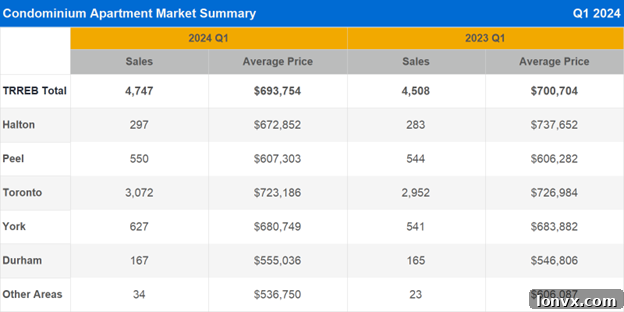
The Greater Toronto Area (GTA) condominium apartment market showcased significant activity in the first quarter of 2024, signaling a potential shift in market dynamics. The Toronto Regional Real Estate Board (TRREB) reported a notable increase in condominium apartment sales, reaching 4,747 transactions. This figure represents a robust 5.3 percent rise compared to the same period in 2023, indicating renewed buyer interest. Furthermore, new condominium listings surged by an impressive 23 percent during this quarter, offering prospective buyers a much wider selection of properties. Consequently, with more inventory available, buyers found themselves with increased choice as average prices experienced a slight downward adjustment.
Renter Resilience Wanes: The Impetus for First-Time Homeownership
A key driver identified by TRREB’s consumer polling, conducted by Ipsos, is the growing impatience among renter households regarding continuous rent increases. Jennifer Pearce, TRREB’s President, highlighted this sentiment, stating, “Many renter households will have no more patience for rent increases before they consider purchasing their first home.” This suggests a brewing wave of first-time buyers poised to enter the market. As interest rates begin their anticipated downward trend, a significant uptick in condominium sales is expected, fueled by these motivated first-time buyers seeking to transition from renting to owning and build equity.
Despite the growing desire for homeownership, the rental market itself also saw substantial activity. TRREB reported a considerable 19.7 percent year-over-year increase in condominium apartment rental transactions during Q1 2024, totaling 12,541 leases. Interestingly, while rental activity soared, the average rent for a one-bedroom condominium apartment experienced a marginal dip of 1.2 percent, settling at $2,441. In contrast, the average rent for a two-bedroom unit remained remarkably stable at $3,139 throughout the same period. This delicate balance between increased rental transactions and stable or slightly declining average rents could be attributed to the rise in completed units entering the rental pool, offering more options to tenants even amidst high demand.
Price Stabilization: A Nuanced Look at Condo Values
The first quarter of 2024 brought a period of price stabilization to the GTA condominium market. The average selling price for a condominium apartment across the GTA was recorded at $693,754, reflecting a modest one percent decrease compared to Q1 2023. This slight adjustment indicates a market that, while still robust, is less overheated than in previous years, providing a more balanced environment for transactions.
Delving deeper into regional specifics, the City of Toronto continued to dominate the market, accounting for nearly two-thirds of all condominium sales within the GTA. In Toronto proper, the average selling price stood at $723,186, which was a marginal 0.5 percent less than in Q1 2023. These figures suggest that the slight price corrections were widespread but minimal, demonstrating the enduring value and desirability of condominium living in the urban core and surrounding regions.
Future Projections: Anticipating Market Tightening and Price Appreciation
Looking ahead, expert analyses point towards a tightening market and potential price appreciation. Jason Mercer, TRREB’s Chief Market Analyst, forecasts an increase in first-time buyer activity spurred by lower borrowing costs later in the year and extending into 2025. This influx of buyers is expected to lead to the absorption of existing inventory, subsequently tightening market conditions. Mercer predicts that “Increased competition between condominium buyers will result in upward pressure on selling prices.” This outlook underscores the cyclical nature of the real estate market, where current affordability and choice may soon give way to heightened competition and rising values.
Several key factors are poised to influence these future trends. The trajectory of interest rates remains paramount; any significant cuts by the Bank of Canada will directly enhance purchasing power and buyer confidence. Toronto’s sustained population growth, driven by immigration and inter-provincial migration, will continue to fuel demand for housing, particularly in the more accessible condominium sector. The delicate balance between new construction completions and the rate at which these units are sold will also dictate future inventory levels. Finally, broader economic stability and employment figures will underpin consumer confidence and their willingness to make large real estate investments.
Where Are the Bestsellers? A Glimpse into Regional Condo Hotspots
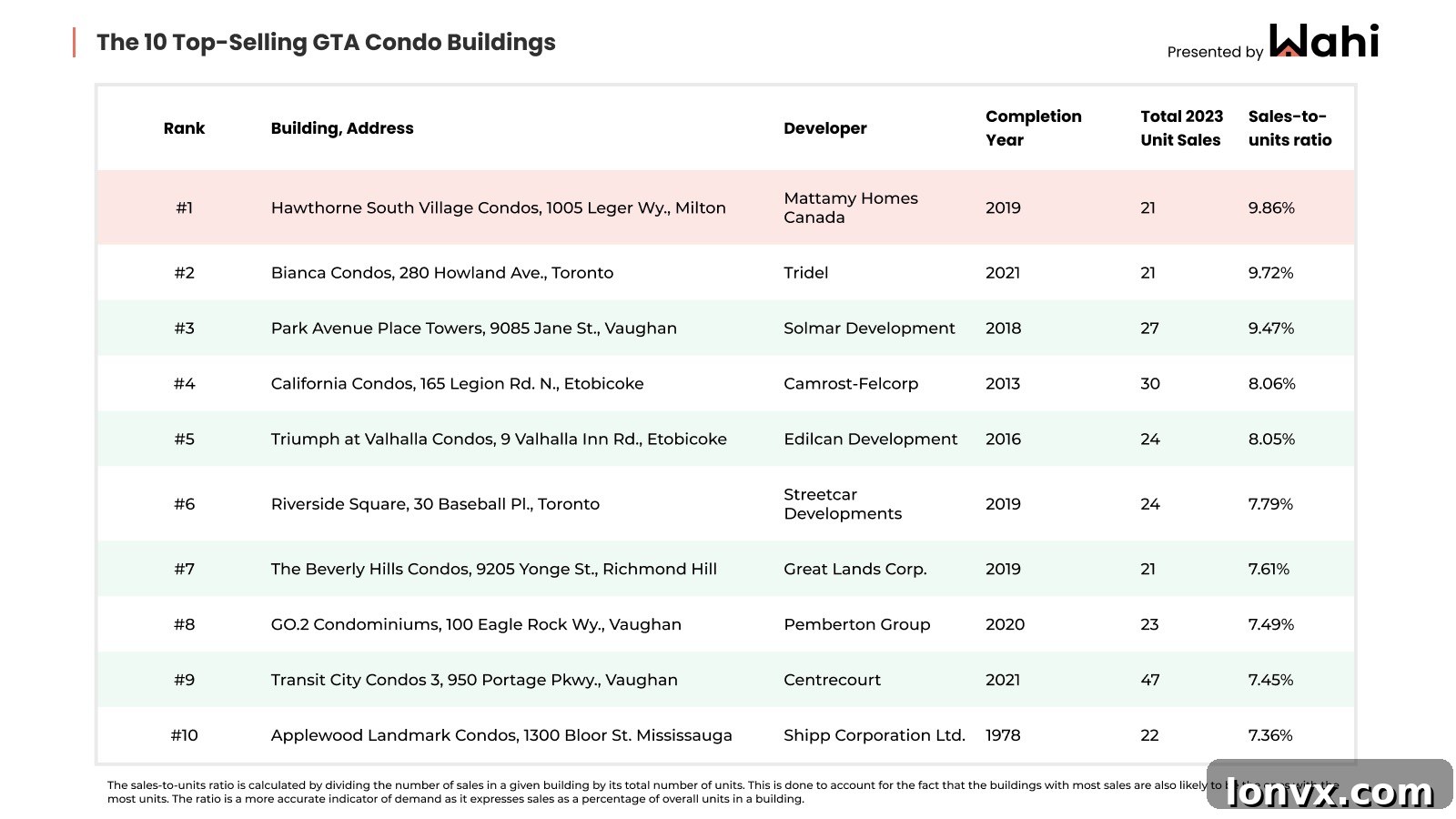
Insights from Wahi’s reports shed light on where the demand for condominiums is strongest across the GTA. Their analysis of the 10 best-selling condominium buildings revealed a clear geographical concentration. The City of Toronto emerged as a dominant force, hosting four of these top-performing buildings, reinforcing its status as a highly sought-after urban living destination. Vaughan also showcased significant appeal, with three buildings making the list. Mississauga, Milton, and Richmond Hill each contributed one building, indicating a broader regional demand for quality condominium living.
Benjy Katchen, CEO of Wahi, emphasized the critical role of location in market success. “The best-selling Toronto condominiums show there’s still strong demand for condos depending on the location,” he noted. This highlights that while the overall market may be stabilizing, specific desirable locations continue to command robust buyer interest, driven by factors such as proximity to amenities, transit, employment hubs, and lifestyle offerings.
Identifying Top-Performing Developments: Sales-to-Units Ratios
Beyond geographical hotspots, an examination of sales-to-units ratios offers a deeper understanding of buyer preference for specific developments. Notably, buildings with the highest sales-to-units ratios were predominantly those completed within the past decade, suggesting a strong preference for newer constructions with modern amenities and designs.
Wahi’s report identified three buildings with exceptional sales-to-units ratios exceeding nine percent, underscoring their remarkable market performance:
- Hawthorne South Village Condos (Milton): This 213-unit mid-rise building achieved an impressive 9.86 percent sales-to-units ratio, indicating strong demand in the growing community of Milton.
- Bianca Condos (Toronto’s Annex): A nine-storey building located in one of Toronto’s most desirable neighborhoods, Bianca Condos recorded a 9.72 percent ratio, highlighting the enduring allure of prime urban locations.
- 9085 Jane Street within Park Avenue Place Towers (Vaughan): This development reached a 9.47 percent ratio, demonstrating robust buyer interest in Vaughan’s burgeoning urban centers.
These figures are powerful indicators of buyer confidence in particular projects, often reflecting quality construction, strategic pricing, and attractive community features.
A Timely Opportunity: Why Now is Prime for Condominium Purchases
Pouyan Safapour, President of Toronto developer Devron, firmly believes that the current market climate presents an optimal window for purchasing a condominium. He acknowledges a slowdown in pre-construction sales throughout 2024, primarily influenced by record-high interest rates and a recent influx of completed units from the past three to four years. However, Safapour anticipates an imminent and significant market shift. This transformation is expected to be driven by projected decreases in interest rates later in the year, coupled with Toronto’s historic and ongoing population increase, which continues to fuel housing demand.
Safapour explains, “This shift will likely result in increased sales and pricing across all projects, as lower interest rates and depleting inventory continue to drive up demand.” He aligns with economists like Benjamin Tal, who are predicting a sharp increase in condo pricing in 2025. This collective expert foresight underscores the present as a “unique window of opportunity for buyers to make their move now, before the market undergoes this transformation.” For both first-time buyers and seasoned investors, the current conditions of stabilized prices and increasing inventory, juxtaposed against a strong future forecast, make a compelling case for timely action.
The Evolving Landscape: A Call for Quality and Value from Developers
Beyond market timing, Safapour also identifies a crucial and much-needed shift in the real estate market towards a “flight to quality and value.” This trend is being driven by increasingly discerning buyers who prioritize superior quality, thoughtful design, and long-term value over purely speculative purchases. He observes, “Projects offering exceptional quality and location continue to hold value, while those lacking in these aspects face challenges.” This signifies a maturing market where buyers are more educated and demanding, seeking homes that offer lasting appeal and functionality.
Safapour issues a clear call to the development industry: “As developers, it’s our responsibility to cater to the evolving needs of Torontonians by creating homes that are not only of superior quality but also meet the diverse requirements of end-users.” He stresses the importance for the industry to collectively elevate standards to meet the maturing expectations of buyers, which increasingly include considerations for sustainability, innovative design, and community-centric features. This emphasis on quality and value ensures developments remain competitive and desirable in a market that continues to evolve rapidly.
Navigating the GTA Condo Market: Advice for Prospective Buyers and Investors
For individuals considering a foray into the GTA condominium market, understanding these intricate dynamics is crucial. First-time buyers should closely monitor interest rate announcements and leverage any reductions to enhance their purchasing power. Focusing on pre-approval and understanding the total cost of ownership, beyond just the purchase price, is vital. Given the “flight to quality,” prioritizing well-located, quality-built developments will offer better long-term appreciation and livability.
Investors, on the other hand, can capitalize on the robust rental demand and the projected upward trajectory of prices. Identifying areas with high rental yields and strong potential for capital growth, informed by reports like Wahi’s bestseller lists, can be strategic. Both buyer types would benefit from working with experienced real estate professionals who possess an in-depth understanding of the nuances of the GTA’s diverse sub-markets.
The first quarter of 2024 has laid the groundwork for an exciting period in the GTA condo market. With increasing sales, rising inventory, stable prices, and expert predictions pointing towards future appreciation, the coming months promise significant opportunities for those ready to make their move.
Enjoying this article?
Get the latest REM articles in your inbox 3x week so you stay up to date on the latest in the Canadian real estate industry