GTA Real Estate Market Navigates Shifting Tides: Overbidding Recedes Amidst Renewed Buyer Optimism
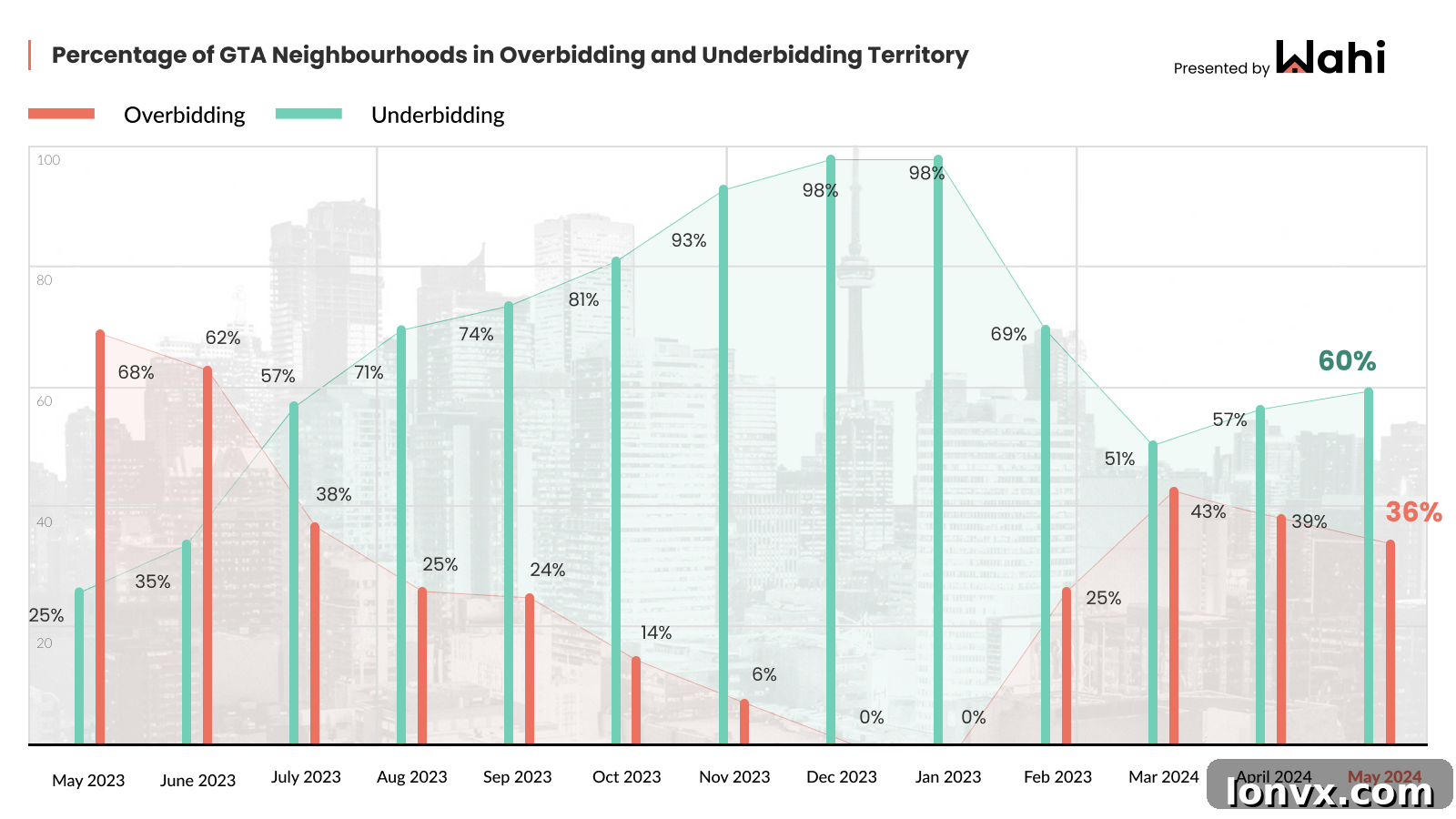
The Greater Toronto Area (GTA) housing market is currently undergoing a significant transformation, marked by a continued decline in overbidding activity. Data from Wahi reveals that in the past month, only 36 percent of GTA neighborhoods experienced homes selling above their asking price. This marks a consecutive monthly decrease, following 39 percent in April and 43 percent in March, showcasing a notable cooling trend compared to the robust 68 percent seen just a year prior.
This shift indicates a more balanced market, where approximately 60 percent of GTA neighborhoods saw properties selling below asking price, while the remaining four percent concluded sales at the listed price. Such conditions are setting the stage for increased market participation, especially with the Bank of Canada’s recent interest rate cut. This monetary policy adjustment is widely anticipated to inject new energy into the market, encouraging a fresh wave of buyers to explore their options.
Benjy Katchen, CEO of Wahi, emphasized the psychological impact of such economic shifts: “This week’s rate cut from the Bank of Canada will likely change consumer psychology, thereby giving homebuyers the confidence to bid on properties.” This sentiment highlights the critical role that interest rate expectations play in shaping buyer behavior and, consequently, market dynamics.
Wahi’s analysis further illustrates a clear correlation between interest rate movements and bidding activity. For instance, following consecutive rate pauses by the Bank of Canada in March and April of 2023, the share of neighborhoods experiencing overbidding conditions surged by 11 percent, reaching 68 percent in May 2023. Conversely, when rate hikes resumed in June of the same year, this trend rapidly reversed, with the proportion of overbidding neighborhoods sharply declining from 62 percent to 38 percent between June and July. This historical context underscores the immediate and profound influence of interest rate decisions on the competitive nature of the GTA real estate market.
Divergent Paths: Single-Family Homes vs. Condominiums in the GTA
Beyond the overarching market trends, Wahi’s research uncovered distinct patterns in bidding activity based on property type. The GTA market is currently experiencing some “opposing forces,” leading to different outcomes for various housing segments.
For traditional single-family homes, which encompass detached and semi-detached houses, as well as row homes and townhouses, the trend of declining overbidding continued. Last month, 53 percent of neighborhoods saw these property types sell above asking, a decrease from 58 percent in April. This suggests a potential easing of competition in this segment, offering more room for buyers to negotiate.
In contrast, the condominium market displayed a different trajectory. While still a smaller percentage overall, condominiums in 11 percent of the analyzed neighborhoods sold at over-asking prices, representing a two percent increase from April. This slight uptick in condo overbidding could be attributed to several factors, including their relative affordability compared to single-family homes, renewed interest from first-time buyers seeking lower entry points, or investors drawn to the rental market potential. The diverging trends between these property types underscore the importance for buyers and sellers to understand the specific nuances of their chosen market segment.
Understanding the Dynamics Behind Property Type Differences
The disparity between single-family homes and condominiums often reflects varying buyer demographics and investment strategies. Single-family homes typically attract families or those seeking more space and land, often with a higher price tag. The recent cooling in this sector might indicate that higher interest rates have disproportionately affected buyers in this segment due to larger mortgage amounts. On the other hand, condominiums often appeal to young professionals, empty-nesters, and investors. The slight increase in overbidding for condos could signal a return of confidence among these groups, perhaps viewing condos as a more attainable investment in a market with softening prices for larger homes, especially with the anticipation of lower borrowing costs.
Strategic Navigation: Discovering GTA Properties Under $1 Million
In a dynamic market like the GTA, successful home buying often hinges on strategic planning and swift action. This includes identifying neighborhoods where competitive bidding is prevalent, even within the more accessible price ranges. For many prospective homeowners, particularly first-time buyers or those looking to downsize, finding properties under the $1 million mark is a primary goal in the Greater Toronto Area.
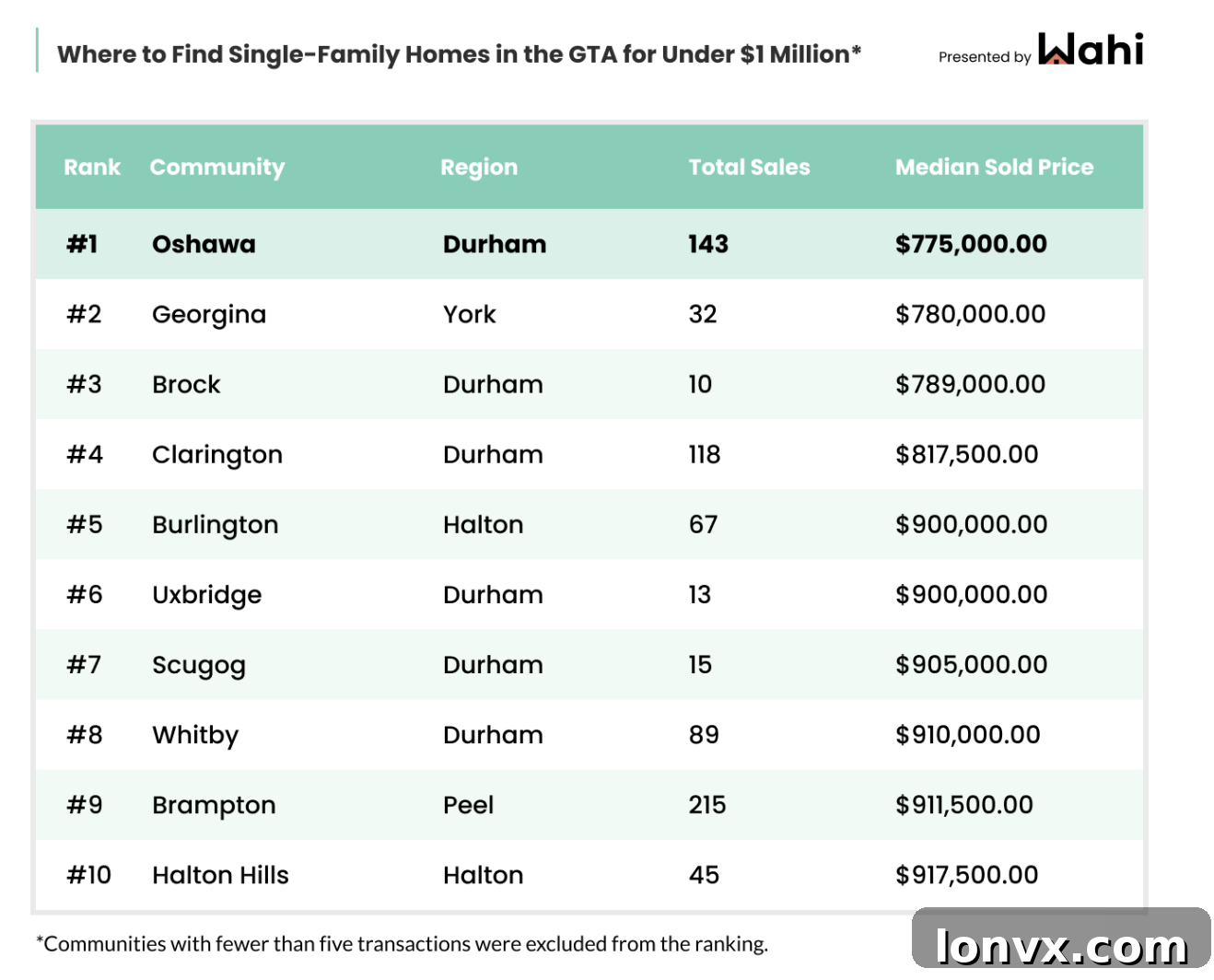
Wahi’s insights reveal that the majority of communities where houses had a median sold price of under $1 million were recently in overbidding territory. This highlights that affordability, even at this price point, does not necessarily equate to a lack of competition. Buyers in these segments still need to be well-prepared and agile. However, the analysis also identified four specific areas where homes were selling below their asking prices, offering potential opportunities for those who are diligent in their search.
Among these more accessible markets, Oshawa stood out as the most affordable region, with a median sold price of $775,000. Located in the eastern part of the GTA, Oshawa offers a compelling option for buyers seeking value, often boasting a mix of housing types and ongoing development. Conversely, Halton Hills, situated to the west, was identified as the least affordable among the under-$1 million category, with a median sold price of $917,500. While still within the desired price bracket for many, its higher median price reflects differing market conditions, possibly influenced by its proximity to other affluent areas and its appeal to those seeking a suburban lifestyle with larger lots.
Tips for Buyers in Competitive Price Segments
For those targeting the under-$1 million market, understanding the local micro-markets is crucial. Researching specific neighborhoods, consulting with experienced real estate agents, and getting pre-approved for a mortgage can provide a significant advantage. Furthermore, being flexible with property features and location within a chosen community can open up more opportunities. The four areas selling below asking price, though not explicitly named in the summary, represent pockets where a savvy buyer might find less intense competition, potentially allowing for more favorable terms.
The Road Ahead: Navigating the Evolving GTA Market
The current landscape of the Greater Toronto Area real estate market is undeniably complex, marked by a fascinating interplay of economic factors, psychological shifts, and evolving consumer preferences. The decline in overbidding across a majority of neighborhoods signals a move towards a more balanced environment, a welcome change for many prospective buyers who have faced years of fierce competition.
The recent interest rate cut by the Bank of Canada acts as a significant catalyst, poised to boost buyer confidence and affordability. This move is expected to translate into increased market activity in the coming months, potentially drawing in buyers who were previously on the sidelines due to high borrowing costs. However, the market’s response will likely be nuanced, with different property types and price segments reacting in varied ways, as evidenced by the divergent trends observed between single-family homes and condominiums.
For sellers, understanding these shifts means being realistic about pricing and being prepared for a market where strategic negotiation may become more common. For buyers, the evolving conditions present both challenges and opportunities. While the overall decline in overbidding offers a more favorable environment, particularly for those targeting single-family homes, competitive pressures can still exist, especially for well-priced properties in desirable locations or within the burgeoning condominium market.
Ultimately, success in the GTA’s real estate market in this new era will hinge on informed decision-making, thorough market research, and a clear understanding of personal financial capacity. As the market continues to recalibrate, staying abreast of the latest data and expert analyses will be paramount for anyone looking to buy or sell in one of Canada’s most dynamic urban centers.
For a comprehensive deep dive into the latest market statistics and expert analysis, you can review the full report here.