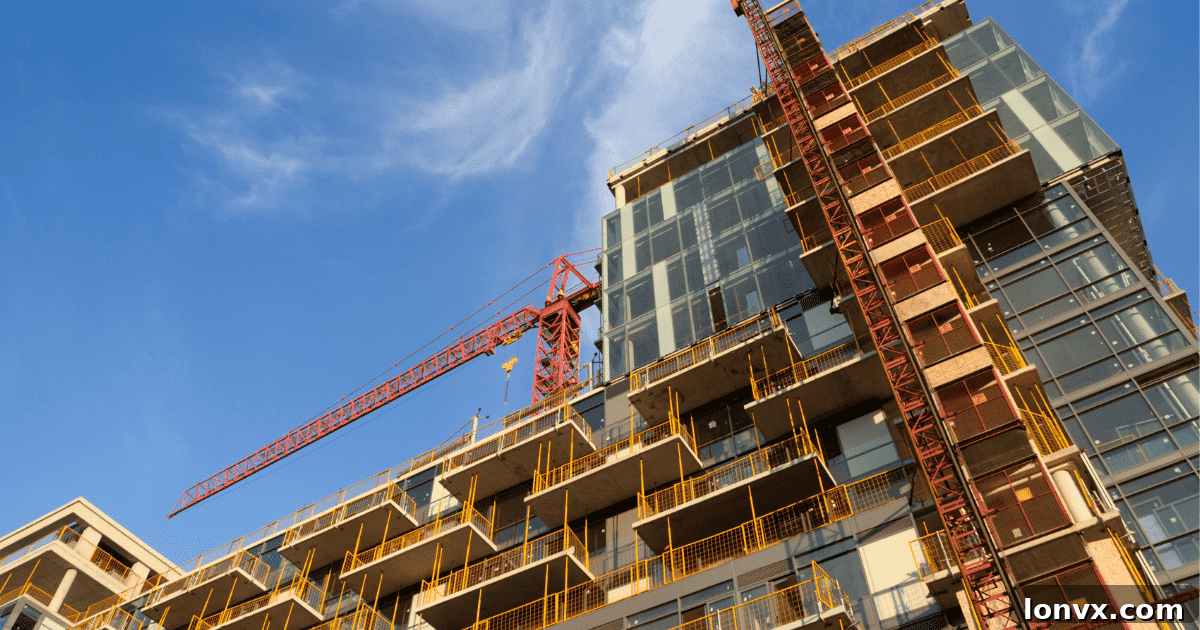
The Greater Toronto Area’s housing market is grappling with unprecedented challenges, as new data reveals a dire situation for the region’s building and land development sector. February 2025 marked the worst February on record for new home and condominium sales, with a mere 400 units sold across the vast GTA. This dismal figure stands in stark contrast to nearly 22,000 units that currently sit unsold on the market, painting a grim picture of supply outpacing demand at an alarming rate. The statistics, compiled by Altus Group and reported by the Building Industry and Land Development Association (BILD), underscore a profound slowdown that threatens the stability of one of Canada’s most vital economic engines.
The sales figures for February 2025 represent a staggering 50 percent decline compared to the same period last year, signalling a rapid deterioration in market activity. Even more concerning, current sales are a staggering 84 percent below the 10-year average, which typically sees approximately 2,570 units sold in February. This dramatic downturn highlights a significant departure from historical trends, indicating a prolonged period of suppressed buyer confidence and market stagnation. Of the handful of homes that did find buyers, 248 were single-family dwellings, while only 152 were condominium apartments, reflecting distinct challenges within each segment of the market.
A Deluge of Unsold Homes: Nearly 22,000 Units Languish in the GTA Market
The sheer volume of unsold inventory is perhaps the most striking indicator of the current market’s distress. Edward Jegg, research manager at Altus Group, articulated the prevailing sentiment, stating, “New home sales across the GTA in February 2025 remained at rock bottom levels.” He further elaborated on the contributing factors, noting that “uncertainty related to upcoming U.S. tariff levels have further added to the reservations buyers previously had on their minds,” pointing to external economic pressures compounding domestic challenges. This uncertainty, coupled with high interest rates and broader economic concerns, has created a perfect storm, causing prospective buyers to delay or cancel their purchasing decisions.
Inventory levels continued their upward trajectory in February, reaching an astounding 21,863 new homes sitting unsold across the Greater Toronto Area. This substantial backlog comprises 16,995 condominium apartments and 4,868 single-family homes. A significant portion of these units are either in the pre-construction or under-construction phases, meaning they represent substantial financial commitments from developers. The accumulation of such a large volume of unsold properties not only strains developers’ balance sheets but also poses a long-term risk to future housing supply, as builders may hesitate to initiate new projects in an uncertain market. The cost of carrying these unsold units – including financing, insurance, and maintenance – adds immense pressure to the industry, potentially leading to project delays or even cancellations.
Despite the precipitous drop in sales and the overflowing inventory, prices have shown a remarkable degree of resilience, holding relatively steady. The benchmark price for a new single-family home experienced a modest dip of 2.9 percent year-over-year, settling at $1,536,734. Similarly, condominium apartment prices saw a slight decrease of 2.4 percent, with the benchmark price now at $1,021,760. This stability, despite weak demand, can be attributed to several factors. Developers are often reluctant to significantly cut prices due to the escalating “cost to build” – encompassing land acquisition, material costs, labor, and hefty development charges. Furthermore, many developers have strong financial backing, allowing them to absorb holding costs rather than engage in drastic price reductions that could devalue their entire project pipeline. This price rigidity, however, further exacerbates affordability issues for potential buyers, creating a paradoxical situation where homes are available but out of reach for many.
Condos vs. Single-Family Homes: Diving Deeper into Segment Performance
A closer look at the performance of different housing types reveals varying degrees of market struggle. Condominium apartments, which include units in low, medium, and high-rise buildings, accounted for only 152 units sold in the GTA during February. This figure represents a dramatic 62 percent decrease from February 2024 and an astonishing 90 percent decline below the 10-year average for condo sales. Condos, traditionally seen as a more affordable entry point into the GTA market, are now suffering from a severe lack of buyer interest, possibly due to a combination of higher interest rates making mortgage payments prohibitive, and an oversupply in the segment, particularly in the pre-construction market. The significant drop in condo sales is particularly troubling as this segment is crucial for accommodating population growth and addressing the region’s long-term housing needs.
The single-family home market, while performing slightly better than condos in terms of percentage decline, still faced substantial headwinds. There were 248 single-family home sales in the GTA in February, a 38 percent drop from February 2024 and 75 percent below the 10-year average. While single-family homes typically command higher prices and represent a different buyer demographic, the significant reduction in sales highlights a broad-based slowdown affecting all housing types. The scarcity of available land for single-family development in the GTA, combined with rising construction costs, continues to push prices higher, making these homes increasingly unattainable for a larger segment of the population. This market segment’s struggles point to a broader issue of housing attainability across the region.
Economic Implications and the Urgent Call for Policy Alignment
The current downturn in the Greater Toronto Area’s housing market has far-reaching economic implications that extend beyond the real estate sector itself. Justin Sherwood, BILD’s senior vice president of communications, research, and stakeholder relations, emphasized the critical need for intervention: “In this time of economic uncertainty, stimulating housing sales and starts is essential to support Canada’s economy.” The housing industry is a significant contributor to Canada’s GDP, creating hundreds of thousands of jobs directly in construction and indirectly through related industries like manufacturing, retail, and finance. A sustained slowdown risks job losses, reduced investment, and a ripple effect throughout the national economy.
Sherwood added a crucial warning: “However, this can only be accomplished if government policy aligns to get housing sales and construction moving again.” This sentiment underscores the industry’s belief that current policies and regulatory frameworks are hindering recovery rather than facilitating it. The building industry faces numerous hurdles, including prolonged approval processes, escalating development charges imposed by municipalities, and complex zoning regulations that limit housing density and diversity. These factors collectively increase the “cost to build,” which in turn translates to higher home prices, further exacerbating the affordability crisis and dampening buyer demand.
BILD welcomed recent federal announcements, such as the exemption of new homes from the Goods and Services Tax (GST), as a positive step towards alleviating some of the financial burden on buyers and developers. However, Sherwood quickly cautioned that “more is needed.” While the GST exemption provides some relief, it addresses only one piece of a much larger, complex puzzle. To truly address the housing crisis and stimulate the market, a more comprehensive and coordinated approach is required from all levels of government.
Sherwood articulated the essential criteria for effective policy, stating, “To be successful in addressing affordability these policies must apply to the largest number of buyers, have price thresholds that are reflective of the GTA market reality and be matched by the provincial government.” This highlights the need for policies that are broad in scope, realistic in their understanding of the GTA’s high-cost environment, and harmonized across federal, provincial, and municipal jurisdictions. Inconsistent or fragmented policies can negate the positive impact of any single measure. For instance, a federal incentive might be undermined if provincial or municipal charges remain excessively high.
The warning from BILD is stark and urgent: “We are at the point of a serious ‘cost to build’ crisis and we risk an entire industry shutting down.” This declaration signifies that the challenges extend beyond a mere market correction; they point to a fundamental breakdown in the system that produces housing. The “cost to build” crisis is driven by a confluence of factors: inflation in material costs, persistent labour shortages in skilled trades, and the cumulative impact of various taxes, fees, and regulatory delays. If the industry is unable to build homes profitably and efficiently, the long-term consequence will be a severe shortage of housing supply, driving prices even higher in the future and making the dream of homeownership unattainable for generations to come. The current environment necessitates immediate and decisive action from policymakers to prevent this critical industry from collapsing, ensuring a sustainable and affordable housing future for the Greater Toronto Area.