
Canada’s Housing Market Poised for Strong Growth: 2024 Forecast Reveals Significant Price Appreciation
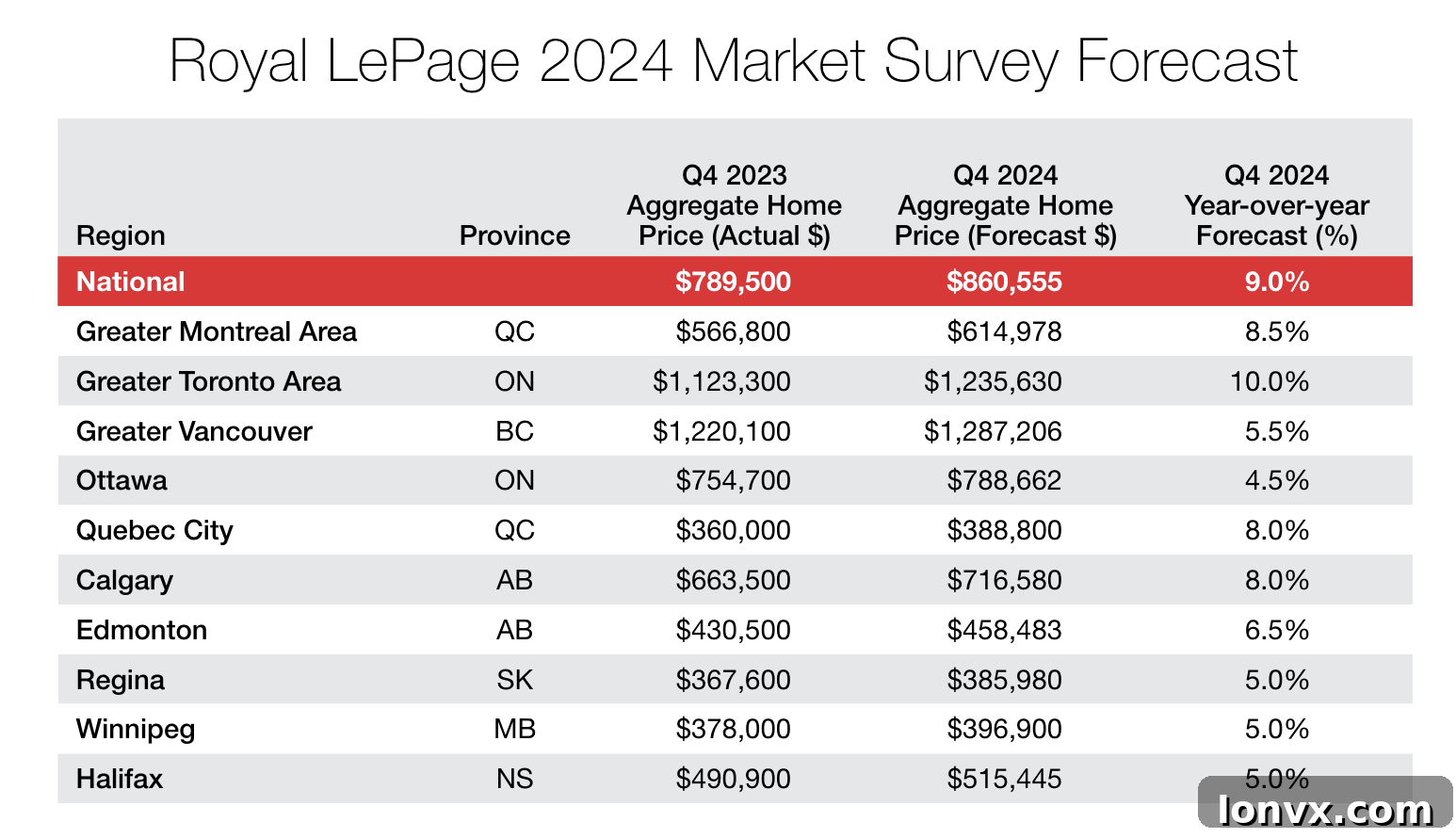
The Canadian housing market is entering a period of renewed vitality, with significant price appreciation expected throughout 2024. According to the latest House Price Survey released by Royal LePage, the aggregate price of a home in Canada is projected to increase by a substantial 9 per cent in the fourth quarter of 2024, when compared to the same period last year. This bullish forecast follows a stronger-than-expected performance in the first quarter of 2024, where the aggregate price saw a 4.3 per cent year-over-year increase, reaching $812,100.
This upward trend signifies a dynamic shift in market sentiment. The national aggregate home price surged by 2.9 per cent quarter-over-quarter, a clear indicator that many previously sidelined buyers are actively re-engaging with the market. This renewed enthusiasm is largely driven by the anticipation of impending interest rate cuts, creating a sense of urgency among potential homeowners keen to secure properties before prices climb further.
Motivated Buyers Drive Market Ahead of Anticipated Rate Reductions
The first quarter of 2024 marked a crucial turning point for the Canadian housing market, as home prices bottomed out and began a steady climb. Phil Soper, president and CEO of Royal LePage, highlights this shift: “Consistent with our previous forecast, the market did reach a critical tipping point in the first quarter of 2024, when home prices bottomed out and began to appreciate again. Clearly, more and more buyers are motivated by the need to get ahead of rising home prices, rather than adopting the strategy of waiting for mortgage rates to fall.” This sentiment underscores a growing realization among consumers that delaying a purchase might lead to higher costs in the future.
The initial months of 2024 have witnessed robust price appreciation and a noticeable uptick in sales activity across the Canadian housing landscape. A key factor contributing to this resurgence is the Bank of Canada’s decision to maintain steady interest rates through six consecutive review periods since July 2023. This period of stability, after previous rate hikes, has allowed a degree of certainty to return, prompting numerous homebuyers to enter the market. Many are striving to finalize purchases ahead of what is widely anticipated to be a highly competitive spring real estate season, further fueled by the expectation of future rate adjustments.
Price Appreciation and Buyer Activity Expected to Intensify Post-Rate Cut
Despite the current elevated borrowing costs, a significant segment of consumers, particularly first-time homebuyers, have demonstrated remarkable adaptability. Soper notes, “Many consumers – particularly first-time buyers – who have the capacity to transact have accepted and adapted to the higher borrowing cost environment. Thus, the modestly rising home prices we are experiencing today.” This acceptance suggests a new equilibrium in buyer expectations, where higher rates are no longer a complete deterrent but a factor to be managed.
The market is bracing for an even more significant boost once the Bank of Canada makes its highly anticipated initial interest rate cut. Such a move is expected to alleviate some financial pressure on borrowers, potentially unlocking further demand and injecting additional momentum into property values. Soper anticipates that both price appreciation and buyer activity will see a notable increase following this pivotal central bank decision, marking a new phase of growth for the real estate sector. According to the Royal LePage National House Price Composite, the median price for a single-family detached home in Canada saw a 4.5 per cent year-over-year increase, reaching $845,300. Condominium prices also experienced healthy growth, rising by 3.5 per cent to $591,900, demonstrating broad-based strength across different housing types.
Critically Low Housing Supply Continues to Drive Price Increases Nationwide
Despite a modest increase in listings as the spring market unfolds, the fundamental challenge of housing supply remains critically low across the entire country. This persistent shortage is undeniably the primary engine behind the upward trajectory of home prices, consistently overshadowing any potential dampening effects from interest rate fluctuations. The scarcity of available homes creates intense competition among buyers, pushing bids higher and solidifying a seller’s market in many regions.
The causes of this supply crunch are multifaceted, ranging from delays in construction due to labor shortages and material costs to restrictive zoning bylaws and lengthy municipal approval processes. This bottleneck in new housing development means demand consistently outstrips supply, maintaining upward pressure on prices. While Canada’s housing market is still navigating its full recovery from the post-pandemic correction, the aggregate home price has comfortably surpassed pre-pandemic levels. The market is projected to witness sustained price appreciation, with major metropolitan areas such as Toronto and Montreal expected to lead the charge, outpacing cities like Calgary in the pace of home price increases. This regional disparity often reflects differing economic growth rates, population pressures, and specific local market dynamics.
Federal Government Moves to Tackle Housing Supply and Affordability
Recognizing the acute challenges of housing supply and affordability, the federal government has put forth a series of proposed measures aimed at addressing these critical issues. These initiatives include strategies designed to accelerate housing construction and boost the overall rental supply across the nation. The goal is to create more housing units faster, thereby alleviating some of the pressure on the market and making homeownership and rental options more accessible.
However, industry experts emphasize that for these policies to be truly effective, there is a critical need for targeted incentives that specifically encourage rapid home construction and significant investment in rental accommodation. Without strong policy frameworks that support and stimulate development, the current affordability crisis is likely to persist. The scale of the challenge is underscored by recent demographic trends. Last year alone, Canada welcomed over 470,000 new permanent residents. Should this growth rate continue unabated, the Canada Mortgage and Housing Corporation (CMHC) reports that an additional four million homes would be required by 2030 to restore affordability levels to what they were two decades ago.
In response to growing concerns about infrastructure and housing capacity, the federal government recently announced its intention to reduce the number of temporary residents in Canada, aiming to bring the figure down from 6.2 per cent to 5 per cent of the national population by 2027. This policy adjustment is expected to have a significant impact.
Phil Soper commented on this development, stating, “The reduction of non-permanent residents, which includes international students, should have a material impact on Canada’s extremely tight rental market, easing the rate at which rents are rising by reducing competition for limited properties.” While this move is intended to alleviate pressure on the rental sector, it is not without its trade-offs. Soper adds, “This move comes at a cost, however. Non-permanent residents are critical to addressing our labour shortages and are an important engine of economic growth. We will undoubtedly be easing quotas up again in the near future.” This highlights the delicate balancing act between managing housing demand and supporting Canada’s economic and labor market needs.
Future Outlook: A Dynamic and Evolving Canadian Housing Landscape
As Canada moves further into 2024, the housing market is set to remain a focal point of economic discussion and public interest. The Royal LePage forecast paints a picture of continued price appreciation, driven by a confluence of factors: a resilient buyer pool adapting to current interest rate environments, the anticipated stimulus from future rate cuts, and the pervasive issue of critically low housing inventory. While government initiatives are underway to boost supply and address affordability, the sheer scale of demand, particularly in major urban centers, means these efforts will need time to yield substantial results.
The interplay between economic indicators, Bank of Canada policies, and evolving demographic trends will shape the trajectory of the market. Investors, first-time homebuyers, and existing homeowners alike will need to remain agile and informed. The market’s resilience in the face of previous challenges suggests a fundamental strength rooted in population growth and a desire for homeownership. However, the persistent supply gap remains the most significant hurdle, ensuring that competition for available properties will continue to be a defining feature of the Canadian real estate landscape for the foreseeable future.
For a comprehensive understanding of the market dynamics and detailed regional breakdowns, you can read the full report here.
Enjoying this article?
Get the latest real estate insights and market analyses delivered directly to your inbox 3 times a week. Stay informed on the newest trends in the Canadian real estate industry!