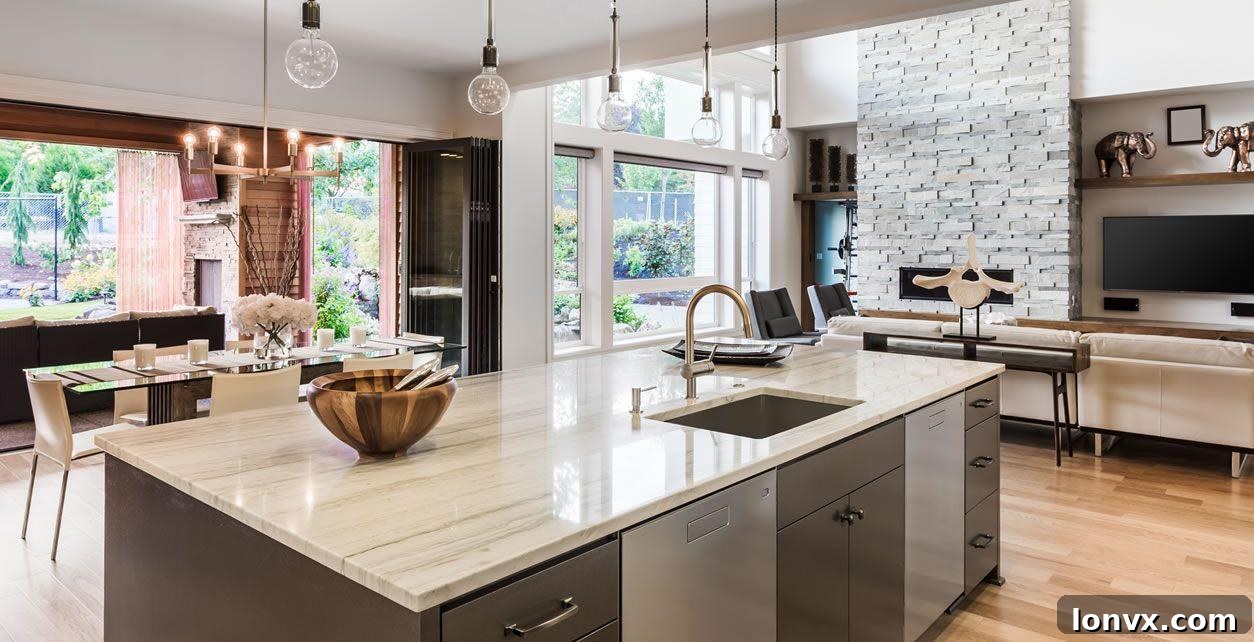
Unlocking Your Property’s Full Potential: The Undeniable Value of Home Staging
In the dynamic world of real estate, a question frequently surfaces among sellers and their agents: “Can a property be sold without being staged?” The straightforward answer is yes, it absolutely can. For every property, there exists a potential buyer willing to pay a certain price they perceive aligns with the value received. However, while selling an unstaged home is possible, it often comes at a significant cost – potentially longer listing periods and a lower final sale price than your client truly deserves. This article delves into why home staging is not merely an aesthetic enhancement, but a crucial strategic investment for any serious seller.
The Hidden Costs of Skipping Home Staging: A Deep Dive into Price Reductions
One of the most immediate and tangible consequences of an unstaged home is the inevitable spiral of price reductions. It’s a widely accepted industry practice to recommend a price decrease of approximately two percent for every two weeks a property lingers on the market without a successful offer. This rapid erosion of value can quickly outweigh any perceived savings from skipping staging.
Let’s illustrate this with a common scenario to understand the financial implications:
- Imagine a property initially listed at a competitive $500,000.
- After two weeks with no compelling offers, a two percent reduction is advised. This shaves a considerable $10,000 off the asking price, bringing it down to $490,000.
- If another two weeks pass without a successful sale, a further two percent reduction is recommended. This translates to an additional $9,800 decrease (2% of $490,000).
- Within just four weeks on the market, the total reduction amounts to $19,800, and the property is now priced at $480,200.
- This cycle can continue, often leading to a final sale price significantly lower than the initial asking price and far below the property’s true potential.
This relentless cycle of continuous price drops not only erodes the seller’s equity and confidence but can also inadvertently send a negative signal to prospective buyers. A property that consistently drops in price might be perceived as having underlying issues or being overpriced initially, further complicating the sales process and extending its market tenure. The cumulative financial implications quickly underscore that the “cost” of not staging can be far higher than the investment in professional preparation.
The Compelling Statistics: How Staging Elevates Sale Price and Speeds Up Sales
The anecdotal evidence is strong, but the statistics truly underscore the transformative power of professional home staging. According to data compiled by Schwarz’ stagedhome.com, strategic home staging can dramatically reduce a property’s listing time on the market by a remarkable 30 to 50 percent. This means fewer open houses, less inconvenience for sellers, and a quicker path to closing. More impressively, professionally staged homes often command a selling price that is six to 20 percent higher compared to vacant properties or those that haven’t been properly prepared for sale.
Consider the investment versus the return on investment (ROI). The Real Estate Staging Association (RESA) provides clear cost estimates: staging a vacant property spanning 2,000 to 2,500 square feet in regions like Ontario might range from $2,950 to $5,250. For an occupied property of a similar size, where the stager works with existing furnishings and enhances them, the cost is typically lower, between $1,400 and $2,700, depending on the condition and suitability of the homeowner’s existing furniture. When juxtaposed against the potential for faster sales and thousands more in profit, this initial investment becomes almost negligible, often paying for itself many times over in the final sale price.
Revisiting our earlier example of continuous price reductions, if a $500,000 property remained unstaged and suffered several rounds of price drops, the alternative of investing in professional staging could equate to a net saving of approximately $14,550 to $18,400 (by avoiding reductions and potentially gaining a higher sale price). In this financially advantageous scenario, both the seller reaps a substantially higher profit margin, and the real estate agent benefits from a quicker, more lucrative transaction, enhancing their reputation and client satisfaction.
Beyond Aesthetics: The Psychology of a Staged Home
Home staging isn’t merely about interior decoration; it’s a sophisticated marketing strategy rooted deeply in consumer psychology. Modern buyers lead incredibly busy lives, often juggling demanding careers, families, and personal commitments. When they step into a potential new home, they aren’t looking to compile a mental checklist of necessary repairs, extensive renovations, or arduous decluttering tasks. Instead, they overwhelmingly desire and are willing to pay a premium for a “move-in ready” experience. They want to instantly envision themselves living there, effortlessly transitioning into a comfortable, appealing, and functional space.
If a home is cluttered, filled with outdated furniture, or overly personalized with the current occupants’ specific tastes and belongings, buyers struggle to make that crucial emotional connection. They find it difficult to project their own belongings and lifestyle into the space, especially if it feels cramped, visually chaotic, or reflective of someone else’s life. A professional stager understands this psychological barrier and works meticulously to remove it, allowing the home’s true potential to shine through.
Decorating vs. Staging: Understanding the Key Difference
It’s crucial to distinguish between decorating and staging, as they serve entirely different purposes. Decorating is about personalizing a space to perfectly suit the homeowner’s individual tastes, preferences, and lifestyle. It’s about making a house a home for the people living in it.
Staging, conversely, is about strategically depersonalizing and optimizing a space to appeal to the broadest possible range of potential buyers. It’s about creating a neutral, aspirational canvas that allows buyers to easily envision their own future within those walls, free from distractions. This involves a deliberate selection of furniture placement, carefully chosen lighting, modern and neutral color palettes, and minimal accessories, all designed to highlight the home’s best architectural features and minimize any perceived flaws or idiosyncrasies. The goal is to create an inviting atmosphere that evokes positive emotions and allows buyers to see the property as their future sanctuary.
The Evolution and Enduring Relevance of Home Staging
While home staging has long been a revered staple in the luxury property market, its widespread adoption as a vital and indispensable real estate marketing strategy truly took off in the late 2000s. This period marked a significant shift towards a buyer’s market – a market dynamic strikingly similar to what many regions experience today. In such competitive environments, sellers need every possible advantage to stand out from the multitude of listings and capture buyer interest effectively. Staging provides that critical edge, transforming a mere house into a desirable lifestyle proposition that resonates with contemporary buyers.
In today’s digital age, the importance of staging extends far beyond physical viewings. The vast majority of home searches now begin online, with potential buyers scrolling through countless listings on their computers and mobile devices. High-quality, professionally staged photographs are absolutely crucial for making a memorable and impactful first impression. A beautifully presented home in online listings generates significantly more interest, leads to more scheduled showings, and ultimately, results in more competitive offers. Conversely, poor quality photos of cluttered, empty, or uninspired spaces deter buyers before they even consider stepping foot in the door, effectively eliminating the property from their consideration set.
The Invaluable Role of a Professional Home Stager
The primary objective of a professional home stager is twofold: to help sellers achieve a quick and profitable sale, and to empower buyers to visualize themselves thriving in their potential new home. A stager brings an invaluable, objective, and unbiased viewpoint to the property. Having lived in a home for years, sellers often become “house blind” – immune to its imperfections, dated elements, or how their personal style might inadvertently detract from its universal appeal. This is where a stager’s expertise becomes indispensable.
A stager’s comprehensive expertise encompasses several critical areas:
- Objective Assessment: Identifying areas for improvement that sellers, due to their familiarity, might entirely overlook. This includes everything from paint colors to furniture arrangement.
- Strategic Furniture Placement: Meticulously arranging furniture to maximize perceived space, improve the natural flow of traffic, and strategically highlight the home’s best architectural features and selling points.
- Color and Lighting Optimization: Selecting modern, neutral palettes and implementing lighting solutions that enhance natural light, brighten dark corners, and create a consistently warm, inviting, and spacious atmosphere throughout the home.
- Decluttering and Depersonalization: Providing expert guidance to sellers on the ruthless removal of personal items, excessive clutter, and family memorabilia to create a clean, neutral, and aspirational environment.
- Targeted Appeal: Curating a specific style and ambiance that thoughtfully appeals to the likely demographic of potential buyers for that particular property and neighborhood, ensuring maximum resonance.
- Enhancing Curb Appeal: Offering invaluable recommendations for exterior improvements, ranging from landscaping to front door paint, to ensure the property makes an exceptional first impression even before buyers step inside.
Their expert advice is wholly geared towards making the property universally appealing, ensuring that its best features shine brightly and potential buyers can connect with the space on a deep, emotional level, ultimately leading to a faster and more profitable sale.
Budget-Friendly Staging Tips: Maximizing Impact Without Breaking the Bank
What if professional staging isn’t quite within the budget? While a full professional service offers the most comprehensive benefits, there are still highly effective, budget-conscious steps sellers can take to significantly improve their home’s marketability. My foremost recommendation is radical decluttering and depersonalization. Advise clients to ruthlessly declutter every single living space, including often-overlooked areas like closets, pantries, and especially the garage, by a minimum of 30 to 50 percent. This creates an immediate and noticeable sense of spaciousness, order, and potential for buyers.
Key DIY staging tactics that can make a substantial difference include:
- Remove Oversized and Excess Furniture: Large, bulky pieces can make rooms feel significantly smaller and obstruct natural flow. Store them if possible to open up the space.
- Execute a Deep, Thorough Clean: A spotless home signals meticulous care and maintenance to buyers. Clean every surface, window, and floor until it sparkles.
- Repair All Minor Flaws: Address leaky faucets, patch any holes in walls, touch up chipped paint, tighten loose cabinet handles, and ensure all light fixtures and bulbs are in perfect working order. These small fixes prevent buyers from compiling a mental “to-do” list.
- Optimize Strategic Lighting: Ensure every room is well-lit. Open curtains and blinds to let in natural light, clean windows thoroughly, and add lamps where needed to brighten any dark corners or create inviting ambiance.
- Neutralize and Update Colors: Fresh coats of neutral paint (soft grays, warm beiges, or crisp whites) can instantly modernize a space, make it feel larger, cleaner, and more universally appealing.
- Enhance Curb Appeal: The exterior is the first impression. Trim hedges, mow the lawn, plant fresh flowers, clear pathways, and perhaps give the front door a fresh coat of paint. A welcoming exterior draws buyers in.
- Create Warm & Inviting Spaces: Arrange existing furniture to facilitate conversation, add subtle touches like fresh flowers or a bowl of fruit, use subtle, pleasant scents (avoiding overpowering ones), and ensure comfortable temperatures year-round.
- Depersonalize Thoroughly: Remove all family photos, highly unique art, religious items, and collectibles. Buyers need to imagine their own lives and belongings in the home, not yours.
- Organize Closets and Cabinets: Buyers will inevitably open these. Neatly organized storage spaces suggest ample storage capacity and convey an image of a well-maintained home.
The more effort you and your client invest in preparing the property, the greater the returns will be, both in terms of significantly reduced time on the market and securing a potentially higher sale price. Even small changes can yield remarkable results.
Conclusion: Staging – An Investment, Not an Expense
Ultimately, the core question isn’t whether you can sell an unstaged property, but rather, “at what financial and emotional cost?” In today’s highly competitive real estate market, professional home staging is no longer merely a luxury or an optional extra; it has evolved into a strategic necessity. It is a proven and highly effective method to maximize a property’s appeal, dramatically shorten its time on the market, and secure the best possible sale price, ensuring sellers achieve their financial goals.
By transforming a house into an irresistible home that resonates deeply and emotionally with potential buyers, sellers make a smart, calculated investment that consistently yields significant returns. Whether through comprehensive professional staging services or diligent, well-executed DIY efforts, presenting a property in its absolute best light is the undeniable key to unlocking its full market potential and achieving a truly successful, swift, and profitable sale.