Revolutionizing Real Estate: The Power of 3D Virtual Home Tours
The landscape of real estate marketing is undergoing a significant transformation, ushered in by groundbreaking technologies that offer unparalleled immersion and convenience. At the forefront of this revolution is 3D photography, a dynamic tool that redefines how potential buyers experience properties. Imagine stepping into a home, not physically, but virtually from the comfort of your desk, tablet, or smartphone. This isn’t just a series of static images; it’s an interactive, walk-through experience akin to Google Earth, but directly inside a property.
With this innovative technology, you can seamlessly navigate through a kitchen, zoom in to read magnets on the fridge, peek into pantry contents, and effortlessly glide down hallways into bathrooms, bedrooms, and the front entryway. Interested in exploring multiple levels? Lightly outlined circles guide your mouse, allowing you to click on a desired view from the stairs and continue your immersive journey through every corner of the home, all without ever leaving your current location.
The Unmistakable Advantages of Immersive Property Viewing
The impact of 3D virtual tours extends far beyond novelty, offering tangible benefits for both real estate professionals and their clients. Sara MacLennan, Marketing Director at Liv Real Estate in Edmonton, highlights the profound efficiency this technology brings to the sales process. “For a seller, this technology can significantly decrease the number of unsuccessful showings,” MacLennan states. “It’s a real time saver for home buyers and sellers alike. Buyers can experience a home on their mobile device or computer and decide if it’s worth a look in person.” This crucial ability to pre-qualify interest streamlines the entire showing process, ensuring that in-person visits are reserved for truly interested and serious buyers.
Enhanced Buyer Experience and Efficiency
- Unmatched Convenience: Buyers can tour properties 24/7, from anywhere in the world, fitting property viewings into their busy schedules without geographical constraints.
- Realistic Understanding: Unlike photos, 3D tours provide a true sense of space, scale, and flow, helping buyers visualize themselves in the home more accurately.
- Efficient Filtering: Prospective buyers can quickly assess multiple properties virtually, saving time and reducing the need for numerous physical visits to unsuitable homes.
- Informed Decisions: A comprehensive virtual tour empowers buyers to make more confident and informed decisions, often leading to quicker offers.
Significant Benefits for Sellers and Agents
- Reduced Unsuccessful Showings: By allowing buyers to conduct extensive virtual walk-throughs, sellers only host serious prospects for physical visits, minimizing disruption and time wasted.
- Broader Market Reach: Properties can be showcased to a global audience, attracting international buyers who might otherwise be unable to view the home.
- Competitive Edge: Offering 3D tours positions a listing and agent as modern, technologically advanced, and committed to providing the best possible service.
- Increased Engagement: Virtual tours typically lead to longer engagement times on listing pages, capturing buyer attention more effectively than traditional media.
- Showcase Unique Features: Every detail, from custom cabinetry to unique architectural elements, can be highlighted in an interactive way that static photos cannot match.
The Technology Behind the Immersion: Matterport and Beyond
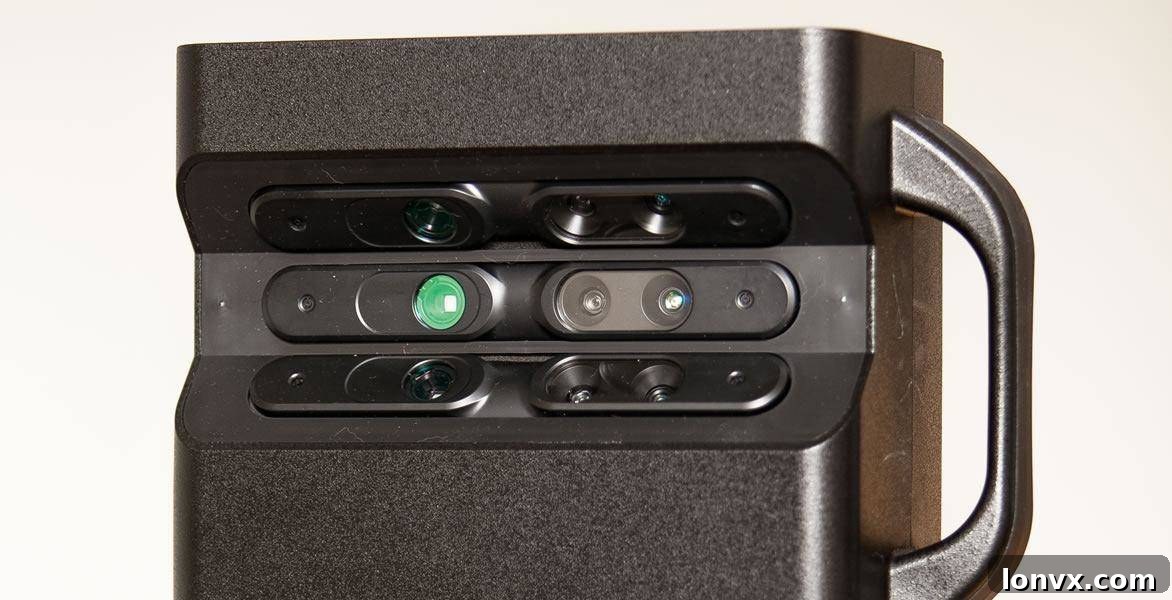
To deliver such an unparalleled immersive experience, 3D photography requires specialized hosting and sophisticated technology. Leading the charge in this sector is Matterport, a renowned manufacturer of the advanced cameras and hosting platforms that make these virtual tours possible. Understanding why Matterport stands out requires a brief look at the limitations of other digital photography methods often confused with true 3D virtual tours.
The Matterport 3D camera
Distinguishing True 3D Tours from Other Photographic Techniques:
- Stereography (Traditional 3D): Often referred to as 3D digital photography, stereography involves taking two photos of the same object slightly apart. When viewed cross-eyed, they create a dimensional effect. While intriguing, requiring a buyer to look cross-eyed at a listing is certainly not a practical selling point for real estate.
- Consumer 3D Cameras: These cameras typically capture close-up images of objects, offering a limited, often lower-quality 3D representation. They are not designed to create comprehensive, computer-walkable house views with the high fidelity that specialized solutions like Matterport provide.
- Cycloramic Photos (360-degree Views): Achievable with smartphone software, cycloramic photos allow users to manually rotate the camera or use a motorized base to capture a 360-degree panoramic view of a single room. While they offer a wide perspective, they fundamentally lack the ability to seamlessly transition from one room to another, move through doorways, or adjust perspective from far away to close up, making the experience disjointed and less immersive.
Matterport’s technology, by contrast, creates a cohesive, navigable 3D model of an entire space, offering a level of realism and interactivity that these other methods cannot replicate.
The Implementation Process: From Capture to Live Tour
For trained photographers like Sara MacLennan, the Matterport camera receives high praise. “I tried it out, checked over the settings to see what it was capable of,” she recounts. “It’s not very hard to use.” The process of generating a 3D virtual tour, while sophisticated, has been optimized for efficiency and quality.
A typical shoot involves a professional photographer, often taking approximately an hour and a half to capture a listing, depending on the property’s size. The Matterport camera, controlled via a tablet, sits on a specially designed revolving base that gently spins, meticulously calculating the dimensions, colors, contours, and intricate spatial relationships of objects within the room. This intelligent system even provides the photographer with real-time feedback, suggesting optimal camera placement to capture the largest possible perspective and indicating if an area might require a re-take before leaving the premises. This ensures comprehensive coverage and minimizes the need for return visits.
Once the data is captured, it is uploaded to Matterport’s specialized website hosting platform. This platform is not merely for storage; it acts as sophisticated software that intelligently stitches together all the information obtained by the camera about the area, constructing a realistic and fully navigable 3D model. Within approximately three hours, the tour is processed and ready to view, offering a lifelike look and feel that truly sets it apart from any other style of photography in real estate.
Investment and Return: Is the Price Justified?
Such cutting-edge quality naturally comes with an investment. The Matterport 3D Pro camera currently retails for approximately $4,500, plus shipping. Furthermore, the company does not directly ship to Canada, necessitating the involvement of an importer to manage the transaction from purchase through customs to final delivery. Despite these costs and logistical considerations, MacLennan firmly believes the investment is thoroughly justified.
The return on investment for adopting 3D virtual tours is multifaceted and significant. Faster sales cycles, potentially higher offers due to increased buyer confidence, and a distinct competitive advantage in a crowded market often outweigh the initial outlay. For brokerages and agents, it represents an investment in superior marketing collateral and a commitment to providing an advanced, convenient experience for their clients, thereby enhancing their brand reputation and attracting more listings.
The Future of Real Estate Marketing: A Present Reality
“We got a phenomenal response when we started putting our listings up in 3D,” MacLennan recalls, emphasizing the immediate positive impact. This trend has not only continued but has grown, solidifying 3D virtual tours as an indispensable add-on feature for showcasing and selling properties. As more and more people experience the transformative results firsthand, MacLennan confidently asserts that this technology is not just a passing fad but indeed “the future of marketing technology in real estate listings.”
The trajectory suggests that 3D tours will soon transition from being a premium differentiator to a standard expectation within the real estate industry. Their ability to transcend geographical barriers, offer unparalleled convenience, and provide an authentic, immersive viewing experience makes them an invaluable asset. This innovation empowers both buyers with greater insight and sellers with a more efficient, effective sales process, truly setting a new benchmark for property marketing in the digital age.
For an immersive preview of 3D photography in action for real estate listings, click here. Alternatively, delve deeper into the technology and offerings by visiting the official Matterport website.