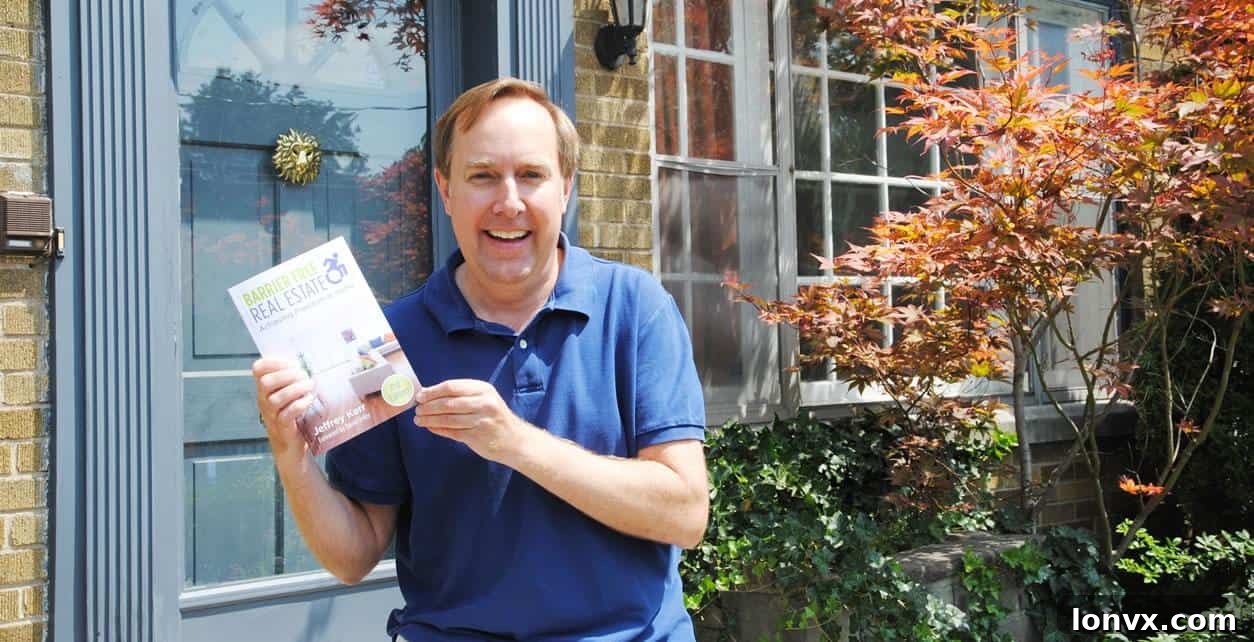
Barrier-Free Real Estate: Achieving Freedom At Home with Jeffrey Kerr
In an era where home comfort and safety have become paramount, the demand for accessible and barrier-free living spaces is rapidly escalating. Guiding this crucial conversation is Jeffrey Kerr, a distinguished broker at Re/Max Unique in Toronto, who has channeled his extensive experience and dedication into the second edition of his transformative book, Barrier Free Real Estate: Achieving Freedom At Home.
Kerr, a Realtor for over two decades, specializes in a vital niche: helping clients navigate the complexities of buying and selling barrier-free and accessible houses and condominiums. Recognizing a significant gap in available resources, he has meticulously compiled his profound knowledge and practical expertise into a comprehensive guide. This book serves as an invaluable tool, empowering fellow real estate agents to better serve their clients, and equipping individuals with the essential information to advocate for their own housing needs. As Kerr aptly puts it, “Being armed with knowledge and knowing what to look for is half the battle,” a truth that resonates deeply in the often-challenging search for accessible accommodations.
A Blueprint for Accessible Living: What “Barrier Free Real Estate” Offers
Jeffrey Kerr’s book is far more than a simple guide; it’s a meticulously crafted roadmap through the journey of finding or creating an accessible home. From foundational concepts laid out in a chapter titled The Big Picture to the most minute, yet critical, details, the book systematically breaks down what readers need to know to ensure a smoother, more successful search for an accessible house or condo. It empowers individuals not only to seek out new accessible properties but also to critically assess their current living spaces. Kerr provides insights into whether existing homes can be adapted through modifications, allowing residents to comfortably age in place, or identifying properties with the potential for future adjustments to meet evolving needs. This forward-thinking approach is critical for long-term planning and ensures housing solutions remain viable for years to come.
Kerr’s authority in this field is underscored by his impressive professional background. Obtaining his real estate license in 1999 and becoming a broker in 2007, he further enhanced his specialization with coveted designations as a Senior Real Estate Specialist (SRES) and an Accredited Senior Agent (ASA). These credentials signify a deep understanding of the unique financial and emotional challenges seniors face when buying or selling property. Beyond his brokerage and authorship, Kerr actively contributes to the community as a regular columnist for Spinal Cord Injury Ontario, consistently sharing his insights and advocating for inclusive living environments.
The Growing Imperative: Aging in Place and the Pandemic’s Impact
The concept of “aging in place” – the ability for individuals to live in their own homes and communities safely, independently, and comfortably, regardless of age, income, or ability level – has gained significant traction. Kerr highlights a compelling statistic: “Eighty-five per cent of Canadians over 55 want to age in place, staying in their homes longer.” This preference was a robust trend even before global health crises reshaped societal norms. However, the COVID-19 pandemic dramatically accelerated this desire, propelling aging in place to the forefront of housing considerations and making Kerr’s book exceptionally timely and relevant.
The pandemic introduced unprecedented realities of physical distancing and self-isolation, prompting a collective re-evaluation of current and future living arrangements. “People will start to re-think their current and future living arrangements,” Kerr observes. The widely reported concerns surrounding COVID-19 outbreaks in long-term care facilities ignited a deeper public discourse about residential safety and autonomy. “Once concerns around COVID-19 in long-term care homes became an issue, lots of people began re-evaluating their future housing. People want a safe space to live and isolate,” he explains. This shift in perspective has cemented aging in place as an increasingly attractive and often essential option for many individuals moving forward, emphasizing the critical need for homes designed to support long-term well-being and independence.
Jeffrey Kerr, left, with David Onley, former Lieutenant Governor of Ontario.
An Unparalleled Endorsement: David Onley’s Acclaim for “Barrier Free Real Estate”
The credibility and impact of Kerr’s 154-page book are significantly amplified by a compelling foreword penned by David Onley, who served as the Lieutenant Governor of Ontario from 2007 to 2014. Onley, a prominent advocate for disability rights and accessibility, offers a powerful endorsement that speaks volumes about the book’s quality and necessity. Kerr recounts meeting Onley on several occasions and, recognizing his influential voice, reached out with a request for a foreword. Upon reviewing an early copy, Onley’s response was immediate and unequivocal, praising the book as “brilliant.”
The profound relevance of Kerr’s work is further validated by its inclusion in the Politics of Disability course, which Onley teaches at the esteemed University of Toronto. This academic integration underscores the book’s scholarly value and its capacity to inform future leaders and policymakers. Onley himself declares the book to be the “single most important resource a disabled person can acquire before venturing into the often daunting world of finding accessible housing.” This powerful commendation from such a respected figure highlights the book’s critical role in demystifying and simplifying the complex search for truly accessible living spaces, providing hope and practical guidance where it is most needed.
Designing for Dignity: Key Features and Expert Collaboration
Understanding what constitutes an accessible home goes beyond broad strokes. Kerr’s book delves into specific, actionable details, making complex concepts easy to grasp. For instance, dedicated chapters explore essential considerations for creating accessible kitchens and bathrooms. These sections meticulously outline design elements, modifications, and innovative solutions that ensure functionality and ease of use for individuals with diverse mobility needs. “It’s like taking a tour of an accessible home,” Kerr explains, offering readers a virtual walkthrough of optimal layouts, fixture choices, and safety enhancements that promote independence and comfort within these crucial spaces.
Kerr powerfully articulates the core message of his work within the book itself: “The pandemic has demonstrated the value and importance of having a safe and comfortable home you can live, work and thrive in. This is especially true for the over six million Canadians who have a disability and for the 23 per cent of Canadians who will be over the age of 65 by the year 2030. If you or someone you know is included in one of these categories, then this book is written for you.” This statement underscores the broad applicability and urgent relevance of barrier-free design for a significant and growing portion of the population.
Beyond structural modifications, the book highlights the invaluable contribution of the occupational therapist (OT). OTs are not merely health professionals; they are crucial allies in the journey towards accessible living. Another chapter in Kerr’s book meticulously discusses their importance, detailing how an OT can provide an in-depth assessment of a buyer’s immediate needs, as well as project their potential requirements five to ten years into the future. This holistic approach ensures that any chosen home or modification plan aligns with an individual’s evolving mobility and health, making it a truly “forever home.” An OT’s expertise helps connect individual capabilities with environmental solutions, bridging the gap between medical needs and architectural possibilities.
Innovation in Accessibility: Developers Leading the Way
The pursuit of accessible housing extends to new developments and forward-thinking builders. Kerr notably highlights The Accessibility Design Program by The Daniels Corporation, a testament to innovative leadership in the real estate sector. “They’re way ahead of the curve with accessible condos,” he praises, pointing to a developer actively integrating universal design principles from the ground up. This initiative goes beyond minimal compliance, aiming to create genuinely livable and adaptable spaces that anticipate diverse needs.
Clients who invested in pre-construction units through this program in 2017 are anticipating occupancy late this year and into 2021. Kerr predicts that once these thoughtfully designed suites become visible – showcasing their non-institutional aesthetics and highly functional layouts – there will be a significant surge in interest. This demonstrates a growing market appetite for modern, accessible housing options that don’t compromise on style or comfort. Furthermore, the book serves as a vital resource for downsizers contemplating a move into a condominium. It encourages them to make informed choices now, selecting properties that are either inherently accessible or easily modifiable, thereby avoiding the disruptive and costly necessity of future relocations due to changing accessibility needs.
A Collaborative Ecosystem for Home Modifications
The commitment to accessible living is also bolstered by industry associations. The book provides crucial details about the Canadian Home Builders’ Association’s Home Modification Council. This council plays a pivotal role in supporting numerous facets of aging in place for Canada’s seniors, persons with disabilities, and their dedicated caregivers. Their offerings are comprehensive, extending to critical home modification training for renovators. Such programs are essential for equipping professionals with the specialized skills required to implement effective, safe, and dignified home adaptations, thereby fostering a robust ecosystem capable of meeting the evolving demands for accessible living.
The Genesis of an Essential Update: Timeliness and Dedication
Kerr’s first edition of Barrier Free Real Estate, published in 2016, quickly became a go-to resource. However, the dynamic nature of real estate, design, and societal needs meant an update was imperative. Despite the clear need, the demands of a busy professional life made finding dedicated time for revision challenging. Ironically, it was the unprecedented circumstances of the COVID-19 lockdown that provided the unexpected window of opportunity. This period of forced pause allowed Kerr to meticulously update and expand his work, ensuring the second edition reflects the latest trends, technologies, and pressing concerns in accessible housing, making it more comprehensive and vital than ever before.
Your Guide to Accessible Living: Connecting with Jeffrey Kerr
Barrier Free Real Estate: Achieving Freedom At Home stands as an indispensable guide not only for real estate professionals seeking to deepen their expertise but also as a thoughtful and empowering gift for clients navigating their own accessible housing journeys. Beyond the pages of his highly acclaimed book, Jeffrey Kerr himself remains an invaluable resource within the real estate community. He extends an open invitation for agents and individuals alike to reach out, welcoming calls for advice, information, and insights into the complexities of barrier-free living. His dedication to fostering inclusive and accessible communities is unwavering.
For those ready to embark on their search for an accessible home, or for agents looking to expand their knowledge in this vital sector, Jeffrey Kerr is a trusted name. Visit his official website at accessiblehomefinder.com to explore more resources, or contact him directly for personalized guidance at 416-424-2222. Take the first step towards achieving true freedom at home today.