The Future of Industrial Development: Embracing Mixed-Use Projects Across Canada
The landscape of urban development is rapidly evolving across Canada, particularly in vibrant economic hubs like Metro Vancouver. As traditional perspectives on land use give way to more innovative and efficient models, mixed-use industrial projects are emerging as critical drivers of economic growth and the blueprint for future development. These dynamic developments move beyond single-purpose industrial parks, integrating a diverse array of business types and functions. This strategic amalgamation fosters an environment ripe for collaboration, sparks innovation, and ultimately contributes to a more robust and resilient local economy.
This shift reflects a broader understanding that industrial spaces are not merely for manufacturing or warehousing, but can also serve as vibrant ecosystems that support a wider community. By blending traditional industrial operations with commercial, service, and even civic components, mixed-use projects are setting new standards for efficiency, sustainability, and quality of life within urban and suburban areas. They are designed to meet the complex demands of modern businesses and their workforces, ensuring that industrial zones remain competitive and contribute meaningfully to the economic fabric of Canadian cities.
Beyond Profit: Enhancing Employee Well-being and Fostering Innovation in Mixed-Use Industrial Hubs
The advantages of mixed-use industrial projects extend far beyond mere operational efficiency; they profoundly impact employee well-being and overall productivity. Forward-thinking developers and businesses are increasingly recognizing that thoughtful land use planning can directly enhance the daily experiences of staff, leading to a more engaged and satisfied workforce. By integrating supportive services directly within industrial parks, these developments cater to the holistic needs of employees.
Consider the transformative impact of amenities such as on-site gym facilities, dedicated childcare support, and accessible healthcare services. These conveniences not only significantly boost a worker’s quality of life by reducing commute times for essential errands and personal care but also serve as powerful magnets for attracting new talent. In today’s competitive job market, professionals – especially those balancing career aspirations with family responsibilities – are drawn to environments that offer practical support and work-life integration. This creates a virtuous cycle: improved employee satisfaction leads to higher retention rates, reduced absenteeism, and ultimately, a more productive and innovative workforce.
Moreover, the integration of diverse business types within a single industrial park naturally sparks opportunities for cross-pollination of ideas and services. Imagine a scenario where a high-tech manufacturing facility is located alongside a research and development lab, or a logistics company benefits from an adjacent administrative support hub. This proximity cultivates a dynamic ecosystem where collaboration becomes organic, problem-solving is streamlined, and innovation can flourish at an accelerated pace. Such environments are not just places of work; they become vibrant communities of commerce and creativity.
Strategic Integration of Professional Services and Storage Solutions
Another increasingly common and beneficial component of mixed-use industrial developments is the inclusion of self-storage facilities. Catering to both personal and business needs, these facilities offer flexible solutions for inventory management, equipment storage, or even personal items for employees who commute. Their presence optimizes space utilization within the park and provides a crucial service that reduces logistical burdens for tenants.
Furthermore, the strategic co-location of professional services companies – particularly those specializing in the industrial asset class, such as engineering firms, architectural practices, and logistics consultants – near the businesses they serve, represents a significant advantage. This geographical proximity facilitates seamless communication, enables quicker on-site assessments, and encourages a truly collaborative approach to project execution and problem-solving. It effectively shortens project timelines and reduces overheads associated with travel and coordination.
A prime example of this demand for integrated functionality can be seen in the Link 200 project in Langley, British Columbia. During its pre-construction phase, we collaborated to explore the feasibility of incorporating a third storey of modern office space into an industrial building. The market reception for this additional office component was overwhelmingly positive, underscoring the robust demand for flexible, integrated spaces. This experience highlighted a crucial insight: had regulatory requirements, such as parking stipulations, allowed for even greater office density, that space would have been absorbed almost instantly. This clearly indicates a strong market appetite for projects that thoughtfully blend industrial operations with high-quality office and service elements, demonstrating a paradigm shift in how we envision and utilize industrial land.
Navigating Market Dynamics: Expanding Opportunities for Mixed-Use Industrial Spaces Across Canada
The Canadian industrial real estate market is currently undergoing significant shifts, presenting both challenges and unprecedented opportunities for innovative development models. According to comprehensive data from Altus Group, the national industrial availability rate experienced an upward trend, reaching 5.1 percent in the first quarter of this year. While this figure might suggest a softening market, it crucially translates into increased leasing opportunities, particularly within historically tight markets.
Metro Vancouver, for instance, has long been characterized by exceptionally low industrial vacancy rates, making expansion or relocation a formidable challenge for many businesses. However, recent data from Avison Young indicates a notable change: industrial vacancy in Metro Vancouver rose to 2.1 percent in the first quarter of 2024, a significant increase from the remarkably low 0.3 percent recorded in the second quarter of 2022. This upward movement, while still representing a very competitive market compared to national averages, signals a crucial window of opportunity.
This evolving market availability is a pivotal factor driving the adoption of mixed-use industrial developments. Businesses that were previously constrained by limited options now have a broader spectrum of choices. This newfound availability opens the door for companies to strategically consider relocating or expanding their operations into multi-use spaces. Such environments offer the flexibility and integrated services that single-purpose industrial sites often lack, making them highly attractive to businesses seeking efficiency, employee amenities, and future-proofing their operations against market fluctuations. This trend is not merely about finding space; it’s about finding smarter, more integrated spaces that align with modern business imperatives and contribute to long-term success.
Smart Investments: Offsetting Land and Construction Costs Through Diversified Mixed-Use Strategies
In the high-stakes world of real estate development, particularly in regions experiencing rapid growth like Metro Vancouver, financial viability is paramount. Mixed-use industrial projects present a compelling proposition for enhancing project profitability and mitigating the escalating costs associated with development. Adopting a comprehensive design-build approach, which evaluates the holistic health and long-term potential of a development from its inception to completion, reveals the profound benefits of maximizing density wherever strategically feasible.
The economic realities of the past few years underscore this urgency. The cost of industrial land in Metro Vancouver has reached unprecedented highs, while construction expenses across Canada have surged dramatically over the last half-decade. These financial pressures necessitate innovative strategies to offset significant upfront capital outlays and ensure projects remain attractive to investors and end-users alike. Mixed-use models offer a robust solution by diversifying revenue streams and increasing the overall value proposition of a development.
The strategic integration of varied components within an industrial project can transform it into a more resilient and profitable venture. For instance, incorporating facilities like on-site daycares not only serves a vital community need and enhances employee attraction but also generates a stable, ongoing revenue stream. Similarly, adding a dedicated level of self-storage, seamlessly integrated into the base building design, provides flexible rental income from both business and individual clients. Furthermore, the inclusion of additional commercial components, such as small retail units, cafes, or service providers, can attract foot traffic and generate supplementary operating income that helps to defray the substantial development costs incurred today.
By layering these diverse uses, developers can unlock higher returns on investment (ROI) compared to single-use industrial sites. The blended income streams offer greater financial stability and reduce reliance on any one market segment. This multi-faceted approach transforms a conventional industrial park into a vibrant economic hub, attracting a broader spectrum of tenants and creating long-term value that far surpasses initial development expenditures. It’s a forward-thinking financial model that aligns perfectly with the demands of modern urban planning and economic sustainability, ensuring that today’s investments continue to yield benefits well into the future.
Optimizing Urban Footprints: Multi-functional Space Maximization in Mixed-Use Developments
The efficient utilization of urban land is a critical challenge in rapidly growing metropolitan areas. Mixed-use developments offer innovative solutions to this challenge, particularly in the realm of space maximization. One striking illustration of this potential comes from the Metro Vancouver / Fraser Valley Industrial Parking Study, conducted by the prominent industry organization NAIOP. This comprehensive study revealed a significant finding: both regions are burdened with an approximate 50 percent oversupply of parking spaces within their industrial zones. This data points to a substantial, underutilized resource that can be reimagined for more productive purposes.
The traditional approach to industrial development often mandates extensive surface parking, consuming valuable land that could otherwise be developed for income-generating or community-enhancing uses. Mixed-use industrial projects, however, fundamentally alter this paradigm. By integrating a variety of complementary uses within a single complex, developers can intelligently address parking requirements. The diverse operational hours and varied needs of different tenants – for example, a daycare operating primarily during business hours versus a manufacturing plant with shift workers – lead to a more efficient shared use of parking facilities. This means that instead of each component requiring its own dedicated, often excessive, parking allotment, a consolidated approach can be adopted.
This strategy allows for a reduction in overall parking footprint, freeing up considerable land area. This freed-up space can then be allocated to additional revenue-generating components, expanded green spaces, pedestrian pathways, or other amenities that enhance the quality of the development and its surroundings. By increasing the allowable maximum density within an industrial complex through these multi-functional designs, developers are not just building more structures; they are creating more vibrant, resilient, and economically productive environments.
Ultimately, this thoughtful approach to space maximization underscores a broader commitment to sustainable urban planning. It ensures that every square foot of available land is optimized, reducing urban sprawl, minimizing environmental impact, and creating developments that better serve the multifaceted needs of businesses and communities. In essence, mixed-use industrial projects are redefining what’s possible within our built environment, transforming underutilized assets into dynamic hubs of activity and value.
The Imperative of Density: Reshaping Canadian Cities Through Vertical Integration and Strategic Urban Planning
The drive towards increased building density has become a central tenet of urban planning and development strategies across major Canadian cities. From the rapidly expanding Metro Vancouver to the bustling Greater Toronto Area (GTA) and the vibrant metropolis of Montreal, municipal governments and developers alike are recognizing that vertical growth and intensified land use are essential for sustainable urban expansion, economic competitiveness, and addressing housing and commercial space shortages.
This pursuit of density is already manifesting in tangible ways, notably through the widespread adoption of transit-oriented development (TOD) policies. TOD strategies focus on creating compact, walkable, and mixed-use communities around public transit nodes, thereby reducing reliance on private vehicles, minimizing traffic congestion, and promoting a more sustainable lifestyle. Just as these progressive zoning policies are spurring the development of multi-family residential units near transit hubs, a parallel evolution is occurring within industrial planning.
Adapting Official Community Plans for Modern Industrial Needs
Local governments are proactively adapting their Official Community Plans (OCPs) to better accommodate and encourage innovative industrial zoning. This involves revising regulations to allow for greater flexibility in land use, facilitating the integration of diverse functions, and enabling increased density within industrial precincts. While the conceptual framework for these changes is widespread, the practical pace and consistency of implementation can vary significantly across different municipalities and regions. Challenges often arise from existing infrastructure limitations, community engagement processes, and the need to balance various stakeholder interests.
Exploring Stacked Industrial: A Vision for Vertical Growth
A particularly forward-thinking and high-density manifestation of mixed-use industrial development is the concept of “stacked industrial.” This innovative architectural approach involves constructing multi-storey industrial buildings where different operational units—such as manufacturing, warehousing, office spaces, and even showrooms—are vertically integrated within the same structure. This paradigm shift directly addresses the scarcity of industrial land, especially in prime urban locations, by maximizing the usable footprint on a limited parcel.
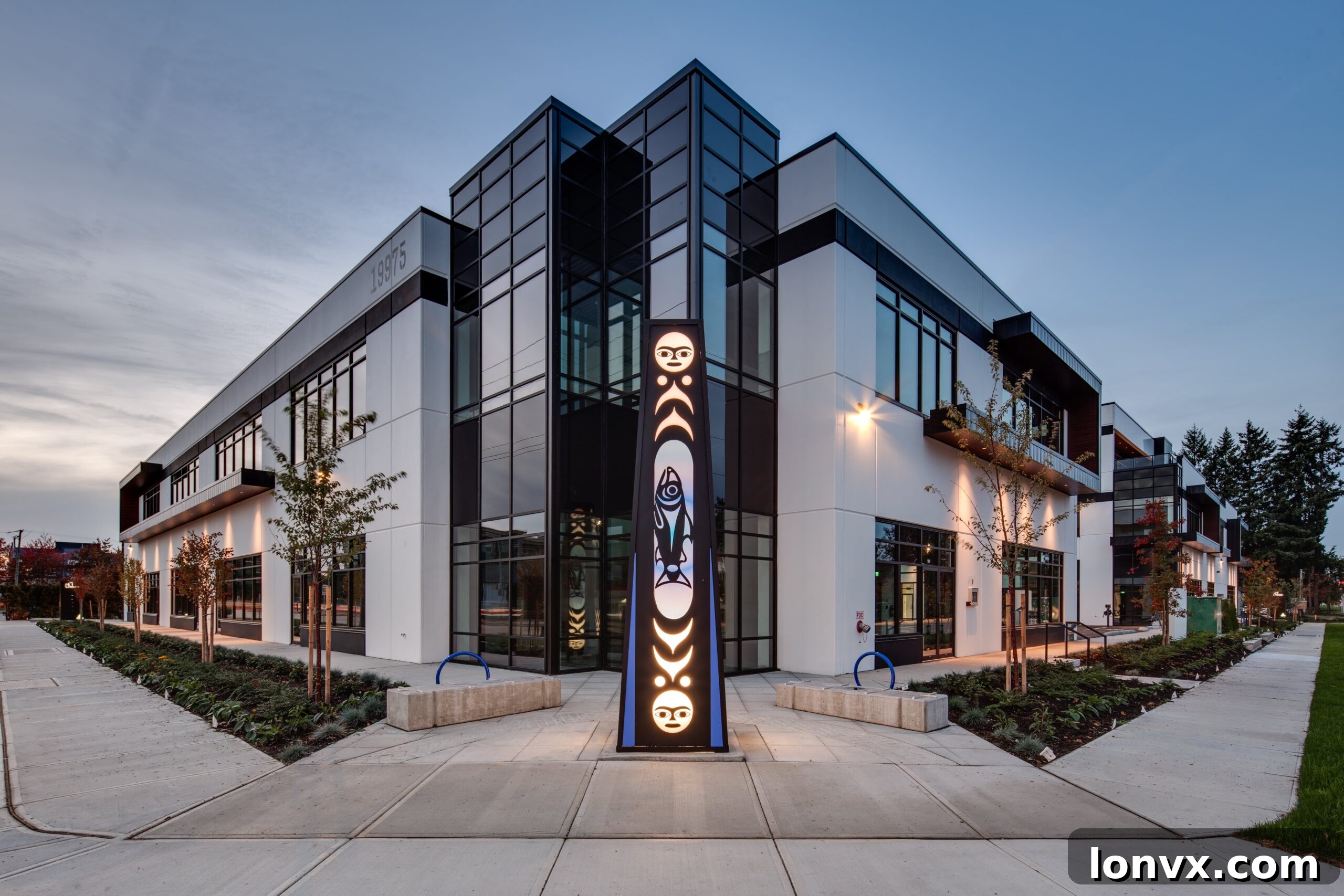
Photo: Orion Construction – Illustrating a multi-level industrial facility.
While stacked industrial projects hold immense potential for maximizing land use efficiency and supporting urban intensification goals, their widespread normalization is surrounded by a myriad of complexities and challenges.
Overcoming Challenges in High-Density Industrial Construction
Several factors are increasingly restrictive to the feasibility and cost-effectiveness of stacked industrial and other high-density projects:
- Poor Soil Conditions: Many prime urban industrial sites, particularly those reclaimed or located near water bodies, can suffer from poor soil conditions requiring extensive and costly geotechnical engineering and foundation work. This significantly inflates construction budgets and timelines.
- Exorbitant Land Value: The very urban locations where stacked industrial is most needed are also characterized by exceptionally high land values. This makes the initial investment formidable and requires robust financial models to ensure profitability.
- Escalating Construction Costs: Beyond land, the general cost of construction materials, skilled labor, and advanced building technologies continues to climb. Multi-storey industrial structures, with their complex engineering, heavy load-bearing requirements, and sophisticated logistics, naturally entail higher per-square-foot construction costs compared to traditional single-story facilities.
- Regulatory Landscape: Adapting building codes and zoning bylaws to accommodate vertical industrial structures can be slow and inconsistent. Upcoming changes, such as the B.C. Building Code updates in 2025, are anticipated to introduce even more stringent requirements for structural integrity, fire safety, and accessibility, further impacting design and construction costs. Developers must navigate a complex web of regulations that are often not initially designed for this type of innovative industrial architecture.
- Logistics and Vertical Transportation: Managing the vertical movement of goods, materials, and heavy machinery within a multi-storey industrial building presents unique logistical challenges. This requires advanced material handling systems, larger freight elevators, and specialized loading docks, all of which add to the complexity and cost of design and operation.
Despite these significant challenges, the enduring demand for industrial space in prime urban locations, coupled with the critical need for sustainable land use, ensures that innovative high-density solutions like stacked industrial will continue to be explored and, with careful planning and supportive policies, progressively integrated into Canada’s urban fabric.
Charting a New Course: The Transformative Future of Mixed-Use Industrial Development
As we look to the horizon, it’s clear that mixed-use industrial developments are not merely a passing trend but a fundamental redefinition of an entire asset class. They signify a pivotal new chapter in how we conceive, plan, and execute industrial projects, embodying a truly forward-thinking approach to land use practices in Canada. This innovative model offers a unique opportunity to fundamentally reconceptualize the traditional industrial park, transforming it from a homogenous, often isolated entity into a dynamic, integrated, and community-enriching hub.
The paradigm shift towards mixed-use industrial is driven by a confluence of factors: the escalating cost of urban land, the imperative for sustainable development, the evolving needs of modern businesses, and the desire to create more vibrant, employee-centric work environments. By embracing density, diversifying functionalities, and integrating essential services, these projects address multiple urban challenges simultaneously, from economic growth and job creation to environmental efficiency and enhanced quality of life.
While the path to widespread adoption, especially for ambitious concepts like stacked industrial, is fraught with complexities related to engineering, financing, and regulatory adaptation, the long-term benefits are undeniable. They promise more resilient local economies, optimized urban footprints, reduced logistical burdens, and ultimately, a more harmonious integration of industrial activity within our cities. Developers, urban planners, and policymakers must continue to collaborate to navigate these challenges, fostering an environment where innovation in industrial real estate can thrive.
Ultimately, mixed-use industrial developments represent a strategic investment in the future – an investment not just in bricks and mortar, but in the vitality of our communities, the productivity of our workforce, and the sustainable growth of our national economy. They are key to unlocking the full potential of Canada’s industrial landscapes, ensuring they remain competitive, adaptive, and integral to the country’s ongoing prosperity.