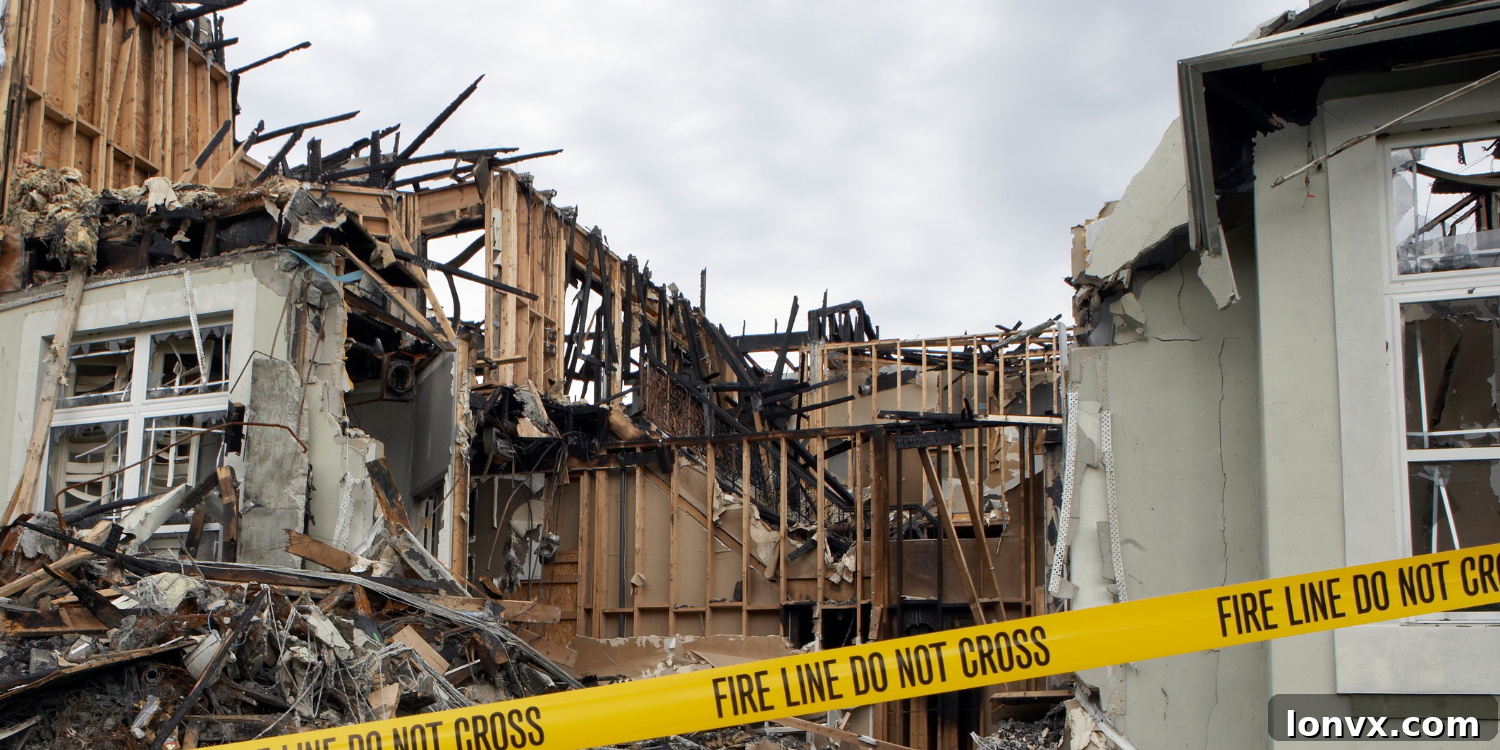
The Escalating Challenge: Catastrophic Loss Events and Their Impact on Canada’s Housing Market Stability and Supply
Catastrophic loss events, driven by an accelerating pace of natural hazards, are presenting unprecedented challenges to housing markets globally, and Canada is no exception. These large-scale disasters not only inflict immediate damage and displacement but also create a complex, cascading ripple effect that disrupts housing supply, drives up costs, and profoundly undermines market stability. As the frequency and severity of these events continue to rise, understanding their multifaceted impact becomes crucial for developing resilient strategies to protect homes, communities, and the broader Canadian economy.
The global landscape is witnessing an alarming increase in the frequency, intensity, and inflation-adjusted cost of catastrophic loss events. When these widespread disasters result in the loss of housing units, they inevitably trigger a surge in demand from displaced families within local and adjacent housing markets. This sudden influx of demand, coupled with the immediate depletion of available housing stock, initiates a chain reaction that significantly impacts housing supply dynamics. Resources that would typically be allocated to building new housing units are diverted towards reconstruction, extensive repairs, or replacement of lost homes, further straining market capacity and leading to measurable, long-term impacts on the overall housing supply pipeline.
Defining Natural Hazards: Understanding the Threat to Canadian Homes
At its core, a natural hazard is an extreme event that occurs naturally within the environment and poses a significant threat, causing harm to human populations and their essential infrastructure, amenities, and, crucially, housing. In Canada, historical data indicates that flooding has been the primary driver of the most expensive housing losses recorded. However, the nation is increasingly grappling with the escalating and diverse impacts of other natural hazards, including destructive wildfires that devastate vast regions, powerful windstorms, prolonged heat waves, severe droughts affecting agriculture and water resources, and damaging hail that causes extensive property damage.
Looking ahead, Canada faces a complex array of emerging threats that are projected to further exacerbate the incidence of catastrophic housing loss across the country. These include rising sea levels and intensified storm surges along its extensive coastlines, the melting of permafrost in northern regions which destabilizes ground and infrastructure, and significant seismic hazards in active geological zones. It is critical to note that catastrophic losses are typically quantified by the insurable losses incurred from these natural events. This narrow definition often overlooks the broader societal costs, such as the extensive expenses associated with emergency management and response operations, the profound and often long-lasting mental health impacts on affected individuals and communities, and the significant long-term societal disruptions. These unmeasured costs represent a substantial hidden burden that extends far beyond mere monetary insurance claims, painting an incomplete picture of the true cost of these disasters.
Profound Impact on Individuals and Communities
The individuals and families directly affected by catastrophic loss events are often the most vulnerable, facing potentially devastating and life-altering consequences. In Canada, a substantial portion of personal wealth for many households is intrinsically tied to the value of their homes. This makes the loss or severe damage to a property not just a structural issue but a significant financial catastrophe for homeowners, often representing their largest asset and primary means of savings.
According to insights from the Canada Mortgage and Housing Corporation (CMHC), periods of high household debt become particularly perilous when a significant negative external economic event occurs. As the CMHC emphatically notes, “High levels of debt do most damage when a significantly negative external economic event happens… It becomes difficult, if not impossible, for many mortgage holders to service their debt.” This inherent financial fragility means that homeowners already burdened with high debt levels can quickly find themselves in an untenable financial position following a disaster, struggling to meet mortgage payments while simultaneously facing immense recovery costs and the expense of temporary accommodation.
Beyond the direct impact on property value, the financial strain of displacement is immense and often underestimated. The Red Cross estimates that the uninsured cost of displacement for a typical family can be as high as $60,000*. This substantial sum, often drawn from rapidly depleted savings or accumulated as new debt, covers immediate disaster recovery expenses and the elevated cost of living while displaced. This figure starkly highlights the severe financial precariousness many families face, even before considering the often-extensive property damage itself.
Furthermore, property values themselves are directly and significantly devalued by catastrophic flood events, as evidenced by “Treading Water”**, a pan-Canadian study on the long-term effects of flooding on property values. This devaluation results in affected homeowners losing substantial equity and missing out on potential market appreciation. The reduction in property value directly diminishes their capacity to leverage that wealth, making it difficult to relocate to lower-risk areas, secure new housing, or access credit. Consequently, the relative buying power of individuals affected by natural hazards is substantially reduced, severely impeding their capacity to financially recover and relocate to safer, more stable environments, thereby trapping them in cycles of vulnerability.
The human toll of managing catastrophic loss extends far beyond financial metrics. Understandably, the experience often leads to immense psychological stress, profound emotional loss, and in many cases, long-term psychological trauma such as Post-Traumatic Stress Disorder (PTSD). These deeply personal costs to individuals and the erosion of community well-being are substantial and long-lasting, yet they are conspicuously absent from the typical valuation of insurable losses reported from catastrophic events. This omission fundamentally underestimates the true societal burden and the profound human suffering caused by these disasters.
Managing Housing Supply: The Multi-Stage Drag of Catastrophic Losses
Catastrophic housing losses create a unique and persistent “drag” on the housing supply, impacting it across three distinct but interconnected stages: the immediate point of incident, the sustained period of housing displaced people, and the eventual, often delayed, return phase. Each stage presents specific challenges that collectively strain the housing market.
Canadian Case Studies: Point of Incident, Displacement, and Return Phases
Glace Bay, N.S.: Approximately 300 homes damaged, with 100 permanently relocated. This event significantly contributed to a long-term housing shortage and altered the community’s demographic landscape.
Fort McMurray, Alta.: Over 2,400 buildings destroyed and 500 damaged during the 2016 wildfires. As of May 2018, two years post-fire, only 20% of the homes destroyed had been rebuilt, indicating a protracted and challenging recovery process and a persistent housing gap.
Merritt, B.C.: In 2021, 400 homes were destroyed by severe flooding, with 52 permanently lost. This resulted in 600 residents being unable to return to their community, highlighting the lasting impact on population density and available housing stock.
Point of Incident: Immediate Loss and Persistent Shortage
The “point of incident” marks the immediate aftermath of a disaster when a home becomes uninhabitable, necessitating either extensive repair or complete reconstruction. From this moment until the “point of return”—which can span two years or, in many cases, even longer—the damaged or destroyed housing unit represents a net loss to the overall housing supply. This immediate reduction translates to a direct “-1 unit” impact on housing availability for each affected home. A critical and often overlooked factor is that not all units are ultimately rebuilt, turning what might seem like a temporary loss into a permanent reduction in the overall housing stock.
For instance, in Merritt, British Columbia, 13% of houses were never rebuilt after the devastating flood due to a variety of reasons, including irreversible damage to the land itself from altered river flows. Similarly, in Fort McMurray, Alberta, some properties remained undeveloped due to persistent land toxicity and environmental remediation challenges following the intense wildfires. On Cape Breton Island, Nova Scotia, coastal lots severely impacted by storm surges were eventually designated as conservation lands. This strategic decision reflected the assessment that the escalating risks associated with sea level rise and future storm surges made reinvestment in rebuilding economically unviable and environmentally irresponsible. These powerful examples underscore how environmental factors, extending far beyond the initial damage, can permanently alter housing landscapes and reduce available residential land.
Housing Displaced People: Surging Demand and Market Strain
Responding effectively to the needs of displaced individuals is a fundamental and immediate component of catastrophic loss management. When residents are forced to evacuate due to disaster, they instantaneously increase market housing demand. Initially, many seek refuge within their personal networks—staying with family and friends—while others secure temporary housing solutions such as hotels or short-term rentals until a more stable interim arrangement can be found. Each displaced household effectively creates a “+1 demand unit” that exerts significant and immediate pressure on both local and adjacent housing markets. This sudden surge in demand, juxtaposed against an already diminished or stagnated supply, almost invariably leads to intense pricing pressure. This makes housing less affordable and accessible for all residents, not just those directly affected by the disaster, creating broader market instability and exacerbating existing housing crises.
Return: Resource Diversion and Delayed Growth
The “return period” is the crucial timeframe spanning from initial displacement to the point when residents can safely and permanently reoccupy their homes. While signifying a vital step towards recovery, this phase paradoxically imposes a significant “–1 unit drag” on new construction capacity. The reason is straightforward: both critical construction materials and skilled labor, which are finite and often scarce resources, are diverted from building new housing to reconstructing damaged properties. This reallocation of build-back resources typically prioritizes disaster recovery efforts, drawing vital capacity away from the new construction marketplace, which is essential for addressing ongoing housing shortages.
This substantial loss of market housing construction resources represents a permanent time-value loss in the creation of new housing units. It means that every unit rebuilt post-disaster comes at the cost of a new unit that could have otherwise been constructed, further exacerbating existing housing shortages and impeding overall housing market growth. The larger and more widespread the catastrophic losses in any given marketplace, the greater the drag on the creation of new housing units, making it increasingly difficult for Canada to meet its ambitious housing targets.
Investing in Resiliency: A Cost-Effective Path to Market Stability and Housing Supply
Catastrophic losses exert an amplifying impact on the fundamental supply and demand imbalance prevalent in many housing markets. This dynamic directly exacerbates existing pricing pressures and reduces housing availability within local communities. Crucially, this disruptive impact is not fleeting; it can persist for an extended period, often two years or longer, from the initial displacement until the full and permanent return of residents. This protracted timeline ensures that the negative effects on market stability, affordability, and accessibility are deeply and broadly felt across the housing ecosystem.
The persistent drag created by catastrophic loss events on Canada’s housing supply will continue to have far-reaching implications, affecting individuals, various levels of government, and the overall stability of the housing market for years to come. Furthermore, direct site-level property devaluation in the aftermath of a catastrophe can stigmatize entire communities. This stigma can lead to lasting negative impacts on local real estate markets, disrupting the entire housing supply chain—from mortgage lenders grappling with reduced collateral and increased risk to homeowners facing diminished equity, reduced mobility, and difficulty securing future financing.
Given Canada’s ambitious goals for creating new housing and addressing pervasive affordability crises, a pivotal shift in perspective is urgently required. Investing in proactive resiliency measures to protect and preserve existing housing from catastrophic loss represents a lower-cost, highly effective, and strategically sound approach to achieve market stability and ensure a robust and sustainable housing supply. This preventative approach contrasts sharply with the far greater financial, social, and emotional costs and complexities of post-disaster recovery and reconstruction, which often prove to be reactive and less efficient.
The stark realities of disrupted new build supply capacity and the amplification of housing insecurity for Canadians who experience catastrophic loss powerfully underscore the urgent importance of proactive residential resiliency investment. By focusing on preventative measures—such as improved and enforced building codes, strategic land-use planning that avoids high-risk areas, the implementation of natural infrastructure solutions (e.g., wetlands for flood mitigation), and robust community preparedness programs—Canada can effectively safeguard its invaluable housing stock. This comprehensive approach will mitigate the devastating impacts of natural hazards, reduce long-term costs, and ultimately build a more stable, equitable, and secure housing future for all its citizens.
* Red Cross 2015-2022 examination of flood response over seven years: CatIQ 2023
** Bakos K., Feltmate B., Chopik C., Evans C., 2022
Enjoying this article?
Get the latest REM articles in your inbox 3x week so you stay up to date on the latest in the Canadian real estate industry
[Sign Up for Newsletter Placeholder]