Unpacking Vancouver’s Housing Crisis: Insights from “No Fixed Address”
Vancouver, a city renowned globally for its breathtaking natural beauty and vibrant urban life, is paradoxically grappling with a housing crisis of unprecedented severity. This escalating challenge has reached a critical juncture, compelling many long-time residents to face an unthinkable reality: being displaced from their homes and communities, often forced into informal living arrangements such as tents or vehicles. It’s a stark illustration of extreme economic disparity, where the average house price soars to an astounding $1.7 million, while the minimum wage languishes at a mere $11 an hour. This glaring imbalance creates an insurmountable barrier for countless individuals and families striving for stable housing in one of the world’s most desirable cities.
The multifaceted causes and profound human impacts of this crisis are meticulously explored in the compelling documentary, Vancouver: No Fixed Address. This pivotal film, which celebrated its world premiere at the prestigious Hot Docs film festival in Toronto, offers a deep dive into the systemic issues underpinning Vancouver’s housing woes. We recently had the opportunity to connect with the Vancouver-based director and producer, Charles Wilkinson, to discuss the motivations behind his latest work and the urgent messages it conveys. His insights shed light on not only the local struggles but also the broader societal trends that resonate far beyond Vancouver’s geographical boundaries.
Director’s Vision: Why This Film Now?
For Charles Wilkinson, the impetus behind creating Vancouver: No Fixed Address stemmed from an undeniable observation within his own city. “In my city, Vancouver, and in many of the cities around the world, inequality is growing at an astounding pace,” Wilkinson articulated. He paints a vivid picture of modern urban landscapes where the stark contrast between extreme wealth and abject poverty is increasingly commonplace. He highlights the jarring sight of homeless individuals on sidewalks, juxtaposed against luxury vehicles costing as much as a family home. In Vancouver, this rapidly widening chasm between the ‘haves’ and ‘have-nots’ is overwhelmingly driven by the real estate market.
Wilkinson explains that while property owners see their wealth accumulate daily, often passively through soaring land values, the predicament of renters deteriorates with equal speed. Beyond these immediate financial pressures, the director points to significant societal shifts, such as a growing demographic of millennials who are increasingly disinclined to take on crippling 30-year mortgages, actively seeking alternative, more sustainable living solutions. Amidst this complex backdrop, a public debate rages, often unfortunately characterized by a disturbing blend of misinformation, intense anger, and, at times, racially charged rhetoric. Wilkinson emphasizes that this isn’t just a niche issue affecting a select few; it is a profound narrative that impacts every single resident of Vancouver, making it a story of paramount importance, one that demands to be told and understood.
Uncovering Deeper Truths: Beyond the Headlines
The media has previously documented many contributing factors to Vancouver’s housing crisis, including a chronic lack of housing supply, governmental inertia, pervasive greed, the influence of foreign ownership, the substantial donations from real estate developers to political parties, loopholes in rent control policies, and the disruptive arrival of short-term rental platforms like Airbnb. However, Wilkinson’s documentary endeavors to uncover even more startling revelations, pushing beyond these commonly cited issues to expose the underlying systemic vulnerabilities.
He reveals facts within the film that are truly “mind-blowing,” such as the shocking statistic that an estimated 90 percent of the condominiums constructed in the city are purchased not by residents seeking homes, but by speculators aiming for profit. This revelation underscores a critical shift in the purpose of housing from fundamental need to investment commodity. Wilkinson contends that the housing crisis itself is merely a symptom of a much larger, more deeply entrenched problem: a decades-long pattern of “business-first” governments prioritizing short-term economic gains at the expense of long-term environmental and social sustainability. He argues that the historical cornerstones of British Columbia’s economy—timber, fish, and minerals—have been largely depleted through unchecked exploitation. With their decline, a vast number of jobs and associated tax revenues have vanished. In this economic void, governments have, perhaps inadvertently, fostered a frantic surge of economic activity centered around real estate speculation. “It’s one of the last things of value that we have to sell,” Wilkinson asserts, “in order to facilitate the continued lavish, unsustainable lifestyle to which we’ve all grown accustomed.” This perspective positions the housing crisis not just as a real estate issue, but as a direct consequence of a broader economic model that has exhausted its natural capital and now turns to urban land as its primary speculative asset.
Faces of the Crisis: Living on the Margins
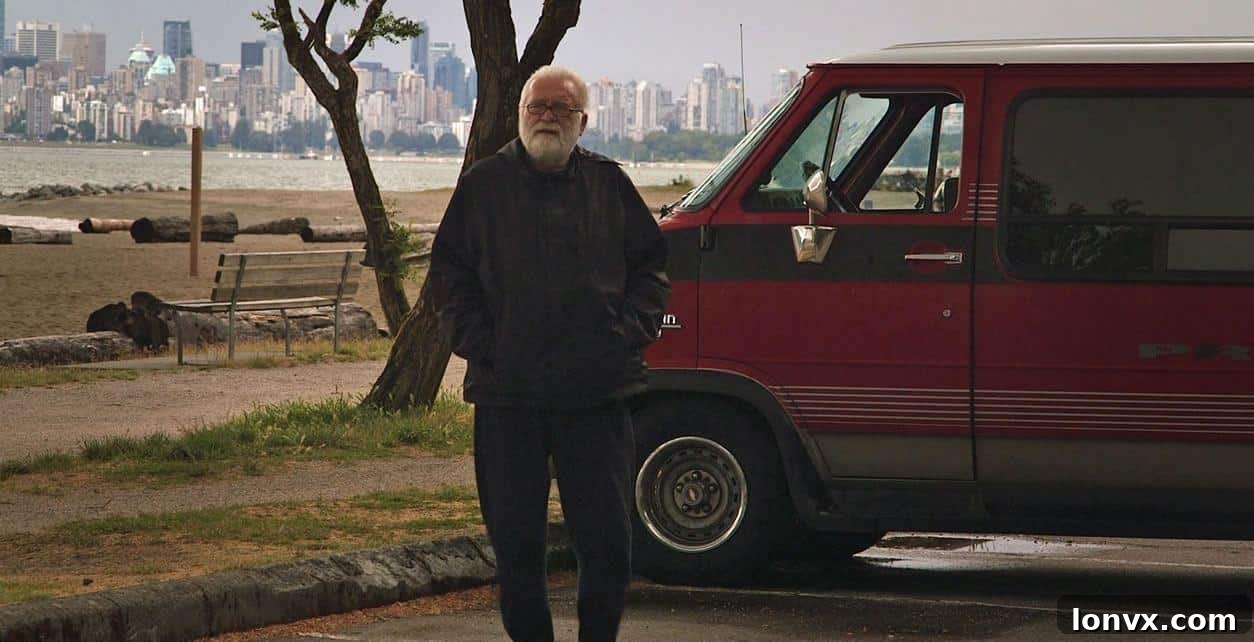
The human face of Vancouver’s housing crisis is poignantly illustrated through the stories of individuals like the pensioner featured in Wilkinson’s film, who has been compelled to live out of his van. This deeply personal narrative raises the question: is this an isolated case, or a reflection of a wider phenomenon? Wilkinson confirms that this pensioner is far from alone, noting, “Yes, hundreds. There are side streets in downtown Vancouver where every second parked vehicle is someone’s abode.” This stark detail paints a grim picture of a city where the line between conventional housing and informal living has blurred, highlighting the severe and often invisible impact of unaffordable housing on vulnerable populations. These individuals, often seniors or those on fixed incomes, represent a growing demographic forced to adapt to extreme circumstances, transforming their vehicles into mobile homes and forming makeshift communities on the city’s periphery.
The Unexpected Toll: Even the Affluent are Affected
One of the most surprising insights Wilkinson shared during a Q&A session after a Hot Docs screening was that the negative repercussions of the housing crisis extend far beyond low-income earners and the homeless. “What we have found really surprising is that almost no one we talked to is happy with the situation,” he revealed. Even those who are financially thriving, whose homes have skyrocketed in assessed value, express deep concern. Their communities, once vibrant and interconnected, are now fragmented by vacant houses—properties bought for investment rather than inhabitation. This creates a sense of social decay, as fewer people are truly rooted in their neighborhoods. Furthermore, Wilkinson points to an insidious long-term effect: “Even the kids of wealthy people can’t afford to have children, that means we don’t get grandchildren.” This poignant observation underscores how the crisis transcends economic strata, affecting fundamental aspects of family planning, community continuity, and generational well-being. The lack of affordable housing and the high cost of living are preventing even the offspring of affluent families from establishing roots and building families in their hometown, signifying a societal disruption that impacts all segments of Vancouver’s population.
Navigating the Real Estate Landscape: Agents and Opinions
The film deliberately features very few real estate agents, with one notable exception being “Condo King” Bob Rennie, a prominent marketer in the Vancouver real estate scene. Wilkinson explains this decision, stating, “No, no agents per se, although we did consult with a number of them. For obvious reasons, few Realtors are in a position to speak freely.” This speaks to the inherent conflicts of interest within the industry, where agents are often pressured to maintain a positive outlook on the market. However, those who spoke with the filmmakers off the record expressed significant “fear and frustration that the runaway market is destroying their communities.” These private sentiments reveal a deep concern among industry insiders who witness firsthand the social erosion caused by escalating property values.
Bob Rennie, a powerful voice in the real estate sector, is included in the documentary, and his perspective, as Wilkinson summarizes, “can be condensed as ‘we need to build more’.” This argument, advocating for increased housing supply as the primary solution, is a frequently heard mantra from developers and some policy makers. However, Wilkinson notes that it is an argument with which “many disagree,” suggesting that a simple increase in supply might not address the core issues of speculation, affordability, or the type of housing truly needed by the city’s residents. The documentary aims to challenge this simplistic narrative by exploring the complexities of demand, ownership, and the speculative forces at play.
The Staggering Reality of Vancouver Property Values
To truly grasp the magnitude of Vancouver’s housing crisis, it is essential to look at the numbers. Wilkinson highlights that Vancouver house prices are unequivocally the highest in the country, painting a stark picture of the market’s trajectory. As of April in the Greater Vancouver area, the average price of detached houses sold stood at a staggering $1.76 million. While this figure represented a slight decrease of 3.2 percent compared to the peak of $1.82 million in February 2016, it still reflects an astronomical barrier to entry for most residents. In stark contrast to the detached home market, other housing segments have continued their relentless ascent. Over the past year, average condo prices in the region have surged by an alarming 13.7 percent, reaching $603,737. Similarly, average townhome prices have risen by 10.8 percent, now standing at $827,893. These figures are not just abstract statistics; they represent an insurmountable financial hurdle in a city where the minimum wage offers a paltry $11 an hour. This severe discrepancy means that an average individual would need to work for decades, saving every single penny, just to afford a down payment, let alone the ongoing mortgage costs, illustrating the profound and widening gap between earning potential and property accessibility.
A Foreboding Outlook: Echoes of Past Booms
Bringing his thoughts to a close, Charles Wilkinson draws a sobering parallel to a previous film he directed, Oil Sands Karaoke, which captured the height of the oil boom when prices soared above $100 a barrel. “In the oil patch, in Ft. Mac,” he recalls, “you couldn’t find a single person who thought it would ever end. Sustained high oil prices were invincible.” This unwavering confidence in perpetual growth eerily mirrors the current sentiment surrounding Vancouver’s real estate market: “Just like today sustained high housing prices are invincible.” However, Wilkinson offers a potent reminder of history’s lessons: “We know what happened to the oil patch.” The eventual collapse of oil prices and the subsequent economic downturn in Alberta serve as a cautionary tale, suggesting that no market, no matter how robust it appears, is truly immune to correction or decline.
Wilkinson emphasizes that Vancouver’s predicament is not unique; it is symptomatic of a larger global phenomenon. “International money, much of it anonymous and of questionable origin, is sloshing around the globe looking for a return,” he explains. This torrent of speculative capital often seeks safe havens or high-yield investments, and Vancouver’s real estate has become a prime target. While some jurisdictions have implemented measures to curb speculation, Vancouver has largely resisted, as “the amount of cash at play is just too tempting.” This short-sighted attraction to easy money, Wilkinson warns, comes with an inevitable, bitter consequence. “Unfortunately, as always happens, at the end of the day the profits will be taken away, the Porsches will rust, the motorboats will sink, the expensive wine will be drunk and the hangover will commence. It’s going to be a doozy.” This powerful metaphor serves as a stark warning, predicting a future economic reckoning for Vancouver, where the current unsustainable boom will give way to a painful and pervasive downturn, affecting everyone caught in its wake.
Through Vancouver: No Fixed Address, Charles Wilkinson not only meticulously documents a crisis but also issues a profound call to action, urging viewers to look beyond the immediate symptoms to the deeper systemic issues and to consider the long-term consequences of unchecked speculation and inequality on the fabric of our communities.