
Canada’s Housing Market: Navigating Rate Cuts, Supply Shortages, and the First-Time Buyer’s Dilemma
Following the Bank of Canada’s decision to implement its third consecutive cut to the overnight lending rate this year, reducing it by another 25 basis points in September to 4.25 per cent, a palpable shift is expected within Canada’s housing market. This pivotal move signals a potential increase in market activity throughout the fall season and into the upcoming year, offering a glimmer of hope to many.
For countless consumers, this gradual reduction in interest rates serves as a reassuring indicator that the era of prohibitive lending costs may be behind us. With further rate cuts anticipated on the horizon, a significant segment of prospective buyers who have been patiently waiting on the sidelines will likely feel sufficiently confident to re-engage with the market. The promise of more favourable borrowing conditions is a powerful motivator, yet a critical question remains: are these incremental rate adjustments truly enough to make a substantial difference in the strained budgets of first-time homebuyers across the nation?
Beyond Borrowing Costs: The Multifaceted Hurdles Facing First-Time Homebuyers
While the recent rate cuts offer some relief, high interest rates represent just one piece of a much larger, more complex puzzle that first-time buyers must contend with. The path to homeownership in Canada is fraught with several significant financial and logistical obstacles, each demanding considerable effort and sacrifice.
The Down Payment Predicament
One of the most formidable challenges is accumulating a sufficient down payment. With soaring rental rates in many urban centers, a substantial portion of a young person’s income is allocated to housing, leaving little room for aggressive savings. The escalating cost of homes means that the required down payment, often 5% or more for insured mortgages, translates into tens of thousands of dollars, a sum that can take years, if not decades, to save, particularly for those entering the job market or carrying student debt. This cycle of high rent hindering down payment savings creates a significant barrier to entry, trapping many aspiring homeowners in a perpetual renting loop.
Navigating the Mortgage Stress Test
Another crucial hurdle is successfully passing the mortgage stress test. Introduced to ensure borrowers can withstand potential future interest rate increases, the stress test requires applicants to qualify at a higher rate than their actual contract rate. While designed to protect borrowers and the financial system from market volatility, its current application effectively reduces the amount of mortgage a buyer can qualify for. For first-time buyers already stretched thin, this additional layer of scrutiny can make the difference between qualifying for their desired property and being priced out of the market entirely, even with slightly lower nominal interest rates.
The Scarcity of Suitable Properties
Even if buyers manage to save a down payment and pass the stress test, the struggle doesn’t end there. Finding an appropriately sized property within a desirable region and, crucially, within their allocated price range, presents its own set of immense difficulties. Canada faces a chronic and worsening housing supply shortage, particularly concerning affordable starter homes and mid-sized properties suitable for young families. This scarcity means that even with increased purchasing power from lower rates, buyers often find themselves competing for a limited pool of suitable homes, driving prices up and negating some of the affordability gains.
To truly empower young families to achieve their dream of homeownership, a fundamental increase in supply is needed. Crucially, this isn’t just about building more homes; it’s about building the *right types* of homes in the *right locations* that cater to the diverse needs and budgets of first-time buyers.
Government Initiatives and Developer Challenges
While there have been government initiatives aimed at alleviating some of these pressures – such as allowing Canadian lenders to offer 30-year amortizations for insured mortgages on new construction homes, which can reduce monthly payments – these measures alone are insufficient. More robust and comprehensive actions are required to genuinely incentivize development and streamline the construction process, making the creation of new homes easier, faster, and more affordable for builders.
The challenges for developers are substantial, particularly in Canada’s most expensive and densely populated markets. High construction costs, including the rising prices of materials and labor, combined with elevated borrowing costs for financing projects, act as major deterrents. Furthermore, complex regulatory frameworks, slow permitting processes, and local opposition (often referred to as NIMBYism) contribute to significant delays and added expenses. Without further strategic intervention and collaborative efforts from all levels of government, the pace of new construction is likely to continue its decline in the coming years, exacerbating the existing supply deficit.
The Persistent Supply-Demand Imbalance: A Core Affordability Crisis
While home prices have shown signs of stability in many markets this year, and declining interest rates are indeed making homeownership marginally more accessible for some buyers who have patiently awaited their moment, we cannot afford to divert attention from the overarching, critical issue: Canada still possesses far too few homes for its rapidly expanding population. The recent rate cuts, while welcome, risk obscuring the fundamental supply-demand imbalance that underpins the nation’s housing affordability crisis.
Canada is currently positioned at a critical juncture: the convergence of declining interest rates and the looming threat of renewed home price appreciation. If market activity gathers momentum in the months ahead, a plausible scenario is that any increased affordability offered by lower borrowing costs will swiftly be eroded and ultimately outweighed by significant price gains. This upward pressure on prices will stem directly from heightened competition among a burgeoning pool of buyers vying for a perpetually limited inventory of homes.
According to a seminal 2023 report by the Canada Mortgage and Housing Corporation (CMHC), Canada urgently needs to construct approximately 3.5 million additional housing units by 2030 merely to restore a semblance of affordability. However, numerous independent experts and economists have since refuted this figure, arguing that with the country’s sustained and robust population growth—driven significantly by immigration—the actual requirement for new homes will be hundreds of thousands, if not millions, higher than CMHC’s projection. This disparity highlights the profound scale of the challenge and underscores the need for an even more ambitious national housing strategy.
For first-time buyers, this creates an agonizing dilemma: should they transact now, seizing the current, albeit fragile, window of opportunity, or should they continue to hold off, gambling on the hope of further rate reductions that may or may not materialize, and risk facing even higher prices later? This decision is fraught with risk, with potential buyers caught between the fear of missing out and the fear of overpaying.
As those sidelined buyers gradually filter back into the market, even a modest increase in demand could act as a catalyst, triggering a sudden and significant uptick in competition. This surge in buyer interest, coupled with constrained supply, would inevitably lead to further home price appreciation. Cautious buyers, recognizing this dynamic, are increasingly likely to enter the market sooner rather than later, aiming to capitalize on a period where competition is relatively low and inventory might still be building. Conversely, those with a higher risk tolerance might opt to prolong their wait, banking on more substantial rate decreases. However, the fundamental truth remains that young Canadians should not be forced into this precarious position of having to “time the market” for such a fundamental need as shelter. The system should provide stable, accessible opportunities, not a high-stakes gamble.
The Enduring Dream: Young Canadians Prioritizing Homeownership
Despite the considerable barriers posed by persistently high home prices and elevated borrowing costs in recent years, the intrinsic desire among young Canadians to own a home remains remarkably strong and unwavering. Homeownership is not merely a financial transaction for this demographic; it represents a deeply ingrained cultural aspiration, a symbol of stability, financial security, and personal achievement that echoes across generations.
A recent and illuminating Royal LePage survey underscored this profound commitment, revealing that a staggering 84 per cent of Canadians belonging to the adult Generation Z and young Millennial cohorts—individuals aged 18 to 38, or born between 1986 and 2006—firmly believe that homeownership constitutes a worthwhile and essential investment. More importantly, they are resolutely committed to achieving this deeply personal and financial goal. For a significant majority, realizing this ambition necessitates making profound and often difficult lifestyle adjustments. This can range from meticulously cutting back on discretionary expenses, such as travel, entertainment, and dining out, to more impactful decisions like postponing major life milestones, including marriage, starting a family, or even pursuing further education.
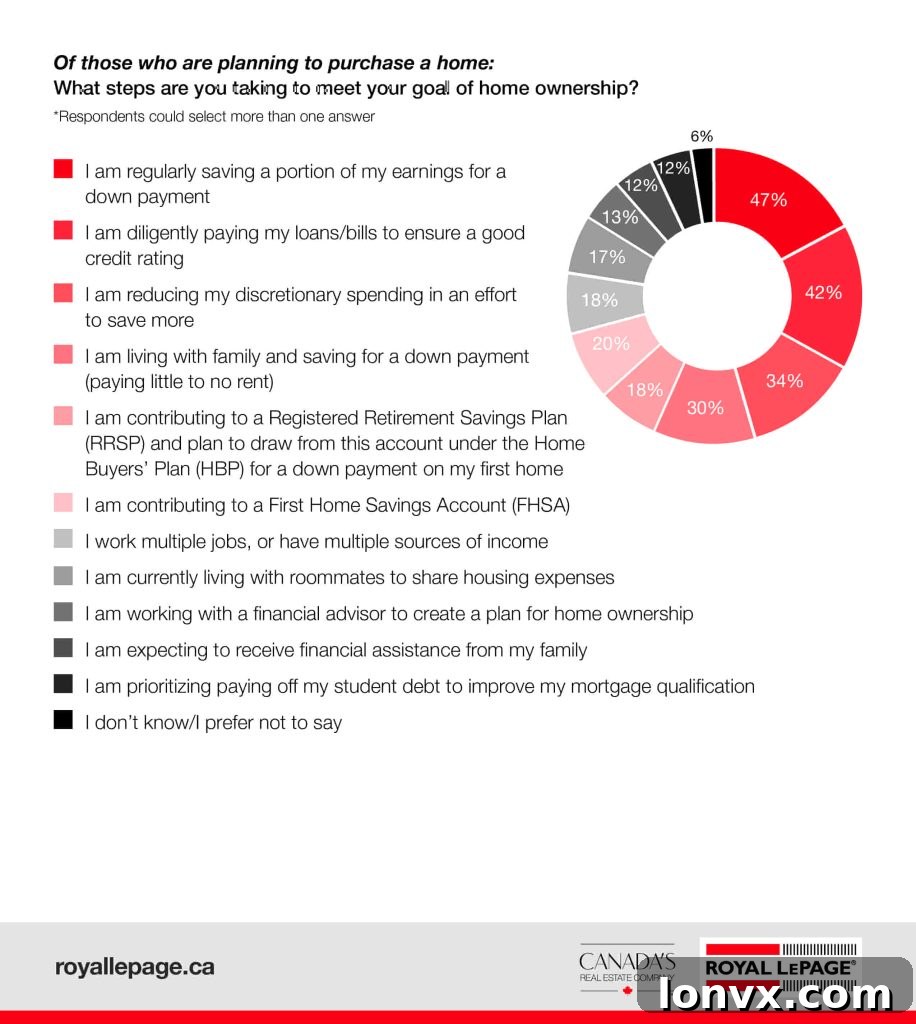
Addressing Canada’s Worsening Housing Supply Shortage: An Immediate Imperative
The sacrifices being made by young Canadians extend beyond mere reductions in discretionary spending. Alarmingly, many are compelled to make financial decisions that carry potential long-term implications for their overall stability and future opportunities. These include delaying crucial educational pursuits, postponing contributions to retirement savings, and deferring other significant investments that are vital for long-term wealth creation and security. This pervasive trend highlights a deeply troubling societal cost associated with the current housing crisis.
If there was ever any lingering doubt, these stark realities should serve as unequivocal proof to policymakers and regulators at every level of government that Canada’s ongoing and worsening housing supply shortage must be addressed immediately and with unprecedented urgency. The severe lack of adequate housing inventory is not merely an economic statistic; it is a profound societal challenge that directly impacts the financial stability, mental well-being, and future potential of an entire generation of young Canadians. Failure to act decisively will not only perpetuate existing inequalities but also undermine the nation’s economic productivity and social cohesion.
Pathways to Resolution: A Multi-faceted Approach
Addressing this multifaceted crisis requires a comprehensive and coordinated national housing strategy that moves beyond piecemeal solutions. Key areas for intervention include:
- Streamlining Permitting and Zoning: Drastically reducing bureaucratic delays and reforming restrictive zoning laws that hinder density and diverse housing types (like duplexes, townhouses, and stacked flats) in urban and suburban areas.
- Incentivizing Development: Offering financial incentives, tax breaks, and reduced fees for builders committed to constructing affordable housing and increasing the overall supply, especially in high-demand areas.
- Investing in Infrastructure: Ensuring that essential infrastructure, such as transit, utilities, and community services, keeps pace with new housing developments, making these projects more viable and desirable.
- Addressing Labor Shortages: Investing in trades training and attracting skilled labor to the construction sector to expedite building processes and control labor costs.
- Promoting Innovative Housing Solutions: Encouraging and facilitating the adoption of modular construction, prefabricated homes, and other innovative building technologies that can accelerate supply and potentially reduce costs.
- Federal-Provincial-Municipal Collaboration: Fostering stronger partnerships across all levels of government to align policies, share best practices, and allocate resources effectively towards common housing goals.
It is abundantly clear that young Canadians possess an undeniable and passionate eagerness to transition from the rental market to the security and equity of homeownership, aspiring to secure their place on the property ladder much like previous generations. While the recent reductions in interest rates undoubtedly offer a degree of relief and can make homeownership marginally more attainable for some first-time buyers, it is crucial to recognize that this is not a panacea. Lower rates are merely one component of a much larger, intricate, and deeply entrenched set of challenges within Canada’s complex real estate economy. A holistic, long-term, and bold strategy focusing on sustainable supply growth, regulatory reform, and comprehensive support for buyers is indispensable to truly unlock the dream of homeownership for all Canadians.
Enjoying this article?
Get the latest insights on the Canadian real estate industry delivered to your inbox 3x a week.