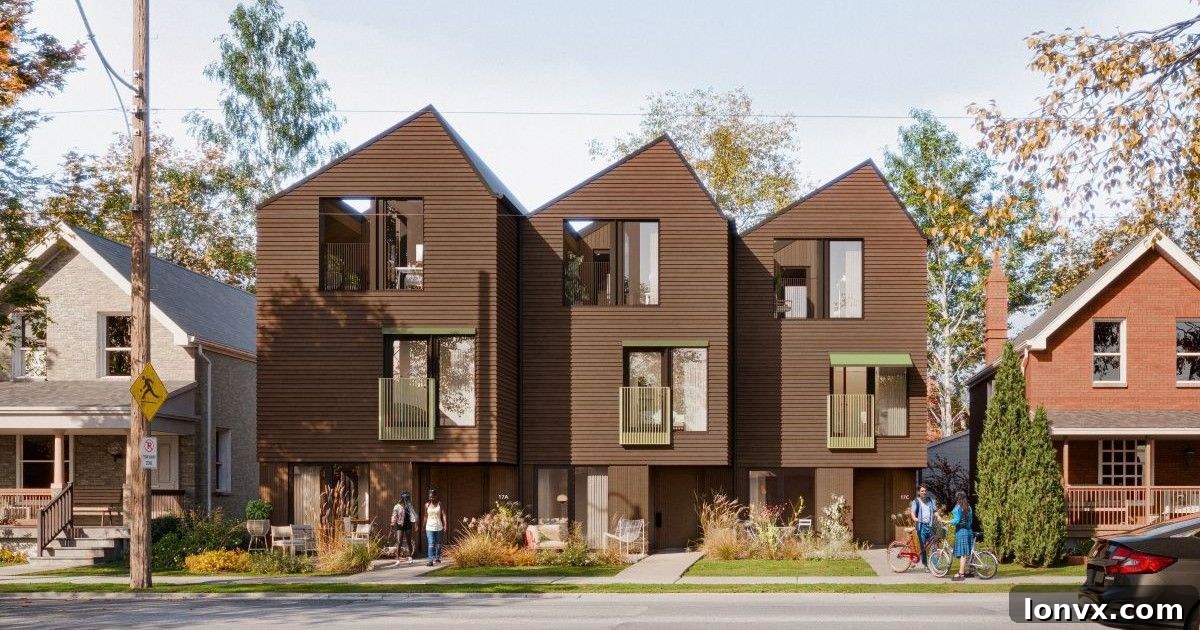
(One of the catalogue designs. Photo credit: CMHC)
Canada’s Housing Revolution: The New Standardized Design Catalogue Set to Transform Construction
In a significant stride towards addressing Canada’s pressing housing crisis, the federal government has unveiled an ambitious initiative: a comprehensive catalogue of standardized housing designs. This innovative program, spearheaded by the Canada Mortgage and Housing Corporation (CMHC), aims to dramatically reduce construction costs and accelerate the pace of home building across the nation. The introduction of this Housing Design Catalogue marks a pivotal moment, offering a tangible solution to the urgent demand for more affordable and accessible homes.
The imperative for such an initiative is clear. Canada has been grappling with an escalating housing affordability crisis, characterized by soaring home prices, rental shortages, and prolonged construction timelines. The complexities of bespoke architectural designs, coupled with varied municipal approval processes, have historically contributed to high costs and delays. By offering a meticulously crafted collection of pre-approved designs, the federal government seeks to dismantle these barriers, streamlining the entire construction pipeline from conception to completion.
A Deep Dive into the Catalogue: What’s Inside?
The newly released catalogue is far more than just a collection of pretty pictures; it’s a robust technical resource designed for practical application. It comprises 50 distinct technical design packages, each meticulously developed to facilitate the construction of various housing types crucial for fostering “gentle density” in Canadian neighbourhoods. These include:
- Rowhouses: Efficient, multi-unit dwellings that maximize land use.
- Fourplexes and Sixplexes: Mid-density housing options that offer flexible living arrangements and cater to diverse household needs.
- Accessory Dwelling Units (ADUs): Standalone or attached units, such as basement apartments or laneway homes, which significantly contribute to housing supply without drastically altering neighborhood character.
Each of these 50 packages is a comprehensive blueprint for construction, providing everything a builder or municipality needs to move forward with confidence and efficiency. Specifically, every package contains:
- Architectural and Engineering Drawings: Detailed schematics ensuring structural integrity, aesthetic appeal, and functional layouts.
- Energy Reporting Templates: Tools to help builders assess and optimize energy performance, aligning with modern sustainability goals.
- Building Performance Reports: Data-driven insights into how each design performs in terms of energy efficiency, durability, and occupant comfort.
- Cost Estimate Summaries: Transparent financial projections, enabling better planning and budgeting for projects.
- Climate Resiliency Guide: Crucial advice and specifications to ensure structures are built to withstand Canada’s diverse and changing climatic conditions, promoting long-term sustainability and safety.
A cornerstone of this initiative is its commitment to regional applicability. The designs, developed by local architects and engineers, are categorized by region to ensure they not only meet but exceed the specific building codes and climatic considerations of each Canadian province. This regional focus ensures that while the designs are standardized, they are also contextually appropriate and readily implementable across the country.
Unlocking Efficiency: The Benefits of Standardization
The strategic deployment of standardized housing designs promises a multitude of benefits that directly address the core challenges of Canada’s housing landscape.
Cost Reduction at Every Stage
One of the primary objectives of the catalogue is to significantly lower the financial burden associated with housing development. By providing pre-engineered and pre-approved designs, developers and builders can bypass substantial upfront costs related to custom architectural and engineering fees. The ability to reuse proven designs fosters economies of scale, potentially leading to better pricing on materials and a more streamlined procurement process. Furthermore, reduced design variations can minimize construction errors and rework, leading to additional cost savings on site.
Accelerating Construction Timelines
Time is a critical factor in housing supply. The catalogue is engineered to drastically cut down the time required from initial concept to groundbreaking. The pre-approval of these designs by municipalities (a key component of the program) means that builders can circumvent lengthy and often unpredictable permitting processes. With blueprints already vetted for compliance and structural integrity, projects can move from planning to execution with unprecedented speed, ultimately getting homes built and occupied faster.
Fostering “Gentle Density” for Sustainable Growth
The designs within the catalogue explicitly support the concept of “gentle density.” This approach advocates for increasing housing units within existing urban footprints without dramatically altering the low-rise character of neighbourhoods. By promoting rowhouses, multiplexes, and ADUs, the initiative enables more efficient use of existing infrastructure, reduces urban sprawl, and creates diverse housing options that cater to various income levels and family structures. This thoughtful urban planning strategy contributes to more vibrant, walkable, and sustainable communities.
Cutting Red Tape and Bureaucracy
The labyrinthine nature of municipal approvals has long been a source of frustration for builders and developers. The CMHC catalogue acts as a powerful tool to simplify this process. By offering designs that are already vetted and recognized as compliant, municipalities can expedite their review processes. This reduction in administrative burden translates into less time spent navigating bureaucracy and more time dedicated to actual construction, benefiting both public and private sectors involved in housing delivery.
Prioritizing Wood-Frame Construction: An Economic and Environmental Choice
A key feature of the catalogue’s designs is their prioritization of wood-frame construction. This choice is multifaceted, offering both economic and environmental advantages. From an economic perspective, wood-frame construction supports Canada’s vital forestry sector and local industries, creating jobs and fostering domestic economic growth. Environmentally, wood is a renewable resource, and wood-frame buildings have a lower carbon footprint compared to structures built with more energy-intensive materials. This commitment aligns with Canada’s broader sustainability goals, offering resilient and eco-friendly housing solutions.
Drawing Inspiration from a Rich History: CMHC’s Legacy
This isn’t CMHC’s first foray into standardized housing designs. The initiative draws profound inspiration from highly successful design catalogues published by CMHC between the 1940s and 1970s. These earlier catalogues played a crucial role in guiding and accelerating post-war housing development, helping to rapidly house a growing population and returning veterans. By revisiting this proven model, the federal government is leveraging historical success while adapting it to meet contemporary challenges, integrating modern building science, energy efficiency standards, and climate resiliency into the new designs.
Pioneering Municipalities: The Path to National Adoption
The success of the Housing Design Catalogue hinges on widespread adoption by municipalities across Canada. As of its launch, 14 forward-thinking municipalities have already committed to pre-reviewing the catalogue’s designs. This crucial step signifies their willingness to streamline approval processes for projects utilizing these standardized plans. These pioneering municipalities include:
- Burnaby, Kelowna, Vancouver (British Columbia)
- Edmonton (Alberta)
- Regina (Saskatchewan)
- Ajax, Kitchener, Mississauga, Ottawa, Toronto (Ontario)
- Saint John (New Brunswick)
- Halifax Regional Municipality (Nova Scotia)
- Whitehorse (Yukon)
- Yellowknife (Northwest Territories)
The involvement of these diverse urban centres, from major metropolitan areas to northern communities, demonstrates the broad applicability and urgent need for this initiative. Their commitment to pre-review will set a precedent and provide valuable feedback, paving the way for easier adoption by other municipalities nationwide.
CMHC officials have confirmed that active discussions are ongoing with many more municipalities, encouraging them to participate in the pre-approval process and expand the program’s reach across the country. This collaborative approach is essential for scaling the catalogue’s impact and ensuring its benefits are realized from coast to coast to coast.
Part of a Grand Vision: Canada’s Broader Housing Strategy
The Housing Design Catalogue is not an isolated initiative; it is an integral component of the federal government’s comprehensive national housing strategy. This overarching strategy is built upon ambitious pillars designed to fundamentally transform Canada’s housing landscape:
- Doubling the Rate of Home Construction: A bold target aimed at addressing the severe housing supply deficit.
- Improving Affordability: Making homes accessible to a wider range of Canadians, ensuring that housing costs do not disproportionately burden households.
- Reducing Homelessness: Implementing programs and initiatives that provide stable housing solutions for vulnerable populations.
By streamlining design and approval processes, the catalogue directly contributes to the goal of doubling the rate of construction, thereby increasing supply and putting downward pressure on prices. This, in turn, enhances affordability and provides more housing options, which are crucial steps in the broader fight against homelessness. The catalogue embodies the government’s commitment to innovative solutions in pursuit of a more equitable and stable housing market for all Canadians.
Challenges, Collaboration, and the Path Forward
While the potential benefits of the Housing Design Catalogue are immense, successful implementation will require ongoing collaboration and adaptation. Challenges may include ensuring that builders become familiar with the new standardized plans, integrating these designs with existing zoning bylaws in various municipalities, and maintaining flexibility for local customization where appropriate. Public perception and acceptance of standardized designs will also be a factor, requiring clear communication about the quality, sustainability, and aesthetic versatility inherent in the catalogue.
The CMHC and the federal government are committed to working closely with provincial and territorial governments, municipalities, industry stakeholders, and the public to navigate these challenges. The catalogue is not a static document but a living framework, poised for updates and expansions based on feedback and evolving housing needs. This iterative approach will ensure its continued relevance and effectiveness.
Conclusion: A New Era for Canadian Housing
The launch of Canada’s new Standardized Housing Design Catalogue represents a significant and proactive step towards building a more affordable, sustainable, and accessible housing future. By embracing efficiency, innovation, and collaboration, this initiative promises to unlock significant potential in the construction sector, cut through bureaucratic hurdles, and ultimately deliver more homes to Canadians faster and more affordably. As the catalogue gains traction and widespread adoption, it is set to usher in a new era of housing development, fundamentally transforming how homes are designed, built, and delivered across the nation.