
The Canadian Housing Market in October 2023: Navigating a Period of Adjustment
The Canadian housing market is undeniably grappling with the full impact of elevated interest rates, a reality that has progressively reshaped buyer behavior and seller expectations throughout 2023. As reported by the Canadian Real Estate Association (CREA), October data reveals a distinct lack of positive momentum in home sales, painting a clear picture of a market in significant transition. This comprehensive analysis delves into the key metrics from October 2023, exploring the intricate dynamics of sales volumes, pricing trends, market balance, and the underlying financial pressures influencing Canadian households.
Sales Figures: A Glimmer Fades Amidst Persistent Declines
Earlier in the year, the Canadian housing market showed a fleeting resurgence, with home sales trending back towards the 10-year moving average, igniting a sense of cautious optimism. However, this glimmer of hope proved short-lived. October 2023 saw a continuation of the steep decline in sales, firmly establishing a pattern of retraction rather than recovery.
While the number of homes sold in October registered a marginal increase of 0.9% compared to the same month last year, this slight year-over-year uptick is overshadowed by a more telling monthly performance. Sales plummeted by a notable 5.6% from September, indicating a loss of momentum as the autumn market progressed. This monthly drop suggests that despite a low base from the previous year’s market slowdown, current conditions are struggling to maintain even a modest pace. Buyers are evidently exercising increased caution, influenced by persistent affordability challenges and the ongoing impact of higher borrowing costs.
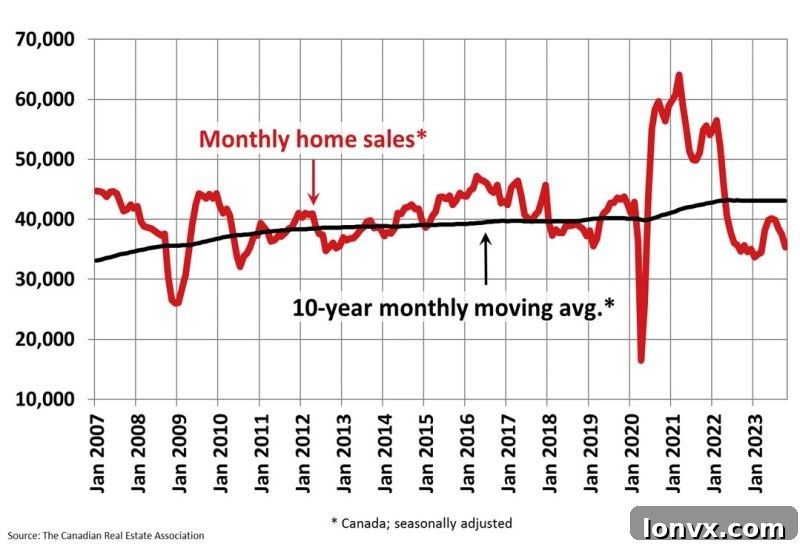
The divergence between the year-over-year and month-over-month figures is crucial. The slight annual gain can be attributed to the comparison with a particularly subdued period in late 2022 when interest rate hikes had just begun to bite hard. The more recent monthly decline, however, offers a clearer insight into the immediate market sentiment, highlighting growing hesitancy among potential homebuyers. This trend signals a sustained period of cooling, moving further away from the heated conditions experienced in previous years.
Price Adjustments Mirror Shifting Market Realities
In parallel with sales volumes, Canadian housing prices are exhibiting a similar dual trend: short-term monthly declines contrasted with modest longer-term yearly gains. The national House Price Index (HPI) experienced a 0.8% decrease from the previous month, extending a downward trajectory observed over several preceding months. This consistent monthly softening underscores the market’s current trajectory towards price adjustments, driven by reduced demand and an increase in available inventory.
Despite these monthly corrections, the HPI remained approximately 1.1% higher than in October 2022. This slight year-over-year increase offers a measure of context, suggesting that while the market is undoubtedly cooling, it has not yet reverted to the severe lows seen during the sharp sell-off period of last year. This indicates a more gradual deceleration rather than a precipitous crash, allowing for a somewhat more orderly market adjustment. However, for many buyers, even these modest annual gains, when combined with significantly higher mortgage rates, continue to present substantial affordability hurdles.
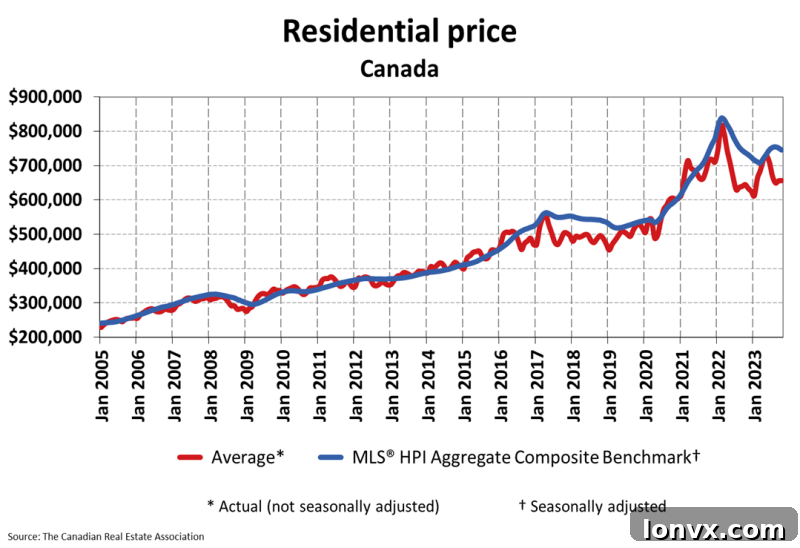
The ongoing struggle between supply and demand, heavily influenced by monetary policy, is reshaping price expectations. Sellers who entered the market with expectations based on peak pandemic pricing are increasingly facing the reality of a more discerning buyer pool and longer listing times. Meanwhile, buyers, while still facing high nominal prices in many regions, are finding that the cost of financing has drastically altered the effective price of homeownership.
The Canadian Market Tilts: Towards Buyer-Friendly Conditions
October 2023 data strongly indicates that the Canadian real estate market is continuing its definitive shift towards a buyer’s market. A critical indicator, the sales-to-new listings ratio, dropped to a 10-year low of 49.5%. This ratio is a vital barometer for market balance: generally, a ratio between 40% and 60% suggests a balanced market, with figures above 60% indicating a seller’s market and below 40% a buyer’s market. The current reading of 49.5% signifies a substantial cooling from earlier periods and places the market firmly on the cusp of, if not already within, buyer-favorable territory.
Furthermore, the national months of inventory, another key measure of market balance, rose to 4.1 months. This is a noticeable increase from the low of 3.1 months recorded in May, underscoring the trend of more homes becoming available relative to the pace of sales. An increase in months of inventory typically indicates that it would take longer to sell off the current stock of available homes at the prevailing sales rate, giving buyers more choice and negotiation power. This expanded inventory offers prospective purchasers greater leverage, enabling them to be more selective and potentially secure better terms.
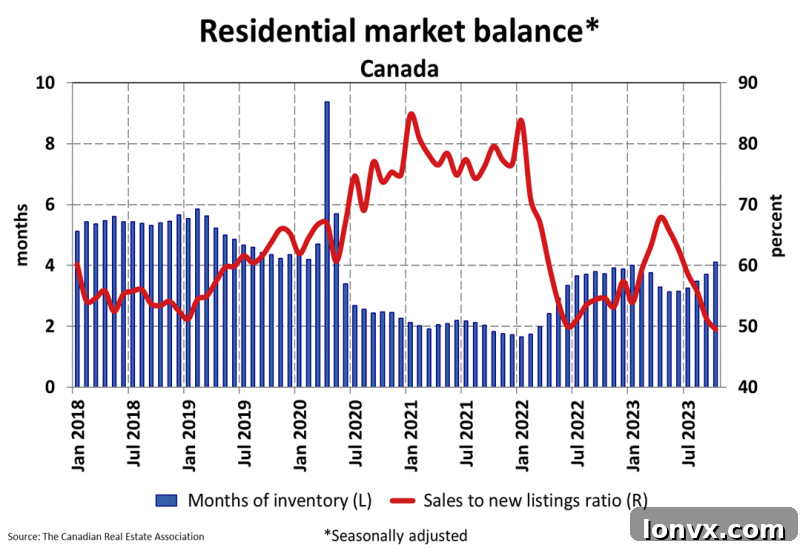
The implications of these shifts are profound for both buyers and sellers. For buyers, the diminished competition and increased choice translate into a less frenetic purchasing environment, potentially allowing for more thorough due diligence and the opportunity to negotiate on price and terms. For sellers, this environment demands a recalibration of expectations, emphasizing strategic pricing and effective marketing to stand out in a market with more inventory and fewer immediate buyers.
Unpacking the Financial Stress on Canadian Households
A significant contributing factor to the current market dynamics is the evident financial stress impacting Canadian households. The trend of new listings continuing to outpace weakening sales strongly suggests that more homeowners are choosing or being compelled to sell their properties. This influx of supply, not entirely met by demand, points towards underlying economic pressures.
Several factors are contributing to this mounting financial strain. The most prominent is the rapid succession of interest rate hikes by the Bank of Canada, which has dramatically increased mortgage costs, particularly for those with variable-rate mortgages or those facing renewal at significantly higher fixed rates. For many homeowners, these elevated carrying costs, coupled with the persistent rise in the overall cost of living due to inflation, are stretching household budgets to their limits. Utilities, groceries, and other essential expenditures have all seen substantial increases, leaving less disposable income and making mortgage payments increasingly burdensome.
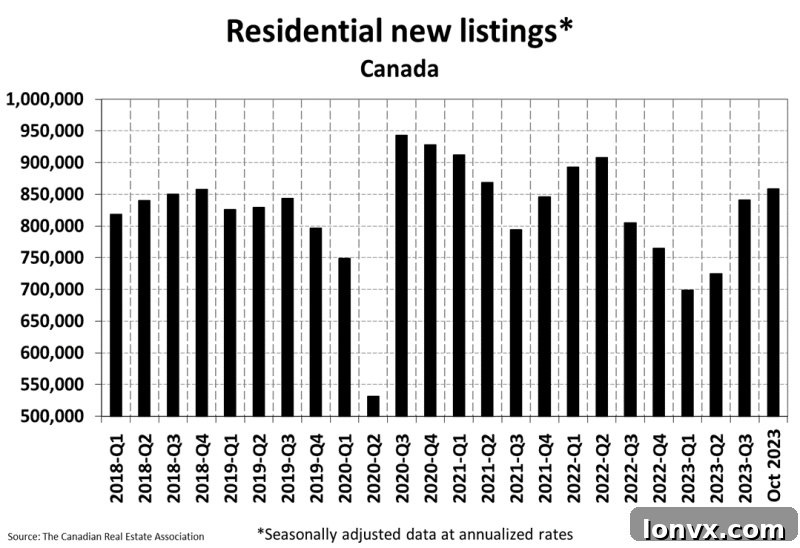
For some, selling their home represents the most viable option to relieve this mounting financial stress. This could include homeowners who purchased during the peak of the market with aggressive financing and are now struggling with renewed mortgage terms, or those who have experienced job loss or reduced income. The decision to sell, in many cases, is likely not an aspirational one but rather a pragmatic response to unsustainable financial obligations. This increase in ‘necessity-driven’ listings further contributes to the expanding inventory, perpetuating the shift towards a buyer’s market and potentially exerting further downward pressure on prices in specific segments or regions.
Regional Variances and the Broader Economic Landscape
While national aggregates provide a crucial overview, it’s important to acknowledge that the Canadian real estate market is a mosaic of diverse regional conditions. Major urban centers, typically characterized by high demand and limited supply, might experience a more gradual cooling compared to suburban or rural areas that saw exponential growth during the pandemic. However, even within bustling metropolitan areas, specific neighborhoods or property types can exhibit unique trends, influenced by local employment rates, population shifts, and inventory levels.
The Bank of Canada’s future monetary policy will remain a pivotal determinant of the market’s trajectory. Signals of a potential pause or even future rate cuts could inject renewed confidence, whereas further hikes would undoubtedly exacerbate existing pressures. Global economic conditions, including inflation rates and geopolitical stability, also play an indirect yet significant role, influencing investor confidence and consumer spending habits within Canada.
Looking ahead, the interplay between continued population growth (driven by immigration) and the ongoing housing supply deficit will shape the long-term outlook. Even with short-term cooling, the fundamental demand for housing in Canada remains robust. The current period of adjustment, while challenging for some, might represent a necessary rebalancing that, over time, could lead to a more sustainable and equitable housing market.
Navigating the Evolving Real Estate Landscape
October 2023 data serves as a stark reminder that the Canadian housing market is in a significant period of recalibration. The era of unchecked growth and intense competition has given way to a more measured environment, one heavily influenced by the cost of borrowing and broader economic uncertainties. For prospective buyers, this evolving landscape presents both challenges and potential opportunities. While financing costs remain high, the increased inventory and softening sales-to-new listings ratio could offer a window for more considered purchases and stronger negotiation power.
Sellers, on the other hand, must approach the market with realistic expectations. Strategic pricing, enhanced property presentation, and patience are likely to be key virtues in a market where buyers have more options. The market’s current trajectory suggests that further adjustments, particularly in price, may be necessary to align with prevailing affordability constraints and buyer sentiment. Ultimately, understanding these dynamic shifts is paramount for anyone looking to navigate the Canadian real estate market effectively in the coming months.
Stay Informed on the Canadian Real Estate Market
Get the latest articles and insights on the Canadian real estate industry delivered directly to your inbox three times a week. Don’t miss out on crucial market updates, expert analysis, and emerging trends that impact your decisions. Stay ahead of the curve with our curated content.