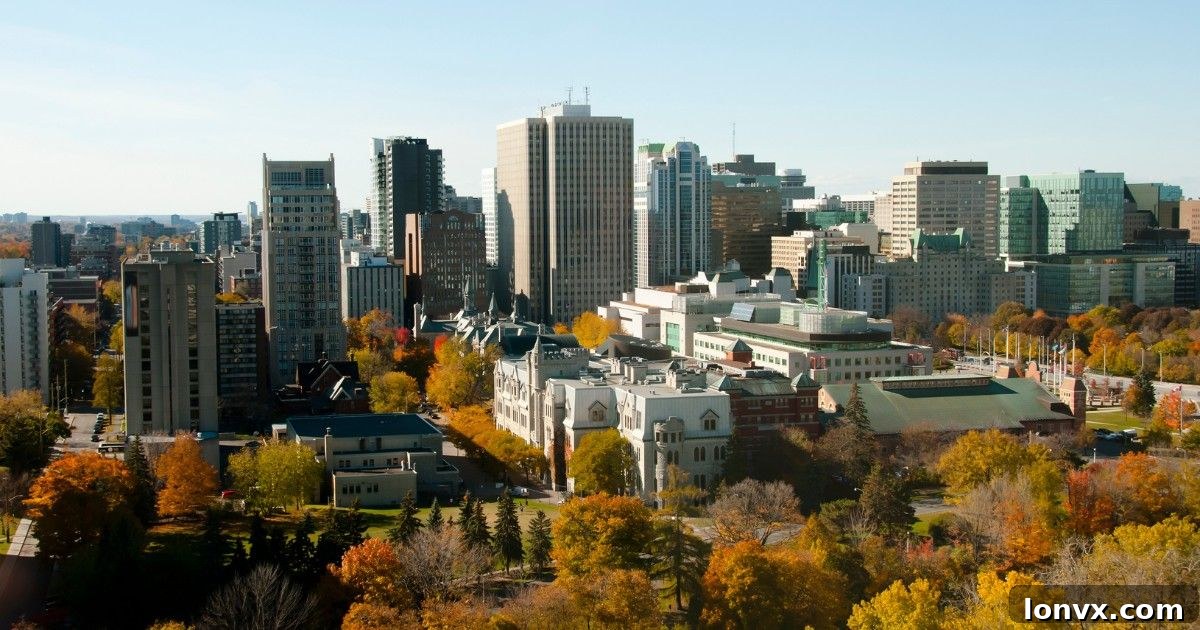
Ottawa’s housing market continues to defy broader national trends, showcasing remarkable resilience even as inventory levels reach a seven-year high. While some major Canadian centers experience significant slowdowns, the nation’s capital is witnessing intense bidding wars in its most coveted areas, a phenomenon experts are calling “microbursts” of activity. This nuanced market dynamic underscores Ottawa’s unique position, offering both opportunities for discerning buyers and strong returns for strategically priced properties.
John King, license partner and broker at Engel & Völkers Ottawa, coined the term “microbursts” to characterize these localized surges of demand. These intense pockets of activity are particularly evident in the city’s most desirable neighborhoods, including Westboro, the Glebe, Old Ottawa South, the Golden Triangle, Wellington Village, and Highland Park. In these areas, a well-positioned home can still attract multiple offers, highlighting the critical role of location and price sensitivity in today’s environment. “If a home is priced right, you can still see multiple offers,” King explains. “It’s really location and price-sensitive, emphasizing the need for expert guidance in navigating these competitive zones.”
Ottawa’s Luxury Market: A Beacon of Growth
The luxury segment of Ottawa’s real estate market is not just holding its own; it’s experiencing a significant upward trend, further cementing the city’s status as a robust market. According to Engel & Völkers’ 2025 mid-year Canadian Luxury Real Estate Market Report, properties valued between $1 million and $1.99 million accounted for an impressive 10.8 percent of all real estate transactions in Ottawa during the first half of the year. This represents a notable increase from 8.6 percent in the corresponding period last year, indicating a growing appetite for high-end properties within the capital.
By the end of June, total residential and condo sales in the $1 million-plus category surged by 31.2 percent year-over-year. This substantial growth firmly positions Ottawa as one of Canada’s most resilient luxury markets, standing strong amidst broader national volatility. Despite this vibrancy, the report also highlights a nuanced shift in buyer behavior. Unlike the frenzied bidding wars that characterized recent years, 2025 has seen buyers adopt a more cautious and meticulous approach. Decision timelines have lengthened, and there’s increased scrutiny of floor plans, renovation needs, and long-term neighborhood trends. This indicates a more informed and strategic luxury buyer, demanding greater value and due diligence.
Supporting these findings, the Ottawa Real Estate Board (OREB) also reported a strong performance in the luxury sector, with sales of homes over $1 million climbing by 31 percent in the first half of 2025 compared to the previous year. These luxury properties now constitute 11 percent of all Ottawa sales, up from nine percent a year prior. However, this robust demand has also been met with a significant increase in supply. Inventory for luxury homes has risen by 60 percent, creating a dynamic environment where, as John King notes, “there is a lot more competition for luxury buyers than ever before.” This surge in inventory means that while demand is high, sellers must ensure their properties are impeccably presented and strategically priced to stand out in a more crowded luxury landscape.
Sellers Still Hold Sway Amidst Market Adjustments
The underlying stability of Ottawa’s housing market, particularly its price resilience, can be attributed to a healthier balance between supply and demand compared to other major Canadian urban centers. Robert Hogue, assistant chief economist at RBC, emphasizes this crucial distinction. “It has seen an increase in supply, but nowhere as much as markets like Toronto or even Vancouver,” Hogue explains. This relative scarcity empowers sellers in Ottawa, allowing them to maintain a stronger negotiating position. “Sellers can still call the shots… that’s why we’re seeing prices remaining relatively resilient in Ottawa compared to other markets,” he adds, highlighting the fundamental market dynamics at play.
Hogue characterizes the recent rise in inventory not as a weakness, but as a healthy market correction following the exceptionally tight and often overheated conditions of the past few years. This adjustment is largely linked to the series of sharp interest rate hikes implemented by the Bank of Canada between 2022 and 2024. These rate increases effectively cooled demand and, consequently, extended selling times as buyers faced higher borrowing costs. While the Bank of Canada’s recent rate cuts have initiated a reversal of this trend, the market is not yet back to its previous state of intense competition. The effects are still being felt, and the market continues to adjust to these significant monetary policy shifts.
Beyond interest rates, the broader economic landscape also plays a pivotal role in shaping Ottawa’s housing market. Hogue points out that Ottawa has historically demonstrated more resilience in its labor market compared to other regions, though it too has experienced some softening recently. Consumer confidence, a critical driver of major purchase decisions like homeownership, has been challenged by a slower Canadian economy and ongoing trade disputes with the U.S. These macroeconomic headwinds introduce an element of caution for both buyers and sellers, influencing everything from investment decisions to long-term housing plans. Despite these challenges, Ottawa’s inherent governmental stability and diversified economy often provide a buffer against more extreme market fluctuations, reinforcing its reputation as a steady and reliable real estate investment.
What Lies Ahead: Ottawa’s Housing Market Outlook for the Remainder of 2025
Looking forward to the latter half of 2025, John King anticipates a continuation of the current market trends, albeit with evolving nuances. He expects “more of the same” regarding strong competition in highly desirable neighborhoods, indicating that the “microbursts” phenomenon is likely to persist in these sought-after enclaves. However, alongside this localized intensity, King also foresees an increase in bargaining power for buyers in other segments of the market, particularly as inventory remains elevated outside of the ultra-competitive zones.
A central theme for success in the upcoming months, according to King, will be the unwavering emphasis on correct pricing. In a market that is becoming increasingly discerning, overpricing a property can lead to stagnation, while competitive and realistic pricing can still spark significant interest and multiple offers. “You’ve got to be priced right, you’ve got to be marketed properly, and you’ve got to be well represented to get the people in there,” King advises. This holistic approach means that sellers must not only set an attractive price but also invest in professional staging, high-quality photography, and compelling marketing strategies to capture buyer attention. Furthermore, engaging an experienced real estate agent who understands the intricate local market dynamics and can effectively negotiate on behalf of their clients will be paramount.
For buyers, this outlook suggests a landscape that demands both patience and preparedness. While competitive bidding may still be a reality in prime areas, increased inventory in broader segments offers more choice and potential for negotiation. Buyers should prioritize getting pre-approved for mortgages, conducting thorough due diligence, and working closely with their agents to identify opportunities and navigate complex offers. Understanding neighborhood-specific trends, school districts, and future development plans will be key to making informed decisions.
The Bank of Canada’s future interest rate decisions will undoubtedly continue to cast a long shadow over the market. Further rate cuts could stimulate demand and improve affordability, while any unexpected rate hikes could introduce new headwinds. Economic growth projections, immigration levels, and evolving work-from-home policies will also play a role in shaping supply and demand dynamics. Ottawa’s robust public sector employment base, coupled with its growing tech industry, is expected to continue providing a stable economic foundation, supporting a relatively healthy housing market even amid broader economic uncertainties.
In conclusion, Ottawa’s housing market remains a compelling study in resilience and localized dynamism. The continued strength of its luxury segment, coupled with the persistent “microbursts” of activity in prime neighborhoods, paints a picture of a market that, while adjusting, is far from retreating. Both buyers and sellers are advised to approach the market with strategic insight, leveraging expert advice and a clear understanding of current trends to achieve their real estate goals in the nation’s capital.