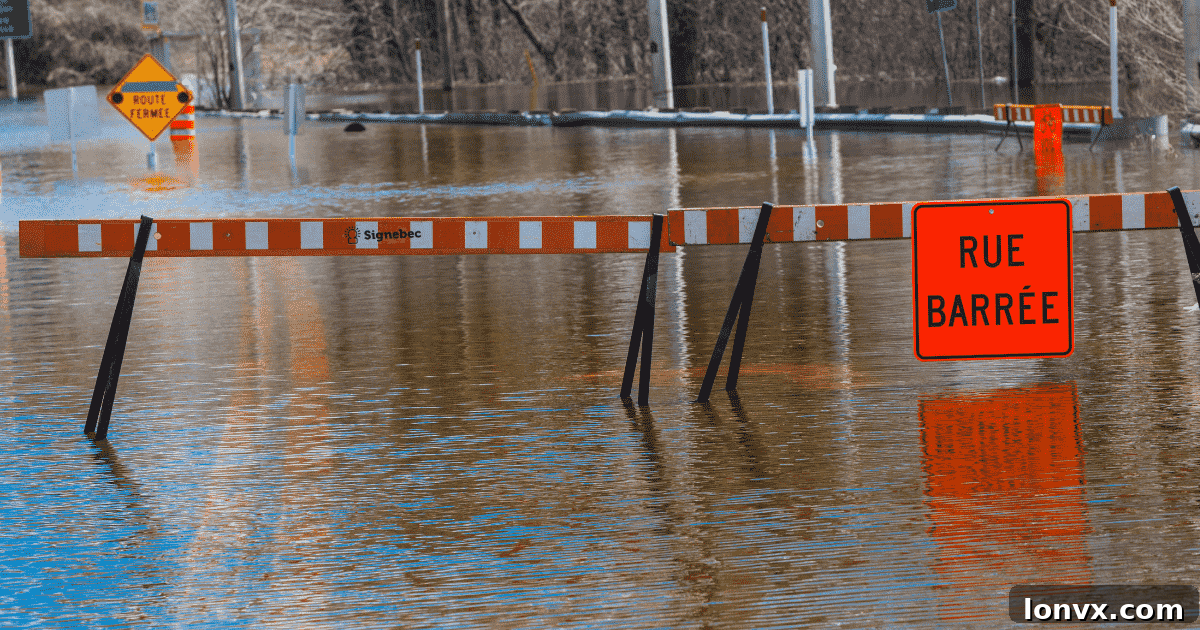
A newly designated provincial flood zone in Quebec has ignited widespread concern and frustration across the province’s real estate sector. This significant regulatory shift, aimed at addressing the escalating impacts of climate change, has inadvertently created a volatile environment for tens of thousands of homeowners and posed formidable challenges to market stability.
The Quebec Professional Association of Real Estate Brokers (QPAREB) has voiced strong apprehension, stating that the updated flood zone mapping now encompasses an estimated 77,000 properties. This reclassification carries profound implications, potentially devaluing homes, complicating insurance acquisition, and creating significant turbulence within the broader real estate market.
“We commend the government’s commitment to implementing long-term strategies to counteract the undeniable effects of climate change,” stated Nathalie Begin, President of QPAREB’s Brokerage Practices Committee. “However, it is absolutely essential that comprehensive mitigation and support measures are developed in parallel. These measures are crucial to assist homeowners adversely affected by this new mapping and to safeguard the stability of our property market. The government can rely on our full cooperation as we navigate these complex issues.”
Growing Frustration and Uncertainty Among Quebec Homeowners
The expansion of the flood zone map has been met with considerable frustration and even anger among Quebec residents. As Begin explains, “Many people in the province are deeply upset because while a flood map existed previously, the new version has incorporated a significantly larger number of properties.” For many affected individuals, their home represents their most substantial asset, often accumulated over decades of hard work and savings.
“For a vast number of people now living within the newly defined flood zones, their property is their singular, most valuable asset,” Begin elaborated. “Many have resided in their homes for extended periods, building their lives and futures there. The immediate challenge arises because this new map is already public. Consequently, insurance providers and mortgage lenders are now using this updated information to determine eligibility for coverage and loans. This has effectively created an instantaneous barrier for homeowners.”
The uncertainty stemming from this regulatory change is palpable. Begin highlighted a critical lack of clear communication from key stakeholders. “We currently have no definitive information regarding the actions that lenders or insurers intend to take,” she noted. “Furthermore, the government has yet to announce any specific programs designed to assist these suddenly vulnerable homeowners.” This ambiguity has led to stalled transactions and immense anxiety, leaving many in limbo.
In certain municipalities, the situation is particularly dire. Begin cited Sainte-Marthe-sur-le-Lac as an example where “almost all properties are now situated within the flood zone. Residents there are understandably distressed, grappling with the profound uncertainty of their financial futures and the value of their homes.” The emotional toll on these communities is immense, as the prospect of losing their most significant investment looms large.
QPAREB’s Strategic Recommendations for Market Stability
Recognizing the urgency of the situation, QPAREB has proactively submitted a detailed brief to the public consultation regarding the modernization of Quebec’s regulatory framework for water environments and flood-prone areas. This comprehensive document underscores the dramatic increase in affected properties, with the new flood zone now encompassing 55,000 more properties than under previous mapping guidelines.
The association is urgently advocating for the government to implement robust mitigation measures. These measures are designed to alleviate the pressure on an already delicate real estate market and to provide tangible support to Quebec homeowners grappling with the repercussions of this updated regulatory framework.
QPAREB’s brief starkly outlines the economic fallout: “This anticipated reduction in property values will undoubtedly have a direct and negative impact on the tax revenues of municipalities, many of which are already confronting serious financial difficulties. This is an issue of paramount importance, particularly when considering that the estimated total value of properties now categorized within flood-prone areas under the new mapping framework is approximately $18.4 billion.” This substantial figure highlights the potential for widespread economic disruption if proactive solutions are not swiftly implemented.
Furthermore, the brief emphasizes the severe challenges property owners will face should they decide to sell. “Owners of homes newly identified as flood-prone could encounter significant obstacles if they wish to divest their properties. Even the mere perception of a flood risk, regardless of whether it’s considered a low-recurrence possibility, can be sufficient to deter potential buyers and significantly depress market interest.” This ‘stigma’ effect can have a lasting impact on property liquidity and value.
To address these pressing concerns, QPAREB has put forth a series of critical recommendations and proposed measures:
- The Quebec government must establish accessible and robust financial assistance programs specifically designed to support affected homeowners in mitigating risks or adapting their properties.
- Financial institutions and insurance providers are urged to publicly and transparently disclose their policies and criteria concerning properties located in these newly designated flood-prone zones. This clarity is vital for both current homeowners and prospective buyers.
- The government should implement a “resilience certification” program, building on suggestions from Professor Michel Leclerc of the Institut national de la recherche scientifique. Such a program would formally recognize and certify properties that have undergone retrofitting or upgrades to enhance their flood protection and resilience. This could potentially help restore confidence and value.
- A comprehensive public awareness campaign is indispensable. This campaign should clearly communicate the practical impacts of the new regulations to all affected residents, offering clear guidance and resources.
A National Perspective on Climate Resiliency and Property Values
The challenges faced in Quebec are not isolated; they reflect a broader national discussion on climate change, extreme weather events, and their profound implications for Canada’s housing market. Pierre Leduc, spokesperson for the Canadian Real Estate Association (CREA), confirmed that CREA is actively collecting data to thoroughly evaluate the extensive impact of labeling properties in high-risk zones across the country. “CREA fully acknowledges that extreme weather events are increasingly occurring nationwide, directly affecting housing markets,” Leduc stated in an email. “We remain steadfast in our support for all initiatives aimed at enhancing the climate resiliency of Canadian homes.”
Leduc highlighted CREA’s collaborative efforts with Natural Resources Canada on “A Homeowner’s Guide to Energy Efficiency.” This guide serves as a crucial resource, informing both buyers and sellers about effective energy-efficient upgrades that can significantly contribute to making homes more resilient against environmental challenges and extreme weather conditions.
Further demonstrating its commitment, CREA is in the advanced stages of developing a specialized “green” designation for realtors. This innovative program will equip real estate professionals with the expertise to better advise their clients on home improvements that not only boost energy efficiency but also enhance a property’s resilience to severe weather events. This initiative aims to integrate climate awareness directly into real estate transactions, empowering informed decisions.
Canada Mortgage and Housing Corporation (CMHC) also acknowledged its role in addressing these critical issues. In an email statement, CMHC confirmed its dedication to “undertaking and supporting research that deepens our collective understanding of challenges such as extreme weather events and facilitates adaptation to future climate-related risks.” This research is vital for developing sound public policy and informed market strategies.
A particularly insightful CMHC study, conducted in partnership with the Intact Centre for Climate Adaptation and the University of Waterloo, meticulously explored the severe impacts of catastrophic flooding on housing markets in various Canadian cities, including Grand Forks, Burlington, Toronto, Ottawa, and Gatineau. The findings of this comprehensive study unequivocally demonstrated several adverse effects on the real estate market:
- A notable 8.2 percent reduction in the final selling price of homes located in affected areas.
- A significant 19.8 percent increase in the average time properties spent on the market before being sold.
- A substantial 44.3 percent reduction in the overall number of houses listed for sale in these flood-impacted regions, indicating a reluctance to sell or a lack of buyer interest.
These empirical findings underscore the tangible and long-lasting financial consequences that catastrophic flooding can impose on homeowners and the broader housing market, reinforcing the urgent need for preventative and adaptive measures.
Addressing Challenges with Real Estate Data on Flooding
A critical obstacle in effectively managing and responding to flood risks in the real estate sector is the pervasive lack of current, credible, and readily accessible data. Alan Tennant, CEO of the Calgary Real Estate Board, highlighted this significant hurdle, drawing parallels to the devastating flood that impacted Calgary in 2013. The experience revealed a pressing need for better information.
“There’s been a tremendous desire within our industry to have comprehensive maps that detail flood zones, but also other vital information such as crime statistics and traffic volumes,” Tennant explained. “These types of data points are incredibly important resources that our members desperately seek because their clients demand them. However, the fundamental challenge lies in securing a credible source that can maintain this information in a consistently current state. Unfortunately, many government agencies simply aren’t equipped to perform this ongoing, dynamic data management.”
Tennant pointed out that a frequently asked question in the wake of the 2013 Calgary flood revolved around its long-term impact on the city’s real estate market. Yet, he lamented, “there really isn’t any great data on that. Most of the time, our understanding is based largely on anecdotal evidence rather than robust, empirical insights.” This reliance on qualitative, often localized, information rather than comprehensive data makes it difficult to make informed policy decisions, accurately assess risk, and advise homeowners effectively.
The absence of reliable data creates a ripple effect: it hinders accurate property valuations, complicates risk assessments for insurers and lenders, and ultimately contributes to the uncertainty and anxiety experienced by homeowners. Without precise and up-to-date flood mapping and historical impact data, the real estate market remains vulnerable to perception, speculation, and the emotional distress of those directly affected. The call for better data infrastructure is not merely an academic exercise; it’s a practical necessity for building a more resilient and transparent housing market in the face of escalating climate challenges.
The situation in Quebec serves as a potent reminder of the complex interplay between environmental policy, property rights, and market dynamics. While the intent to adapt to climate change is laudable, the implementation must be carefully balanced with robust support systems and clear communication to protect homeowners and preserve economic stability. The path forward requires concerted efforts from government, industry stakeholders, and communities to transform challenges into opportunities for resilience and sustainable development.