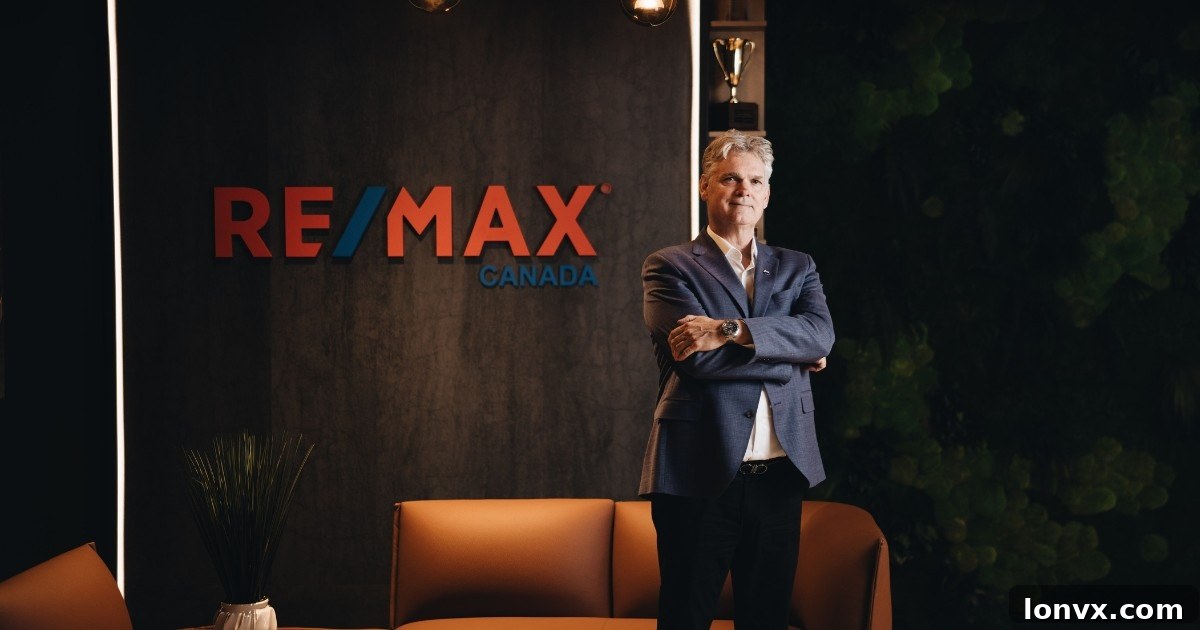
In the vibrant, evolving landscape of Mississauga, Ontario, a young Don Kottick initially charted a course far removed from the corporate world. While many of his peers pursued conventional career paths, Kottick was drawn to the intricacies of human culture, the depths of the psyche, and the ancient history of our planet, immersing himself in studies of anthropology, psychology, and geology. This eclectic academic background, seemingly disparate from the cutthroat world of business, laid an unconventional yet profound foundation for the leader he would become.
Today, decades later, Don Kottick stands as the guiding force behind Re/Max Canada, steering the nation’s most recognized real estate brand through a period of unprecedented change and heightened scrutiny. His journey to the pinnacle of Canadian real estate leadership is a testament to adaptability, a keen eye for opportunity, and an unwavering commitment to innovation.
Kottick’s early life was influenced by parents deeply rooted in academia and engineering, fostering an environment of intellectual curiosity. After graduating from the University of Toronto, a downturn in the oil industry necessitated a pivot in his career aspirations. He briefly explored the tech world as a computer programmer and systems analyst, a period that, unbeknownst to him then, would equip him with invaluable analytical skills and an appreciation for technological solutions. It was during his subsequent role as a business analyst that he truly discovered his calling: the dynamic and people-centric world of real estate. This foundational experience sparked a lifelong dedication to an industry that would eventually lead him to its highest echelons.
His professional odyssey through the real estate sector is marked by a series of influential roles. Kottick dedicated significant periods to Royal LePage, a prominent Canadian real estate franchise. As the millennium turned, he took on the vital position of Vice President of Technology and Business Development at the Toronto Real Estate Board, where he was instrumental in navigating the industry into the digital age. His international experience included working with the real estate division of Trader Classifieds, a Paris-based company, and later serving as CEO of an Ann Arbor, Michigan-based firm specializing in virtual tours – an early embrace of disruptive technology that foreshadowed his future vision.
A significant inflection point in Kottick’s career occurred in 2014 when he ascended to an executive role at Peerage Realty Partners. For five years, he played a crucial part in the company’s aggressive acquisition strategy, which saw it expand its footprint across North America. This period culminated in a pivotal moment: the acquisition of Sotheby’s International Realty Canada. Kottick was subsequently appointed President and CEO, a role he masterfully held for six years, further solidifying his reputation as a strategic leader capable of driving growth and managing complex organizations.
New Beginnings at Re/Max: A Visionary Turn
While at the helm of Sotheby’s International Realty Canada, Kottick received an unexpected call from a headhunter, presenting him with a groundbreaking opportunity: the presidency of Re/Max Canada. Initially, Kottick admits, the proposition did not immediately pique his interest. He was content and successful in his current role, and the idea of moving to another major brand required compelling persuasion.
In an interview with Real Estate Magazine, Kottick revealed what ultimately swayed him: the forward-thinking vision articulated by Erik Carlson, CEO of Re/Max Holdings, Inc. Carlson’s ambitious blueprint for the company, centered on “building the real estate brokerage of the future,” resonated deeply with Kottick’s own progressive outlook. This concept transformed his initial reluctance into genuine intrigue, sparking a realization that Re/Max was the place where he could make a significant impact on the industry’s trajectory. His appointment as the new Re/Max President was officially announced at the end of April, marking a new chapter for both Kottick and the iconic real estate giant.
Building the ‘Brokerage of the Future’
For Don Kottick, leading Re/Max into the future necessitates a profound understanding and proactive response to the seismic shifts occurring within the real estate industry. He firmly believes that the traditional models that have long dominated the sector are rapidly becoming obsolete, demanding a radical rethinking of Re/Max’s core identity and the value it provides. This strategic imperative involves ensuring that Re/Max not only delivers cutting-edge products and services to bolster its franchises but also equips its vast network of agents with the essential tools and support needed to thrive in an increasingly competitive and fluid marketplace.
Embracing Technological Transformation
At the very heart of this ambitious transformation is technology. Kottick is acutely aware of the pervasive and disruptive influence of artificial intelligence (AI), recognizing its power to fundamentally reshape not just society at large, but the real estate sector specifically. To maintain its leadership position, Re/Max must proactively anticipate how AI will integrate into and redefine existing business practices, from lead generation and client communication to property valuation and transaction management. This involves not just adopting new technologies, but truly embracing and integrating them into the company’s operational DNA.
A Visionary Leadership Team
Equally critical to Kottick’s vision is the strength and foresight of the leadership team driving this strategic overhaul. He gives significant credit to Erik Carlson, the Denver-based CEO who joined Re/Max two years prior, for assembling an exceptionally forward-thinking group of industry titans. This includes influential leaders such as Travis Saxton, who joined Re/Max Holdings in January as Executive Vice-President of Strategy, and Chris Lim, appointed Chief Growth Officer in 2025. These individuals, with their diverse expertise and innovative mindsets, are instrumental in charting Re/Max’s course, ensuring that the company remains agile, adaptive, and prepared for the challenges and opportunities of tomorrow.
A Time of Reckoning: Restoring Public Trust in Real Estate
For decades, the Canadian real estate industry has meticulously cultivated an image of trust, with agents positioned as indispensable guides through some of life’s most significant financial decisions. However, 2023 proved to be a watershed year, exposing deep vulnerabilities and severely testing this carefully guarded reputation through two high-profile events that rocked public confidence.
Industry Scandals and Their Fallout
In Ontario, the iPro Realty Ltd. scandal sent shockwaves through the province. It revealed a multi-million-dollar shortfall in the brokerage’s trust account, prompting immediate and decisive action from the Real Estate Council of Ontario. The brokerage’s accounts were frozen, and its branches were abruptly closed, displacing over 2,400 agents across Ontario in August. This incident highlighted critical gaps in regulatory oversight and raised serious questions about financial safeguards within the industry.
Earlier in the year, Calgary’s Re/Max Central found itself embroiled in a media firestorm due to a Ponzi scheme controversy. Former agent Eric Drinkwater was at the center of both criminal and civil court challenges, casting a dark shadow over the brand. Recognizing the severity of the situation and the imperative to protect the integrity of Re/Max, Don Kottick, just months into his new role, made the swift and decisive decision in May to sever ties with Re/Max Central. This action underscored his commitment to upholding the brand’s standards, even in the face of difficult circumstances.
Erosion of Public Faith and Professionalism
Collectively, these crises laid bare not only the vulnerabilities in how the industry is regulated but also the profound fragility of public faith in those entrusted with safeguarding one of the country’s most vital economic sectors. Negative headlines amplified long-standing concerns about professionalism and agent behavior, placing immense pressure on real estate professionals to re-establish and prove their credibility in an increasingly skeptical market. Kottick candidly acknowledges this challenge, labeling it a “defining moment” for the entire industry, demanding introspection and decisive action.
Re/Max’s Distinct Advantage and Responsibility
In this challenging climate, Re/Max, as one of Canada’s most prominent real estate brands, possesses a distinct advantage. Its established name and widespread recognition grant it an inherent level of credibility that newer or less known entities might struggle to achieve. However, Kottick sagely argues that reputation alone is insufficient. To truly rebuild and maintain trust, agents require robust tools, comprehensive resources, and unwavering adherence to professional standards that actively reinforce and justify that public faith. It’s about leveraging the brand’s strength while simultaneously empowering its agents to exemplify trustworthiness and excellence.
The ‘Flight to Quality’ and Shifting Marketing Dynamics
Kottick also observes that the industry is undergoing what he describes as a “flight to quality.” The market is increasingly polarizing, with clients and top-tier agents gravitating towards either discount brokerages or full-service firms that prioritize excellence and offer superior value. Re/Max, he explains, is exceptionally well-positioned to thrive in this latter space. By offering agents a highly supportive brand, innovative technology, and a culture of high performance, Re/Max enables them to elevate their businesses and deliver unparalleled service.
Recent events have also significantly altered marketing tactics within the industry. Kottick identifies an emerging trend where agents are increasingly leaning on the established brokerage name for recognition, rather than solely cultivating a personal brand. He reflects on a recent past phase where individual agent branding was paramount. However, due to negative media attention on “bad actors,” consumers are now actively seeking brands they can inherently trust. “Brand has become important again,” Kottick emphasizes, signaling a return to foundational trust in established institutions.
Forging Ahead: Strategic Steps to Restore Trust
For Don Kottick, the paramount task of rebuilding and sustaining public trust in the real estate sector demands a concerted and collaborative effort. He champions stronger partnerships between industry leaders, professional associations, and regulatory bodies. Crucially, he stresses that while regulation is undeniably vital, it must be developed and informed by those who possess an intimate, practical understanding of the business itself.
Inclusive Policy-Making
Kottick laments that far too often, pivotal decisions are made without meaningful input from the practitioners on the ground, resulting in rules and policies that may not accurately reflect the complex realities of the industry. He draws a compelling analogy: “You wouldn’t build a medical board without doctors at the table,” asserting that real estate should be no different. Ensuring that experienced, on-the-ground professionals are an integral part of the policy-making process is, in his view, absolutely critical to crafting fair, effective, and truly impactful oversight mechanisms.
Resilience and Continuous Improvement
While advocating for robust systems, Kottick also acknowledges the inherent limitations of any framework. “Things happen,” he pragmatically states. “You’re always going to have unavoidable events that you can’t predict.” The key, he argues, is not to strive for an unattainable perfection, but rather to build resilient systems and put in place effective mechanisms that prevent issues from repeating themselves. This involves a commitment to continuous learning, adaptation, and proactive problem-solving to mitigate future risks and bolster consumer confidence.
Navigating Canada’s Housing Market: An Optimistic Outlook
Despite reports of softening conditions in some of Canada’s largest urban centers, such as Toronto and Vancouver, Don Kottick maintains a steadfastly optimistic outlook on the nation’s housing market. His perspective is rooted in a deep understanding of underlying demographic and economic forces that he believes will continue to drive demand and ensure long-term stability.
Chronic Housing Shortage and Immigration Impact
Kottick highlights Canada’s persistent struggle with a chronic housing shortage, a structural imbalance that has plagued the country for decades and is relative to its robust population growth. This fundamental supply-demand mismatch has only intensified in recent years, exacerbated by historic levels of immigration. The influx of new residents, while vital for economic growth, places sustained and significant pressure on both the ownership and rental markets, ensuring a foundational demand that underpins the market.
Favorable Borrowing Conditions and Pent-Up Demand
Beyond demographic pressures, borrowing conditions continue to provide a tailwind for demand. With interest rates remaining at relatively low levels, and the tantalizing possibility of further reductions on the horizon, capital remains accessible for prospective buyers. This affordability factor, combined with the anticipation of market shifts, has created a significant pool of “pent-up buyers” eagerly awaiting the opportune moment to re-enter the market. These buyers, having postponed decisions amidst economic uncertainty, represent a latent demand that Kottick believes will eventually unleash a surge in activity.
Addressing Temporary Hurdles and Unintended Consequences
While acknowledging that uncertainty surrounding tariffs has somewhat slowed market momentum in 2025, Kottick views this as a temporary hurdle. He expresses confidence that the ongoing Canada-U.S. trade dispute will ultimately be resolved, effectively clearing the way for a rebound. “Once this is fixed, the floodgates will open,” he predicts, signaling a strong belief in the market’s underlying resilience.
Kottick also offers a critical perspective on Canada’s foreign buyer ban, arguing that it has inadvertently worsened existing supply constraints. He points out a commonly overlooked aspect: new condominium projects often require upwards of 70 percent of units to be presold before construction can commence. Historically, foreign investors have played a crucial role in providing this essential initial funding. By abruptly cutting off this vital source of capital, the government has, in effect, stalled the development of new housing supply. While the policy may hold political appeal, Kottick contends that “optically, people don’t understand that it actually has an adverse effect” on the very supply it aims to address.
Advice for Thriving in a Challenging Market
Don Kottick firmly believes that challenging markets serve as a crucible, effectively separating the most adept and dedicated agents from the rest. He observes that when market conditions become tough, top performers don’t retreat or slow down; instead, they instinctively ramp up their efforts, recognizing that adversity presents an opportunity for those willing to adapt and work harder.
Back to Fundamentals: Consistency is Key
Rather than succumbing to market anxieties, elite agents consistently return to the core fundamentals of their profession. This involves proactively connecting with their networks, whether past clients, referrals, or community contacts. They engage in consistent outreach, ensuring they remain visible and top-of-mind. These seemingly simple actions—regular communication, sustained effort, and maintaining a strong presence—are the bedrock of success when the market becomes less predictable.
Kottick frequently cites the early days of the pandemic as a prime illustration of this principle. Many agents, faced with unprecedented disruption, perceived it as an enforced break, only to struggle immensely when attempting to restart their businesses later. Conversely, those who remained active—diligently calling clients, systematically “farming” their markets, and meticulously nurturing relationships—were perfectly positioned and ready to capitalize when demand inevitably surged. Their consistent effort during the downturn paid dividends when the market rebounded.
His advice to agents is straightforward yet profound: focus on “the little things.” This includes maintaining regular client touches, ensuring consistent follow-ups, and investing genuine effort in nurturing relationships. These incremental, consistent actions build long-term trust and loyalty, creating a stable foundation for success irrespective of market fluctuations.
A Modern Brand for a Modern Era
Don Kottick’s journey, from a curious young man in Mississauga fascinated by people to a C-suite executive driving strategic transformation, is underpinned by a singular, unwavering principle: credibility first. His diverse academic background in anthropology, psychology, and geology, coupled with extensive experience across technology and real estate leadership, has endowed him with a unique perspective. He understands human behavior, market dynamics, and the critical role technology plays in shaping the future.
As the Canadian real estate market navigates its current complexities and strives to regain its footing, Kottick is confidently betting Re/Max’s future on the quiet, diligent work of delivering better advice, demonstrating steadier leadership, and achieving results that are transparent and measurable. Under his guidance, Re/Max Canada is not just adapting to change; it is actively shaping the future of the industry, prioritizing trust, innovation, and unwavering professional excellence. Kottick’s leadership promises a Re/Max that is not only a recognized brand but a beacon of reliability and forward-thinking progress in the ever-evolving world of real estate.