Navigating Canada’s Evolving Housing Market: Trends, Shifts, and Resilience Amidst Change
The Canadian housing market has always been a dynamic landscape, but recent global events have accelerated profound shifts in buyer preferences and market dynamics. A comprehensive survey conducted by Leger on behalf of Re/Max sheds light on these transformative trends, revealing a significant repositioning of priorities among Canadian homebuyers and sellers. Far from being a market in retreat, Canada’s real estate sector demonstrates remarkable resilience and adaptability, driven by new lifestyle demands and evolving work-life paradigms.
The Great Canadian Relocation: A Shift from Urban Centers
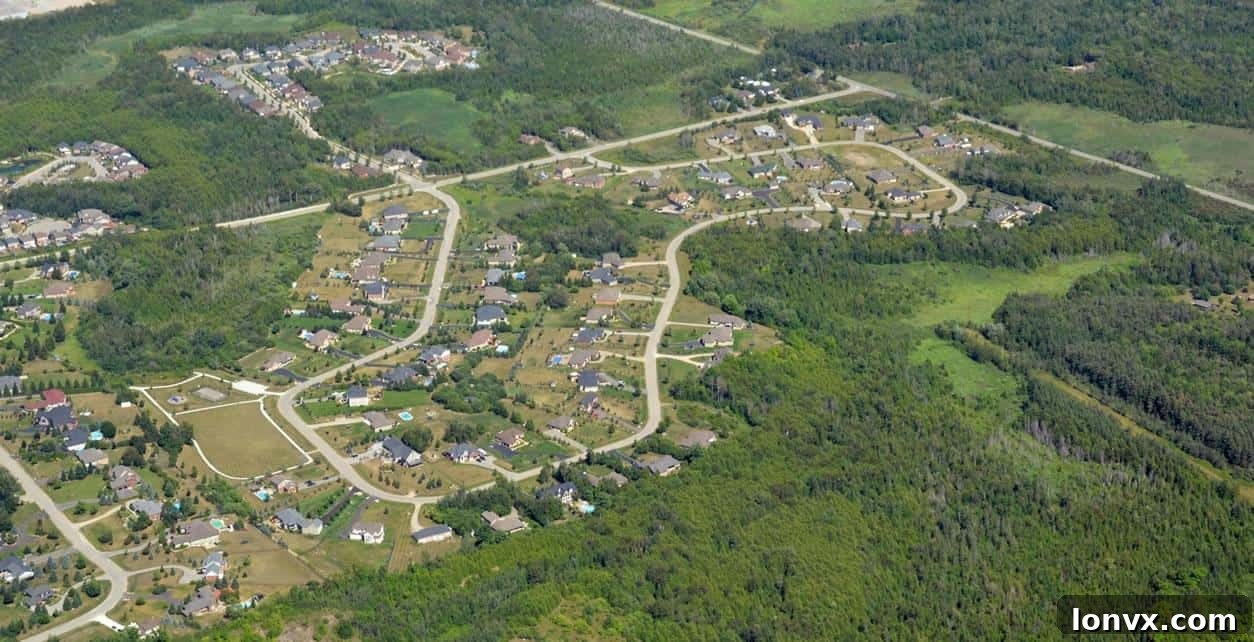
One of the most striking findings from the Re/Max survey is the growing inclination of Canadians to leave bustling urban centers. Approximately one-third of Canadians express a desire to depart large metropolitan areas, favoring the tranquility and space offered by rural or suburban communities. This significant demographic shift is a direct consequence of altered work and life dynamics, primarily the widespread adoption of remote work models.
For many, the daily commute has become a relic of the past, untethering them from the necessity of living close to their workplaces. This newfound freedom has ignited a quest for enhanced quality of life, leading prospective buyers to explore regions historically considered secondary markets. Re/Max brokers and agents have observed this trend firsthand, noting considerable interest from Toronto and Vancouver buyers in picturesque areas such as Muskoka, Peterborough, The Kawarthas in Ontario, and Whistler in British Columbia. These regions offer not just more spacious properties but also unparalleled access to nature, fulfilling a deep-seated desire for balance and well-being.
Evolving Homeowner Desires: Space, Amenities, and Green Living
The pandemic has fundamentally reshaped what Canadians seek in a home. Beyond just a roof over their heads, properties are now viewed as sanctuaries, workspaces, and recreational hubs. The survey highlights a pronounced demand for more personal amenities; a substantial 44 percent of Canadians now prioritize homes equipped with features like private pools, expansive balconies, or large backyards. This isn’t merely a luxury; it’s a response to spending more time at home and the need for dedicated spaces for leisure and relaxation.
Furthermore, the desire for increased living space extends indoors, with 33 percent of Canadians realizing a need for greater square footage within their homes. This often translates to dedicated home offices, larger family rooms, or more adaptable spaces to accommodate diverse activities. The shift also emphasizes a connection to the outdoors and community; 48 percent of Canadians express a desire to live closer to green spaces, valuing parks, trails, and natural environments for mental and physical well-being. Equally important is the practical consideration of safety and access, with another 48 percent stating that proximity to hospitals and clinics is now more crucial than ever before, reflecting heightened health awareness.
A Resilient Market: Canada’s Housing Sector Holds Strong
Despite the initial uncertainty and slowdowns experienced during the early stages of the COVID-19 pandemic, Canada’s real estate market has demonstrated remarkable resilience. Re/Max’s survey of its brokers and agents indicates a strong market outlook for the remainder of 2020, projecting an average residential sale price increase of 4.6 percent across the country.
Elton Ash, Regional EVP for Re/Max of Western Canada, remarked on this robust recovery: “While COVID-19 lockdowns slowed Canada’s housing market at the start of a typically busy spring market, activity bounced back by early summer in many regions, including Vancouver and Toronto. Despite the tragic impacts of the pandemic, our optimism in the strength of Canada’s housing market has always remained, and current market activity further exemplifies this.” He further elaborated on the trend of homebuyers exploring new neighborhoods that align with their evolving lifestyles, leading to increased activity for real estate agents working with buyers from various major cities. This sentiment is widely shared across the Re/Max network, with expectations that Canada’s fall market will experience activity levels reminiscent of a traditional spring season.
Confidence remains high among industry professionals, with 50 percent of Re/Max brokers and agents anticipating a modest increase in average residential sale prices as the year draws to a close. This optimism is rooted in sustained buyer demand and a steady supply of listings, creating a balanced yet competitive environment in many areas.
Regional Market Dynamics: A Mosaic of Recovery and Growth
The national picture of resilience is composed of diverse regional narratives, each reflecting unique local conditions and recovery trajectories.
Western Canada’s Vigorous Rebound
While March and April saw a slowdown in Western Canada’s housing market, activity swiftly resumed by May in key regions such as Kelowna, Saskatoon, and Vancouver. Both May and June recorded sales figures surpassing year-over-year levels, indicating a strong rebound as buyers, whose plans were put on hold, rapidly re-entered the market to make up for lost time. Edmonton’s housing market quickly returned to pre-COVID levels in June, while Saskatoon experienced one of its busiest Junes in recent memory. This vigorous momentum is projected to continue into the fall, with Re/Max brokers and agents in Western Canada estimating a three percent increase in average residential sale prices for the remainder of the year. Encouragingly, potential buyers in the region appear largely undeterred by the prospect of a potential second wave of COVID-19, with steady activity expected to round out 2020.
Ontario’s Dynamic Market Shifts
In Ontario, markets like Niagara, Mississauga, and Kitchener-Waterloo initially experienced significant dips in activity but staged a strong comeback in June. Toronto, a perennial hotbed of real estate, continues to operate as a robust sellers’ market, characterized by low listing inventory and persistent high demand. As buyers and sellers grow more comfortable navigating the market under new norms, an uptick in new listings is anticipated for the fall season. Re/Max brokers project a five percent increase in the average residential sale price in Toronto for the rest of the year. Across the province, market activity is expected to remain steady, with potential for modest price increases of up to six percent in burgeoning regions such as Hamilton, Brampton, and London, reflecting growing interest in communities surrounding the GTA.
Atlantic Canada: Steadfast Growth and Low Inventory
Regions in Atlantic Canada, particularly those with relatively low COVID-19 case counts like Halifax, Charlottetown, and Saint John, experienced a less pronounced decline in activity during March compared to some markets in Ontario and Western Canada. Halifax, in particular, has been grappling with a shortage of listing inventory since before the pandemic, a condition that has been exacerbated and has subsequently driven an uptick in average residential sale prices. Re/Max brokers in the region anticipate a notable 10 percent increase in the average residential sale price in Halifax for the remainder of the year. By May 2020, activity across Atlantic Canada had returned to pre-COVID-19 levels, and much like other sellers’ markets across the country, multiple offer scenarios continue to be a common occurrence in these highly sought-after areas.
The Allure of Recreational and Luxury Properties
The desire for space and a connection to nature has significantly bolstered recreational property markets. Ontario’s Muskoka, Peterborough, and The Kawarthas, along with British Columbia’s Whistler, are all experiencing robust sellers’ market conditions. These regions are characterized by pent-up demand and limited inventory, collectively contributing to a modest yet steady increase in property pricing. Despite the competitive environment, Re/Max brokers forecast that average prices in these popular recreational markets will remain stable through the end of 2020, signaling sustained interest.
Canada’s overall luxury market has also demonstrated remarkable resilience throughout the pandemic. Market conditions in most regions have largely remained consistent with those observed at the beginning of the year. In Vancouver, there has been a notable shift in demand, with increased interest from “move-up” buyers rather than the foreign investors who historically fueled the city’s high-end market prior to COVID-19. This change is largely attributed to international travel restrictions. Toronto’s luxury market experienced a slower spring, as buyers exhibited less urgency to transact during the pandemic’s peak. Both major luxury markets are anticipated to maintain a balanced state for the remainder of the year.
Interestingly, the luxury segment in secondary markets, such as Whistler and Hamilton, is experiencing a slight uptick in activity. High-end buyers in these areas are increasingly seeking more square footage and larger properties situated outside traditional city centers. Whistler, for example, witnessed a remarkable surge in sales for properties up to $3 million this year, marking a 31 percent increase year-over-year. Hamilton has also seen a significant increase in buyer interest, particularly from residents in Brampton and Mississauga looking to relocate to the region in pursuit of more expansive and secluded luxury properties.
Future Outlook and Buyer Confidence
Christopher Alexander, EVP and Regional Director for Re/Max of Ontario-Atlantic Canada, reflected on the unexpected strength of the market: “The classically hot spring market that was pushed to the summer months due to the COVID-19 pandemic created a surprisingly strong market across Canada and across all market segments.” Looking forward, while the potential conclusion of government financial aid programs in September could influence future activity, the enduring combination of pent-up demand and low inventory is expected to keep prices steady and bolster market activity through the end of 2020. “Overall,” Alexander concluded, “we are very confident in the long-term durability of the market.”
The survey also delved into Canadian homeowners’ confidence in the real estate market, revealing a divided but resilient sentiment. Thirty-nine percent of Canadians express the same level of confidence as they did prior to the pandemic, while 37 percent admit to feeling slightly less confident. Crucially, even with the prospect of a second wave of COVID-19 looming, a significant 56 percent of Canadians who are confident in the market are still likely to proceed with their plans to buy or sell property. This indicates a robust underlying confidence and a determination to adapt to evolving circumstances.
Key Priorities for the Modern Canadian Homebuyer:
- Proximity to Green Spaces: 48 percent of Canadians prioritize living closer to parks, nature trails, and other green environments.
- Access to Essential Services: 48 percent emphasize the importance of residing in a community with close proximity to hospitals and clinics.
- Increased Interior Space: 33 percent of Canadians have recognized the need for more square footage within their homes.
- Enhanced Outdoor Amenities: 44 percent desire homes with more outdoor space and personal amenities, such as a balcony or a pool.
In conclusion, the Canadian housing market stands at a fascinating juncture, characterized by both unforeseen challenges and unprecedented opportunities. The desire for space, nature, and community, amplified by new work flexibilities, is fundamentally reshaping where and how Canadians choose to live. With strong regional recoveries and an underlying confidence among both professionals and consumers, the market demonstrates remarkable resilience, poised to navigate the evolving landscape for the foreseeable future.