For real estate professionals who came of age in the 1980s or 1990s, the mere mention of a “mall” conjures vivid memories: the soothing sound of water fountains, the irresistible aroma of cinnamon-sugar pretzels, and the refreshing tang of an Orange Julius. These were more than just shopping centers; they were vibrant social hubs, weekend destinations, and cultural touchstones. However, in today’s rapidly evolving real estate market, the very essence of the “mall” has undergone a dramatic metamorphosis, mirroring the broader shifts across the entire property landscape.
Harp Khela, President of Khela Real Estate Group, headquartered in British Columbia’s thriving Fraser Valley, has been an astute observer of this profound transformation. With over 17 years of experience as a broker, he has witnessed firsthand the dynamic evolution of retail and urban development. Consequently, the recent announcement regarding the sale and planned future development of Strawberry Hill Shopping Centre, a prominent fixture in Surrey’s busy Scott Road corridor, came as no surprise to him. This event encapsulates a significant trend reshaping communities across the region.
The Fraser Valley: A Desirable Destination for Families and Growth
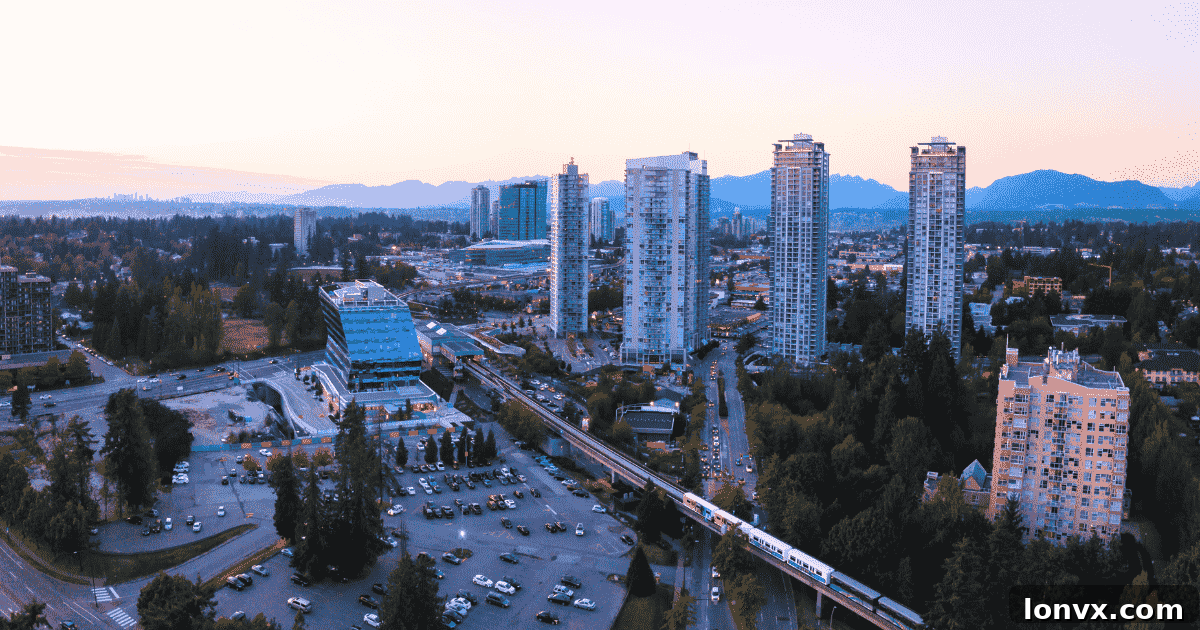
“It wasn’t surprising at all,” Khela remarks, underscoring the predictability of such developments. “All of the large, established shopping centers are experiencing intense densification, especially those strategically located around Skytrain stations and major transit arteries. This is a direct response to burgeoning population needs and shifting urban planning philosophies.” This trend reflects a broader move towards transit-oriented development (TOD), where commercial and residential spaces are integrated around public transport hubs to maximize efficiency and accessibility.
The Fraser Valley, traditionally perceived as a more suburban counterpart situated approximately an hour east of bustling Metro Vancouver, along with its rapidly expanding cities like Surrey, has experienced an unprecedented period of growth over the past decade. This expansion isn’t confined to a single sector; it encompasses a significant surge in housing inventory, robust job creation, and the proliferation of new commercial spaces, including the very shopping centers currently undergoing redevelopment. According to comprehensive data from the City of Surrey, the region boasts an impressive 22 percent employment growth rate over the last ten years, signaling a robust and dynamic economy.
“The job creation here is undeniable and continues to accelerate,” Khela emphasizes. “As a result, the population is increasing at an astonishing rate. This means the Fraser Valley is no longer merely a cheaper alternative for individuals seeking housing; it has fundamentally transformed into a highly desirable place where families actively choose to establish roots, thrive, and raise their children, drawn by its blend of opportunity, community, and quality of life.” This shift highlights a deeper societal trend where economic opportunity and lifestyle choices converge, making the region a magnet for new residents.
Navigating Growth: Balancing Development with Existing Community Infrastructure
Despite the undeniable economic benefits and opportunities brought by rapid growth, the transformation of the Fraser Valley isn’t universally celebrated. While many embrace the dynamism and increased amenities, a segment of the community expresses apprehension and concern.
“Naturally, you have long-term residents, individuals who have resided in certain neighborhoods for decades, often in older, more established communities that are now grappling with intense densification,” Khela explains, highlighting the human element behind urban change. “Developers and urban planners bear a crucial responsibility to address these concerns as they push forward with densification projects and approve new developments. It is imperative that they consider the existing community, implementing strategies such as creating generous buffers or establishing thoughtful setbacks. These measures are essential to ensure that current homeowners can continue to enjoy their properties and maintain their quality of life amidst the surrounding construction and increased population density.” This delicate balance requires innovative planning and proactive communication.
A shining example of how developers are meticulously navigating this complex equilibrium between accommodating necessary growth and preserving the integrity of existing housing infrastructure can be found in The Smith neighborhood, nestled within the highly sought-after Willoughby community in Langley. This area represents a progressive model for urban planning, demonstrating that thoughtful development can coexist harmoniously with established residential areas.
Apcon Group, a visionary real estate developer also deeply rooted in the Fraser Valley, is at the forefront of this new development paradigm. They are meticulously crafting a pioneering mixed-use project aptly named The Hive, strategically situated directly adjacent to the popular Willoughby Town Centre. Willoughby Town Centre itself stands as a testament to a newer generation of retail development. It was deliberately conceived and positioned as a “walkable lifestyle center” – a relatively fresh and innovative concept within the Fraser Valley’s real estate landscape. This design ethos represents a stark and intentional contrast to traditional shopping mall models, such as the aforementioned Strawberry Hill Shopping Centre, which historically rely almost exclusively on extensive vehicle traffic and sprawling parking lots. The Hive, with its emphasis on pedestrian access, community integration, and a diverse mix of uses, signals a decisive shift towards more sustainable, community-centric urban environments.
A Complementary Tenant Mix: Essential Resources for Evolving Communities
Tejvir Atwal, the Managing Director of Apcon Group, has meticulously observed and analyzed the community’s reactions to these extensive development changes. His focus has been particularly sharp concerning the forthcoming updates to the Smith Neighbourhood Plan by the Township of Langley, recognizing their critical impact on the area’s future trajectory.
“The proposed amendment is set to bring about a truly transformative change to the area,” Atwal shares with optimism. “The Township of Langley has demonstrated exceptional foresight and diligence in achieving a remarkable balance between expanding community resources and facilitating essential development. By strategically introducing vital recreational and essential resources to what was previously an underserved community, they are fostering holistic growth. This integrated approach will undoubtedly benefit the community as a whole, ensuring that as it continues to experience significant expansion, its residents are well-supported with the infrastructure and services they need to thrive.” This commitment to community well-being is a hallmark of responsible development.
Balraj Rai, also an integral part of the Apcon Group leadership, offers her nuanced perspective, acknowledging the intricacies involved. “It genuinely feels like a very delicate dance,” she admits, perfectly encapsulating the careful orchestration required in balancing diverse stakeholder interests and community needs.
Both Rai and Atwal possess a deep and intuitive understanding of the paramount importance of curating a tenant mix that is inherently complementary, rather than competitively redundant, with the existing infrastructure and offerings of Willoughby Town Centre. They recognize that successful development hinges on synergy. Their shared philosophy underscores that proactive, transparent communication among all stakeholders – even when their immediate interests may diverge – ultimately serves the greater good, fostering a robust, vibrant, and cohesive neighborhood that benefits everyone involved.
A Two-Fold Retail Approach for Modern Urban Centers
“I believe the approach to retail development, especially in these burgeoning urban centers, is fundamentally two-fold,” Rai elaborates, providing a detailed framework for their strategy. “Firstly, it’s absolutely crucial to ensure that each category of service within the development, whether it’s retail, dining, or essential services, has sufficient and appropriate coverage. However, this coverage must be meticulously balanced across all categories, always taking into careful consideration the existing businesses and services already established in the surrounding area. The goal is not to saturate but to augment and diversify.” This thoughtful integration prevents unnecessary competition and supports local businesses.
She continues, outlining the second critical component: “Secondly, and based extensively on my observations and experience, the presence of a strong anchor tenant is profoundly important. For your anchor tenant, the ideal choice is typically an established company, one that is widely recognized and possesses a strong market presence. This kind of reputable anchor tenant acts as a powerful magnet, making the entire development highly attractive to a wide array of other businesses and companies, drawing them in and fostering a vibrant commercial ecosystem.” This strategic placement generates crucial foot traffic and establishes the development’s credibility.
Janice Barroso, a long-time resident of the Smith neighborhood, personifies the benefits of this strategic planning. She enjoys the convenience of living within easy walking distance of Willoughby Town Centre, a proximity that significantly enhances her daily life. The anchor tenant in her local center is a well-stocked grocery store, which has proven to be an invaluable resource for Barroso and her daughter.
“I would unequivocally say that the most important amenity there, without a doubt, is the grocery store,” she shares enthusiastically, highlighting its essential role. “Especially during challenging weather conditions, like a heavy snowstorm or unexpected disruptions, the sheer convenience is immense. You eliminate the need to drive, you don’t have to worry about transportation, you can simply walk across the street to get what you need. It’s a game-changer for daily errands and provides immense peace of mind.” Her testimony powerfully illustrates the practical, everyday advantages of well-planned, walkable urban developments.
Addressing New Infrastructure Demands from Commercial and Residential Expansion
The continuous and strategic integration of new commercial establishments and residential units within the Smith neighborhood, while undeniably beneficial for community growth and convenience, inherently generates a new set of logistical and infrastructural demands. These changes are a natural byproduct of increased density and activity.
Even with a robust and deliberate emphasis on fostering a pedestrian-oriented neighborhood – a design philosophy aimed at encouraging walking and reducing reliance on vehicles – the Township of Langley recognizes that it must proactively address a variety of vehicular issues, particularly along the bustling 208th Street corridor. This includes the imperative addition of new, strategically placed traffic lights to manage increased flow, as well as the thoughtful creation of new local roads designed to improve connectivity and alleviate congestion. These infrastructural upgrades are crucial to maintaining accessibility and safety as the community continues to grow and evolve.
The Future Horizon: Sustained Demand and Shifting Retail Paradigms
With the significant sale of Strawberry Hill Shopping Centre, coupled with the accelerating emergence of innovative retail models like Willoughby Town Centre, the trajectory for other traditional shopping centers across the Fraser Valley remains fluid and subject to ongoing market dynamics. While the specific future of each individual property may be uncertain, the broader trends within the real estate market offer compelling insights. Harp Khela, with his deep understanding of market forces, firmly believes that the underlying demand for land and the pressure to sell existing properties will continue on a pronounced upward trend.
“What we’re observing with these large shopping centers, particularly in the current economic climate characterized by high interest rates, is an unprecedented level of pressure on owners to sell,” he explains, detailing the confluence of factors at play. “Despite these pressures, capitalization rates (cap rates) for these properties remain relatively low. This sustained low cap rate is largely attributable to the inherent and often appreciating value of the underlying land itself, which continues to command strong interest from developers seeking prime locations for future projects. This dynamic creates a powerful incentive for owners to capitalize on their assets, leading to further transformations across the retail and residential landscape.” The interplay of land value, interest rates, and development potential paints a clear picture of an active and evolving real estate market in the Fraser Valley.