
Navigating Canada’s Mortgage Landscape: Understanding Rising Rates and Renewal Jitters
The Canadian housing market has experienced significant turbulence over the past year, primarily driven by an aggressive monetary policy from the Bank of Canada. Since March of last year, the central bank has implemented an unprecedented nine interest rate hikes, transforming the financial landscape for millions of homeowners. These adjustments have seen the overnight rate target swing dramatically from historic lows to a two-decade high, consequently escalating monthly mortgage expenses to unsustainable levels for a considerable portion of Canadian mortgage holders.
In an effort to gauge the sentiment of Canadians amidst this evolving financial climate, Royal LePage commissioned a comprehensive survey. The findings painted a clear picture: a staggering 74% of mortgagees whose lending agreements are scheduled for renewal within the next 18 months reported feeling profound concern regarding the prospect of higher interest rates. This widespread anxiety has naturally led many Canadians to actively seek strategies for cost reduction, including exploring modifications to their existing mortgage products or extending their amortization periods to alleviate the immediate financial pressure.
In a recent development that offered a glimmer of hope, the Bank of Canada announced its decision to hold its overnight rate target at 5 per cent. While this pause provides a temporary reprieve, the overarching sentiment remains cautious, as homeowners brace for the realities of upcoming renewals in a significantly altered rate environment.
Key Insights from the Royal LePage Survey on Mortgage Renewals
The study by Royal LePage sheds critical light on the scale of the impending mortgage renewal wave. It revealed that over 30 per cent of all Canadian mortgage holders—a substantial 3.4 million individuals—have lending agreements set to renew by March 2025. What’s more, over half of this significant group will face their renewal within the next 12 months, highlighting the immediate financial challenges confronting a large segment of the population.
The survey also provided a crucial breakdown of mortgage types across the country: approximately 75 per cent of Canadian mortgagees are on a fixed rate, enjoying predictable payments for a set term, while the remaining 20 per cent hold variable-rate mortgages, directly exposed to fluctuations in the Bank of Canada’s key lending rate. This distinction is vital when assessing the immediate and long-term impacts of the recent rate hikes.
Disproportionate Impact on Variable and Hybrid Mortgage Holders
While fixed-rate holders have, until their renewal, been shielded from the immediate increases, variable and hybrid mortgage holders have felt the full force of the Bank of Canada’s aggressive policy. Among this group, particularly those who are apprehensive about their upcoming renewal, a significant 40 per cent indicated their intention to switch to a fixed-rate mortgage. This strategic shift reflects a strong desire for stability and predictability in their monthly expenses, even if it means locking in at a higher rate than previously enjoyed.
Karen Yolevski, Chief Operating Officer of Royal LePage Real Estate Services Ltd., underscored the prevailing challenge: “Many Canadians today are facing a mortgage renewal at a significantly higher rate than they’re used to, and this will continue to be the case in the coming years as more loans mature.” She further emphasized the inherent financial prudence of Canadians, stating, “Canadians generally tend to err on the side of caution when it comes to their finances, and we believe this has served them well. Our financial institutions are well positioned to support consumers through one of the largest and most important purchases of their life.” This sentiment highlights both the gravity of the situation and the systemic support available to help homeowners navigate these turbulent waters.
The Pervasive Reach of the Trigger Rate
One of the most pressing concerns for variable-rate mortgage holders is the concept of a “trigger rate.” The Royal LePage study found that a staggering 64 per cent of variable or hybrid mortgage holders reported that their mortgage payment has already reached or exceeded its trigger rate. This threshold, when crossed due to rising interest rates, means that a larger portion of their regular payment goes towards interest, potentially leading to increased monthly costs or, in some cases, negatively amortizing the loan—where the principal balance actually increases.
Yolevski elaborated on the dramatic changes experienced by this segment: “Some Canadians with variable-rate mortgages have seen their monthly payments double or even triple over the last year and a half, due to the Bank of Canada’s aggressive interest rate hike campaign aimed at tamping down high inflation. Those locked into a fixed-rate mortgage, which most are, have been protected from those increases, at least for a short time.” This stark comparison underscores the immediate financial relief fixed-rate holders have experienced, a protection that will inevitably expire at their renewal.
Looking ahead, the landscape for all mortgage holders is set to change. “While the central bank’s key lending rate is expected to come down in the medium term, the likelihood that we will return to rock-bottom rates of less than one per cent is very low,” Yolevski cautioned. “Upon renewal, fixed-rate mortgage holders will be faced with a new reality—higher monthly payments.” This means that while variable-rate holders have borne the brunt of recent hikes, fixed-rate holders are merely postponing this financial adjustment until their renewal date, making proactive planning essential for everyone.
The financial strain is palpable across the board. When asked if their household had felt financial pressure due to increased interest rates and if they had subsequently reduced spending or dipped into savings, a vast majority—86 per cent—of variable or hybrid mortgage holders confirmed these actions. This illustrates the profound impact these rate increases have had on household budgets and discretionary spending, potentially slowing economic growth in other sectors.
Beyond the immediate financial burden, these shifts impact consumer confidence and long-term financial planning. Homeowners are increasingly scrutinizing every line of their budget, seeking efficiencies, and reconsidering major purchases or investments. The psychological toll of uncertainty in one’s largest financial commitment is not insignificant, contributing to a broader sense of caution in the Canadian economy.
Strategies for Canadian Homeowners in a High-Rate Environment
Given the current and projected mortgage landscape, proactive engagement and informed decision-making are paramount for Canadian homeowners. Whether you are a fixed-rate holder nearing renewal or a variable-rate holder grappling with rising payments, several strategies can help mitigate the impact of higher interest rates.
1. Understand Your Mortgage and Future Options
For those with renewals on the horizon, starting the conversation with your current lender well in advance—ideally 4-6 months out—is crucial. Explore all available options: renewing with your current lender, transferring to a new one, or working with a mortgage broker to find the most competitive rates and terms. Understanding the difference between a fixed-rate mortgage and a variable-rate mortgage, and which best suits your risk tolerance and financial goals, is more important now than ever.
2. Consider Amortization Period Adjustments
Extending your amortization period, while increasing the total interest paid over the life of the loan, can significantly lower your monthly payments, offering immediate relief. This option is particularly attractive for those facing substantial payment shocks. However, it’s vital to weigh the short-term benefit against the long-term cost. Many lenders offer flexible options, allowing you to revert to a shorter amortization once interest rates become more favorable or your financial situation improves.
3. Explore Lump-Sum Payments
If financially feasible, making lump-sum payments can be a powerful tool to reduce your principal balance and, consequently, the amount of interest you pay over time. Even modest additional payments can accelerate your mortgage payoff and provide a buffer against future rate increases, especially for variable-rate holders who might be at or near their trigger rate.
4. Budgeting and Debt Management
The current environment necessitates meticulous budgeting. Identify areas where spending can be reduced and direct those savings towards your mortgage or building an emergency fund. Consolidating high-interest debt, if applicable, can also free up cash flow that can then be applied to mortgage payments, reducing overall financial strain. The 86% of variable-rate holders who reported cutting spending and using savings are a testament to the effectiveness and necessity of these measures.
5. Seek Professional Financial Advice
Navigating complex financial decisions, especially those involving your largest asset, benefits immensely from expert guidance. A qualified financial advisor or mortgage specialist can provide personalized advice tailored to your specific situation, helping you understand the implications of different choices and formulate a robust financial plan for the future. They can offer insights into market trends and product options that might not be immediately apparent.
The recent pause in interest rate hikes by the Bank of Canada might offer a moment of relief, but it does not signal a return to the ultra-low rates of the past. Canadian homeowners must remain vigilant and proactive. The insights from the Royal LePage survey underscore the widespread concern and the imperative for strategic planning as millions face their mortgage renewal in the coming months and years. By understanding the options, preparing for potential impacts, and seeking expert advice, homeowners can better position themselves to navigate this challenging yet manageable financial landscape.
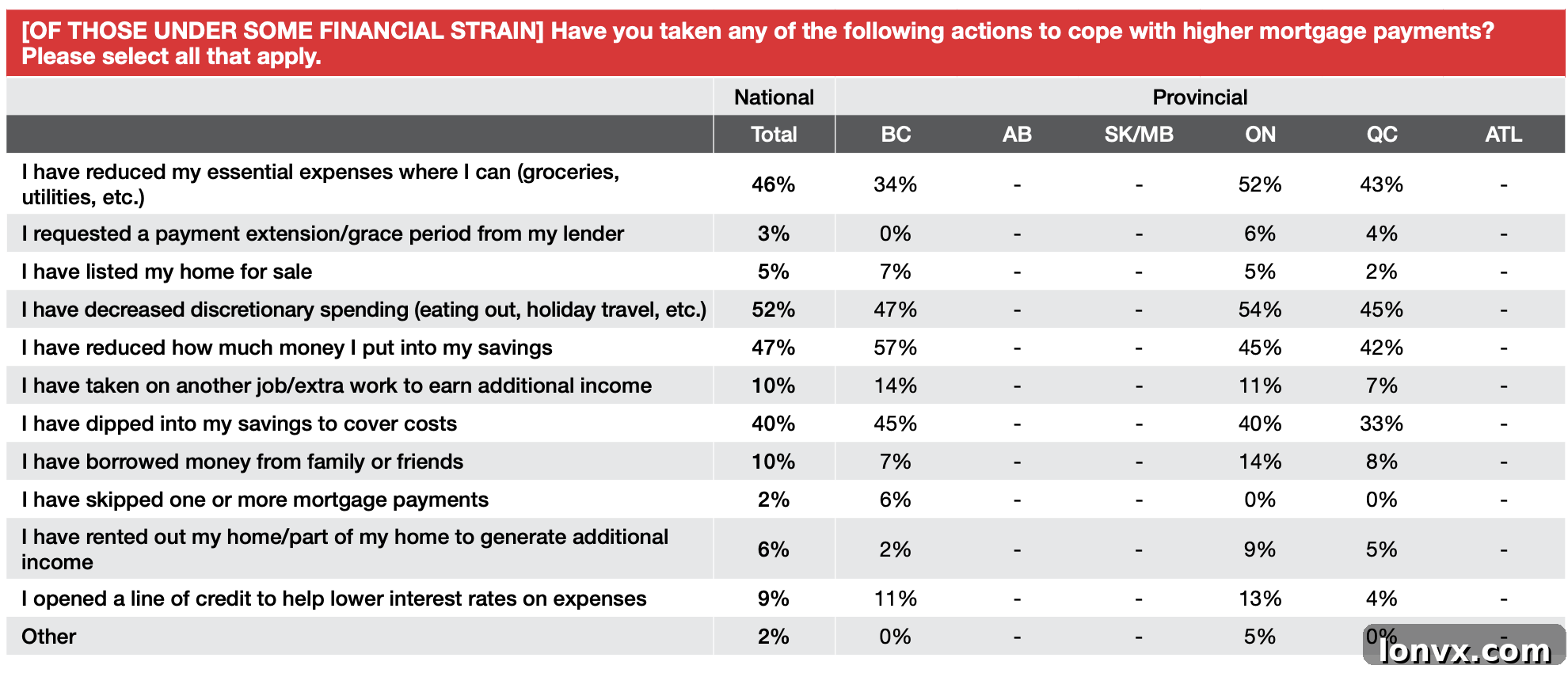
For a detailed breakdown and regional summaries, you can read the full Royal LePage survey here.
Enjoying this article?
Get the latest REM articles in your inbox 3x week so you stay up to date on the latest in the Canadian real estate industry