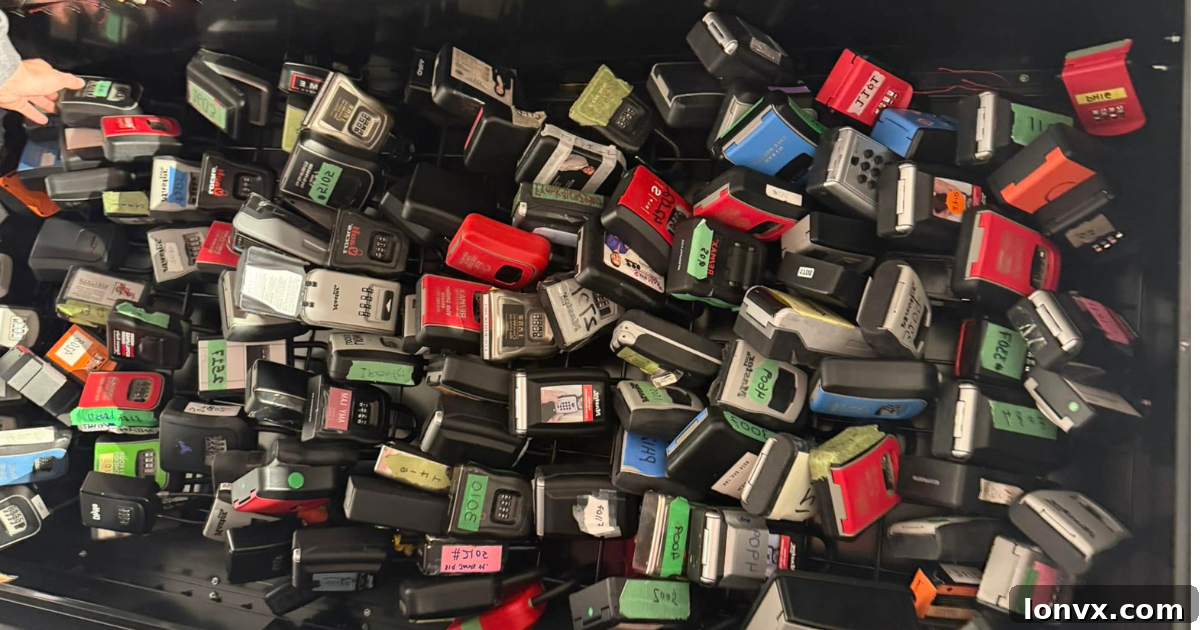
A cluttered collection of lockboxes shows the reality of poor condo key storage management, with handwritten labels and colour-coded Post-it notes making it difficult for agents to quickly locate keys. (Source: Polina Morgulis, Facebook)
First impressions matter. Leading prospective condo buyers down a back alley to search for a lockbox beside a garbage bin is never professional — yet that scenario is all too common when buildings lack secure, well-managed key storage.
Many condominium corporations prohibit lockboxes inside lobbies, and in buildings without a clear, secure internal solution, lockboxes are often hung on railings, door handles or left in other exposed locations. That approach compromises safety, convenience and the overall experience for residents, visitors and agents.
“Too many buildings haven’t put a proper system in place, so lockboxes end up in insecure spots,” says Lenka Matuska, a Toronto-based agent with Right At Home Realty. “We need to close that gap and lift the experience for everyone who uses the lobby — buyers, sellers, tenants and owners.”
The three critical issues
There are three main problems when key storage is handled poorly.
1. Safety: Leaving lockboxes in unattended areas creates a security risk. Someone who knows how to bypass a lockbox can gain entry to the building. Many lockboxes hold fobs that grant direct access to suites and common areas; if a vacant unit’s keys are compromised, it could be targeted for theft or squatting.
2. Convenience: Agents often waste time hunting for the right lockbox among several unmarked containers. The search is more frustrating in winter, when exposed lockboxes freeze, and when labels or notes are missing or illegible.
3. User experience: Buyers frequently want to walk the property with their agent to get a feel for the building and neighbourhood. When access requires searching alleys or parking garages, it undermines the viewing experience and can leave a negative first impression.
Matuska draws on more than 20 years as a registered Realtor and condo resident to stress that agents can and should advocate for better key storage. If management is unresponsive, she encourages owners to raise the issue with their elected board: “The board represents owners, so accountability begins there,” she says.
Technology solutions that close the gap
Simple paper logs or ad hoc systems using Post-it notes are common, but they are easy to lose and difficult to audit. While tools like Google Forms improve transparency compared with a handwritten log, they remain manual and prone to human error.
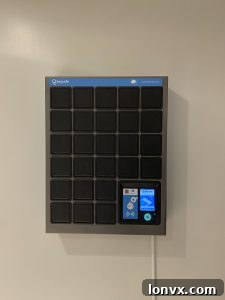
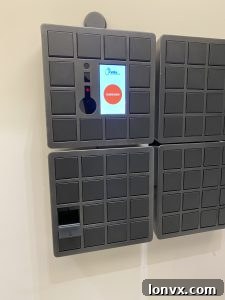
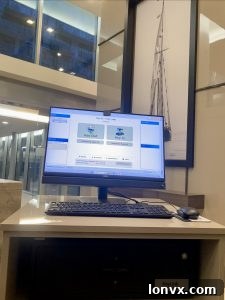
Matuska recommends integrated digital systems that provide reliable tracking and an audit trail. Examples include property-management integrations and stand-alone key-management options that securely store keys and record who accessed them and when. With many systems, keys rest in a secure drawer or cabinet and a time-limited code is provided to concierge staff to release a specific key. That ensures keys are handled only through concierge-controlled access rather than being left in reach of anyone entering the building.
Best practice is to position keyless access points or key-storage devices near the concierge desk and to keep actual keys in concierge-only access areas. Placing devices near mailboxes, paired with camera coverage, can further deter unauthorized removal and improve accountability.
Source: Lenka Matuska
Source: Lenka Matuska
Source: Lenka Matuska
Even buildings managed by the same company can present very different experiences, depending on how proactive the board and community are about implementing secure systems.
Raising standards from the inside
Residents have a role: elect board members who will be accountable and hands-on. Matuska advises board members to review contracts directly, seek legal counsel when needed, participate in vendor interviews alongside management and select vendors based on fit rather than convenience. That diligence protects owners’ investments and the building’s security.
Agents should also take responsibility by familiarizing themselves with each building they show, reading status certificates, touring amenities and observing how access is handled. Because agents move between many properties, they are in a good position to identify practical solutions and suggest improvements. Matuska recalls asking an overstretched security team to consider QR-code sign-in systems she’d seen working well elsewhere.
Improving how keys are stored and managed isn’t just a technical fix — it requires engaged boards, informed owners and proactive agents working together. Matuska applies these principles in her own building, where she has served as condo board president for four years, and has recently sought a director position at the Condominium Authority of Ontario. “This issue is personal,” she says. “I’m not just advising from the outside; I’m doing the work inside my own building.”