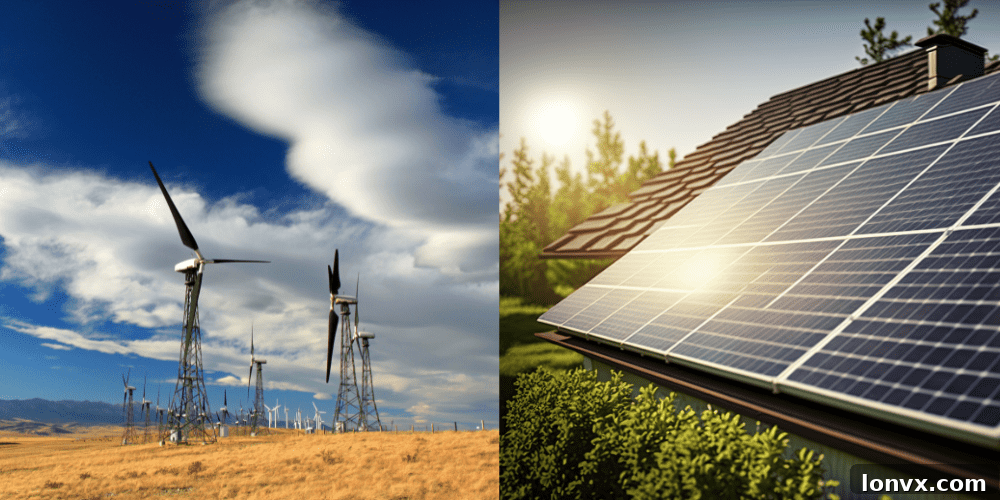
The pursuit of sustainable development in real estate is no longer a niche conversation but a critical imperative. From the sun-drenched landscapes of Palm Springs, California, to the rain-kissed cities of British Columbia and the vast plains of Alberta, developers across North America are confronting significant energy challenges. These challenges are not merely logistical; they are indicative of a broader shift towards innovative, resilient, and environmentally conscious energy solutions for residential communities. This article delves into the real-world experiences of developers navigating the complex terrain of integrating alternative energy, highlighting both the hurdles and the groundbreaking successes.
Powering Progress: Innovative Alternative Energy Solutions in Residential Real Estate
The Unforeseen Energy Crisis in La Quinta, California
In the idyllic desert landscape of Palm Springs, California, one might assume that securing reliable solar power for a new residential development would be straightforward. However, Kevin Lesowski, asset coordinator at Gatehouse Design and Developments, a company based in Chilliwack, British Columbia, and his team faced an unexpected and formidable obstacle with their project in the neighboring city of La Quinta. This experience starkly underscores the urgent need for robust alternative energy solutions in the housing sector, extending far beyond specific regional boundaries.
The core of the problem emerged during the planning phase for a modest development of 34 single-family homes. Despite a year-long engagement with the Imperial Irrigation District (IID), the local energy service provider, Gatehouse was informed that there was simply no power available for their development. This wasn’t a temporary shortage; it was an absolute lack of capacity to support even the basic requirements of an average home, which typically needs around 200 amps of electricity to function fully. “Power was always known as an issue in the area, but it definitely caught us by surprise,” admitted Lesowski, reflecting on the profound challenge this presented.
The severity of the situation became even clearer when Gatehouse, along with other developers in the broader Palm Springs area facing similar constraints, was presented with a staggering proposition: a mandatory substation upgrade. The price tag for this essential infrastructure improvement? A daunting $20 million. For a project comprising only 34 homes, this cost was not only disproportionate but effectively prohibitive, forcing Lesowski and his team to abandon conventional approaches and seek truly unorthodox solutions.
Revolutionizing Residential Power: Micro-Grids and Community Batteries
The turning point arrived approximately a year after Gatehouse received the grim news about power availability. Working in collaboration with a consortium of developers in the surrounding area, Lesowski discovered Block Energy, a visionary third-party company specializing in the creation of residential micro-grid communities. This innovative model offered a viable pathway forward, circumventing the need for the exorbitant substation upgrade and providing a decentralized, resilient power supply.
Lesowski explains the ingenious design: “They have solar panels on the roof that go into batteries in the garages. Then the whole community is linked on a communal grid — once the batteries in the garage are full, they dump power into a community battery bank.” This system transforms individual homes into active participants in a collective energy ecosystem. Each residence generates its own power through rooftop solar, stores it in dedicated garage batteries for immediate use, and contributes any surplus to a larger, shared community battery bank. This communal storage then serves as a backup, ensuring continuous power supply for all residents, even during peak demand or grid outages. The Block Energy solution not only addressed the immediate power deficit but also introduced a new paradigm for energy independence, reducing reliance on aging conventional grids and offering a blueprint for sustainable residential development.
Exploring Geothermal Potential in Vancouver: A Tale of Cost Prohibitions
While southern California basks in abundant sunshine, Vancouver, British Columbia, presents a different climatic reality. Yet, the drive for alternative energy solutions is equally strong. Graham Carter, co-founder of Vertex Developments, explored the potential of geothermal energy for his projects in B.C. Geothermal energy, derived from the Earth’s natural heat, offers a stable and continuous source for heating and cooling, presenting an attractive option for reducing a building’s carbon footprint.
Carter envisioned a system where a geothermal utility could run into a building, creating a long-term income stream for the strata corporation through reduced energy costs and potentially even selling excess energy back to the grid. An environmentally sustainable real estate development project that could also generate profits for its future residents seemed like a perfect fusion of environmental responsibility and financial viability. However, as Carter and his team soon discovered, the reality was more complex. “What we found with everything we looked at is [it] was cost prohibitive, especially in Vancouver with the cost of building buildings. We can’t be competitive and add an extra ‘nice to have’,” he shared.
The high initial capital investment required for geothermal systems, particularly the deep drilling and complex infrastructure installation, clashed with Vancouver’s already elevated construction costs. In a competitive housing market, adding such significant upfront expenses made projects economically unfeasible without substantial government incentives or a premium that buyers were not yet prepared to pay. This highlights a crucial barrier: while the environmental benefits of geothermal are clear, the current economic landscape often prioritizes short-term cost efficiency over long-term sustainability investments, especially in high-cost urban centres.
The Pervasive Impact of Actual and Hidden Costs in Alternative Energy Adoption
The experiences in both La Quinta and Vancouver underscore a universal truth in the adoption of alternative energy solutions: cost is a monumental factor. Carlos Gamez Ruiz, an associate partner at Berry Architecture, with experience spanning both Alberta and British Columbia, consistently observes this challenge. “Either here in B.C. or in Alberta is the same situation — the cost. Also, what [will] be the hidden costs that are required to have that system in place?” Ruiz emphasizes.
The term “hidden costs” encompasses a broad spectrum beyond just the initial purchase price. It includes long-term maintenance, potential specialized insurance, regulatory compliance, grid integration fees, and the opportunity cost of choosing one system over another. For multi-residential dwelling units, which represent a significant portion of urban development, the investment decision hinges on a meticulous calculation of return on investment (ROI). Developers must evaluate not only the immediate expenditures but also the projected savings on utility bills, potential property value increases, and eligibility for any government incentives or rebates. Without a clear financial case that demonstrates viability over the lifespan of the project, even the most environmentally appealing solutions struggle to gain traction. This rigorous financial scrutiny often becomes the ultimate determinant for whether an alternative energy project moves from concept to reality.
Harnessing Alberta’s Open Landscapes: The Rise of Wind Energy
Moving eastward, Alberta’s distinct topography presents a unique opportunity for another powerful alternative energy source: wind power. The vast, open plains and consistent wind patterns across parts of the province make it an ideal location for wind farm development. “They’re trying to make the most of the open scenarios, as there are quite a few areas there where the land is pretty flat,” notes Ruiz, explaining the natural advantage Alberta holds for this renewable resource.
The province is actively exploring wind energy as a significant component of its energy diversification strategy. A notable example is the ongoing development of a wind farm near Medicine Hat, aimed at providing alternative energy solutions for communities further north, such as Red Deer. (Medicine Hat is approximately 410 kilometres southeast of Red Deer, indicating a significant regional energy transfer.) Wind energy offers several compelling advantages: it’s a clean, inexhaustible resource that produces no greenhouse gas emissions during operation, and the cost of wind power generation has been steadily declining, making it increasingly competitive with traditional fossil fuels. However, integrating wind power also comes with its own set of challenges, including intermittency (wind doesn’t always blow), the need for extensive land use, potential visual and noise impacts on local communities, and the complexities of grid infrastructure to handle fluctuating power generation. Despite these hurdles, Alberta’s commitment to expanding its wind energy capacity signals a forward-thinking approach to leveraging its natural resources for a more sustainable energy future.
Bioenergy: A Promising Frontier Requiring Research and Education for Long-Term Viability
Looking further into the future, bioenergy stands out as another alternative energy source with immense untapped potential. This method converts organic matter into usable energy, often in the form of electricity, heat, or fuel. “Garbage generates some gasses,” explains Ruiz. “And they take those types of gasses to generate energy in a clean way.” This seemingly simple statement refers to complex processes like anaerobic digestion, where organic waste decomposes in the absence of oxygen to produce biogas, primarily methane, which can then be captured and combusted for energy generation.
Bioenergy encompasses a diverse range of sources, including by-products from industrial forest processes (such as wood waste), agricultural residues, municipal solid waste, and construction and demolition waste. Its appeal lies in its ability to simultaneously manage waste, reduce landfill volume, and produce renewable energy. Moreover, when managed sustainably, bioenergy can contribute to a circular economy, where waste is viewed as a resource. However, for bioenergy to achieve widespread adoption and become a long-term viable option, Ruiz stresses the critical need for more extensive research and public education. Research is vital to optimize conversion technologies, enhance efficiency, reduce costs, and develop sustainable sourcing methods for biomass. Education is equally important to raise public awareness about the benefits of bioenergy, address potential misconceptions, and garner community support for infrastructure projects. Overcoming technological limitations and ensuring public acceptance are key steps toward unlocking bioenergy’s full potential in the evolving landscape of sustainable energy.
The Pioneering Path: Challenges and Optimism for Canada’s Sustainable Development Future
The journey to discover, study, and ultimately implement alternative energy solutions into residential real estate projects is undoubtedly complex and challenging. It is not a path to overnight success but rather a long-term commitment to innovation and resilience. The experiences of developers like Kevin Lesowski in Palm Springs, navigating unexpected power crises, and Graham Carter in Vancouver, grappling with cost prohibitions, highlight the multifaceted nature of this transition. Yet, despite these significant hurdles, there is a palpable sense of optimism for Canada’s future development landscape.
The diverse regional approaches—from micro-grids in the desert to geothermal exploration in urban centers, and wind farms on the prairies, with an eye towards bioenergy—demonstrate a robust national commitment to finding what works best in each unique context. Collaboration between developers, utility companies, third-party innovators, and government bodies will be paramount in fostering an environment where these solutions can thrive. Incentives, streamlined regulatory processes, and continued investment in research and development are essential to bridge the gap between aspirational sustainability goals and practical, cost-effective implementation.
Lesowski’s sentiment perfectly encapsulates this forward-looking spirit: “It’s really, really great to be on the crest of that pioneering wave. I think that our project aside, just the fact that everything is changing is super cool.” This era of transformation in residential real estate is not just about adopting new technologies; it’s about fundamentally rethinking how communities are powered, built, and sustained. As Canada and its developers continue to push the boundaries of energy innovation, they are not only addressing immediate challenges but also laying the groundwork for more resilient, environmentally responsible, and energy-independent communities for generations to come. The collective effort to embrace these changes promises a future where sustainable living is not just an ideal, but an achievable standard.
Enjoying this article?
Get the latest real estate development insights in your inbox three times a week so you stay up to date on the latest in the Canadian real estate industry and beyond.