Sukkot: Embracing Tradition and Temporality in the Sukkah
The Jewish holiday of Sukkot, often referred to as the Feast of Tabernacles or the Jewish Thanksgiving, is a profoundly meaningful celebration that invites adherents to step out of their permanent homes and into temporary dwellings. This week-long festival, which typically occurs in the autumn season, is a vivid reenactment of a pivotal period in Jewish history. From the 17th to the 25th of October, or according to the Hebrew calendar’s prescribed dates, families worldwide engage in the ritual of building and inhabiting a sukkah – a hut-like structure designed to replicate the fragile shelters in which the Israelites dwelled for forty years during their journey through the wilderness after the Exodus from Egypt. More than just a historical commemoration, Sukkot encourages a deep connection to nature, community, and a spiritual reflection on divine providence.
During this festive time, the sukkah becomes the focal point of Jewish life. Families gather within its temporary walls to share meals, study the sacred texts of the Torah, and some even choose to sleep under its leafy roof. This unique ritual transcends geographical boundaries, uniting Jewish communities from Israel to the farthest corners of the globe. It is a practice deeply embedded in Jewish tradition, fostering a sense of shared history and communal identity.
“Orthodox Jews would tend to have one, but even some secular Jews will make one,” notes Jerry Adler, the esteemed director for Canada, Israel Ministry of Tourism. Adler himself plans to erect a sukkah on the patio of his Toronto home, highlighting the broad appeal and enduring relevance of this ancient custom across the spectrum of Jewish observance. His words underscore that the sukkah is not merely a religious obligation for a select few but a cherished cultural experience embraced by many.
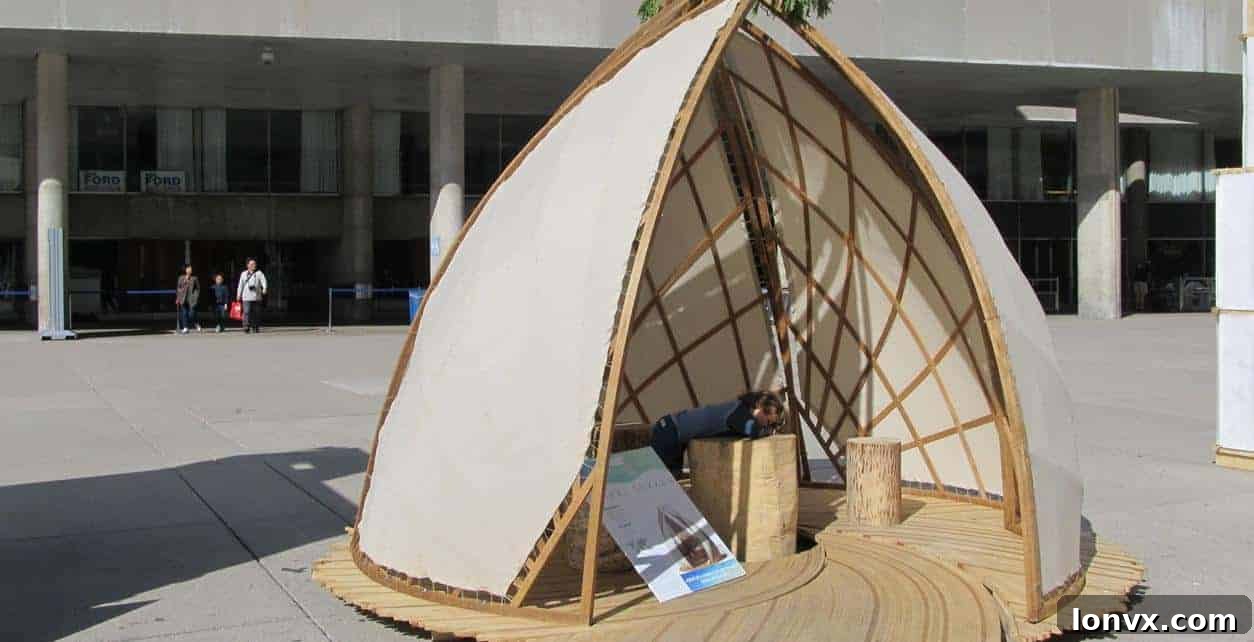
This reimagined sukkah, ingeniously designed by artist Dan Bergeron, utilizes repurposed condominium sandwich boards, offering a poignant commentary on the pressing need for affordable living spaces in densely populated urban centers like Toronto. This innovative structure beautifully fuses ancient tradition with contemporary social concerns, demonstrating the sukkah’s adaptability and enduring relevance in modern society.
The Spiritual Allure of the Sukkah: A Return to Nature and Simplicity
The experience of dining or simply dwelling within a sukkah is remarkably distinct from the comfort of a permanent home. “It’s fun to eat inside, it’s different, not like sitting in the dining room,” Adler describes, capturing the unique charm of the sukkah. He elaborates on the sensory delights: “You can hear the birds, see the sunlight – and the roof of these structures is typically made of tree branches so at night you can see the stars in between the cracks. It’s very back to nature, almost romantic.” This sentiment encapsulates the essence of Sukkot: a deliberate detachment from modern conveniences to foster a profound connection with the natural world and a deeper appreciation for life’s simple pleasures.
Central to the sukkah’s construction is the use of natural, yet robust, materials. While intended to be temporary, they must be strong enough to withstand typical autumn winds, embodying a paradox of fragility and resilience. Halachic, or Jewish law, requirements dictate that a sukkah must have at least two complete walls and one partial wall, creating an enclosed space that is both open to the elements and provides shelter. The roof, known as schach, is perhaps the most significant element, made from natural, unprocessed materials like tree branches, bamboo mats, or palm fronds. This allows for visibility of the stars at night and sunlight during the day, reinforcing the spiritual connection to the heavens and the natural world. These structures can be erected in various locations – from a sprawling backyard to a compact apartment balcony, a cozy porch, or a spacious terrace – making the observance accessible to many. Inside, sukkahs are often adorned with vibrant decorations, reflecting autumn themes of harvest and bounty, or rich Judaic motifs that celebrate the holiday’s spiritual significance, creating a festive and inviting atmosphere.
Beyond its historical and symbolic resonance, Sukkot also carries deep agricultural roots. Historically, it was a pivotal harvest festival, marking the joyous culmination of the fruit harvest in ancient Israel. This aspect connects the holiday to themes of gratitude for sustenance and the cyclical rhythms of nature, reinforcing its character as a profound thanksgiving celebration. The very act of building and decorating the sukkah, often a family affair, becomes a tangible expression of this gratitude and a hands-on lesson in Jewish heritage for younger generations.
The Evolution of Sukkah Design: From Basic Huts to Artistic Expressions
While the fundamental requirements for a kosher sukkah remain constant, the execution of its design can vary dramatically. Some sukkahs are remarkably basic, constructed with little more than a simple wooden frame and a tarp, embodying a minimalist approach to the temporary dwelling. Others, however, are quite elaborate, showcasing intricate craftsmanship and creative flair. This spectrum of design highlights both the accessibility of the mitzvah (commandment) and the capacity for personal expression within Jewish tradition.
In recent years, the sukkah has also become a canvas for artistic innovation, particularly through international design competitions that invite artists and architects to “re-imagine” this ancient structure. These competitions infuse new life into the tradition, exploring contemporary themes while honoring the sukkah’s core symbolism. A notable example took place in Toronto, where approximately a dozen unique creations, including eight finalists, were proudly displayed at Nathan Phillips Square. This public exhibition allowed a wider audience to engage with the beauty and diversity of sukkah design, transforming a religious observance into a public art installation.
The “Roots” sukkah, a striking example from the Toronto design competition, was entirely woven from rope, symbolizing the deep-seated connections to heritage and the intricate fabric of Jewish identity.
Among these innovative designs, “Roots” stood out for its intricate construction entirely from rope, evoking a sense of organic growth and the profound interconnectedness of Jewish heritage. Another captivating entry, the “Spiral Sukkah,” was ingeniously constructed with wood, cloth, and twine, forming five fractured sections that converged around a common center. This design could be interpreted as a metaphor for the diverse yet unified nature of the Jewish people, or the complex journey of faith. The “Guiding Light” sukkah offered a powerful historical commentary, featuring protruding wooden elements of various lengths that characterized the enslavement of the Jews in Egypt, serving as a poignant reminder of the journey from bondage to freedom. Yet another sukkah, previously exhibited in Toronto, captivated viewers with its walls crafted from colorful, hand-painted silk fabric, transforming the temporary dwelling into a vibrant tapestry of art and tradition. These examples demonstrate how contemporary artists can interpret and expand upon the ancient meaning of the sukkah, making it relevant for new generations.
Artist Dan Bergeron’s thought-provoking creation, “///re-ply\ Phase 2,” utilized condominium sandwich boards for its construction. This piece was inspired, in part, by the urgent need for affordable living spaces in rapidly expanding and densely populated cities like Toronto. Bergeron’s sukkah cleverly juxtaposed the temporary, divinely provided shelter of the wilderness with the modern urban crisis of housing affordability, inviting viewers to reflect on both historical narratives and contemporary social issues through the lens of Jewish tradition.
Sukkot Around the World: A Universal Expression of Faith and Community
The spirit of Sukkot extends far beyond individual homes and community centers. If you are fortunate enough to be in Israel during this time of year, you will undoubtedly encounter sukkahs in various public spaces, providing a unique opportunity to experience the holiday firsthand. Many hotels, restaurants, and tourist attractions go to great lengths to provide a kosher sukkah, allowing visitors and locals alike to dine in accordance with the holiday’s traditions. This widespread public observance transforms the entire country into a living tapestry of faith and culture, welcoming everyone to partake in the festive atmosphere.
Globally, Jewish communities embrace Sukkot with immense enthusiasm. From bustling metropolitan areas like Toronto to remote villages, the construction of the sukkah becomes a communal effort, fostering bonds and strengthening intergenerational ties. Children eagerly participate in decorating, learning about their heritage through hands-on experience. Neighbors visit each other’s sukkahs, sharing meals and conversation, reinforcing the strong sense of community that is characteristic of Jewish life. The holiday serves as a powerful reminder of shared values, collective history, and the enduring strength of faith.
The practice of Sukkot transcends mere ritual; it is a profound spiritual exercise that encourages introspection and gratitude. Living in a temporary dwelling, even for a short period, forces an awareness of impermanence and a reliance on a higher power. It cultivates humility, reminding participants of their ancestors’ journey and the constant presence of divine protection. This annual return to simplicity and nature helps to re-center priorities, fostering appreciation for one’s blessings and an understanding that true security comes not from material possessions but from faith and community.
The Enduring Message of Sukkot: Simplicity, Gratitude, and Connection
The temporary nature of the sukkah stands in stark contrast to the permanent homes we inhabit daily. This deliberate shift invites us to reflect on what truly constitutes security and belonging. For the Israelites in the desert, their fragile dwellings symbolized their complete dependence on divine providence. Today, the sukkah serves as a potent reminder that our earthly possessions are fleeting, and true wealth lies in our spiritual connection, our community, and our gratitude for life’s fundamental blessings. It is a powerful lesson in mindfulness, encouraging us to savor the present moment and appreciate the world around us, from the rustling leaves of the schach to the distant stars visible through the roof.
Moreover, Sukkot reinforces the importance of hospitality and inclusivity. The very act of inviting guests into one’s sukkah, a mitzvah known as hachnasat orchim, underscores the communal aspect of the holiday. It is a time for sharing, for open doors and open hearts, extending warmth and welcome to friends, family, and even strangers. This creates an atmosphere of collective joy and belonging, strengthening the fabric of the Jewish community and promoting understanding among diverse individuals.
As the holiday concludes, participants carry with them not only memories of festive meals and starlit nights but also a renewed sense of purpose and a deeper connection to their heritage. The lessons learned within the sukkah’s temporary embrace – of faith, fragility, gratitude, and community – resonate long after the structures are dismantled, influencing how we live our lives in our permanent homes throughout the year. It’s a holiday that profoundly connects the past, present, and future, ensuring that the wisdom of ancient traditions continues to guide and inspire.
As we observe this beautiful holiday, we extend a heartfelt greeting to all: “Chag Sameach!” (Happy Holiday!)