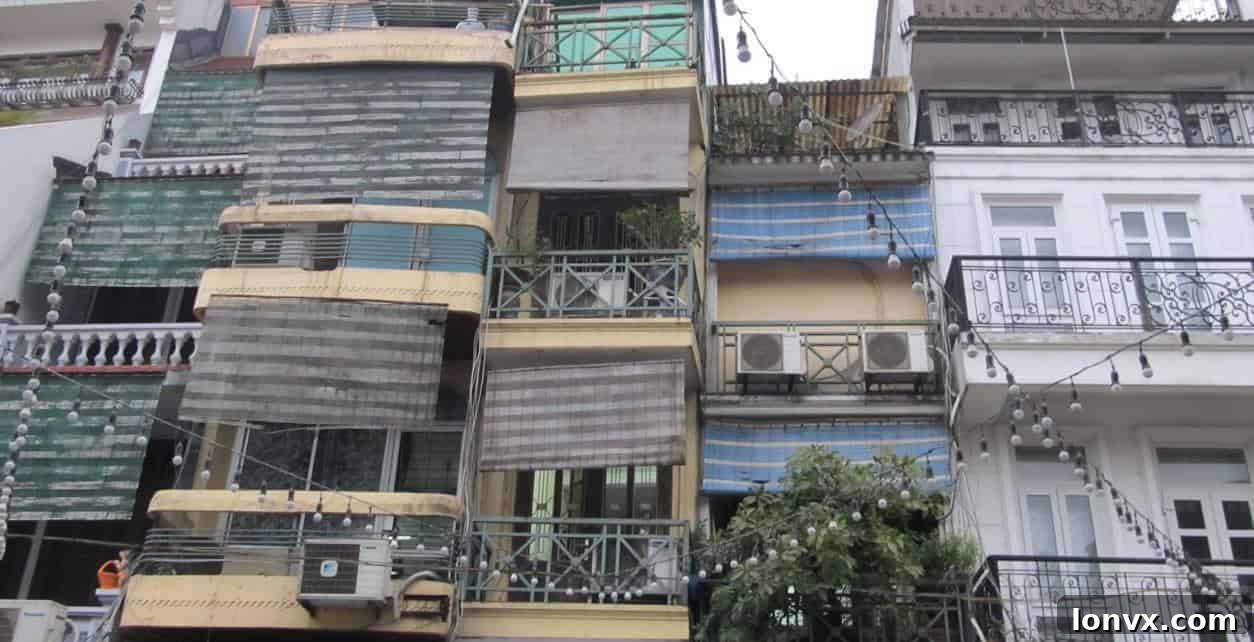
Hanoi’s Iconic Tube Houses: A Marvel of Ingenuity and History
Hanoi, Vietnam, a city steeped in rich history and vibrant culture, is home to a truly unique architectural phenomenon: the tube houses, affectionately known locally as Nha Ong. These slender, often towering structures are far more than mere buildings; they are living testaments to centuries of Vietnamese ingenuity, adaptation, and an enduring spirit that transformed a simple tax regulation into a distinctive urban landscape. Stepping into Hanoi’s bustling streets, particularly its ancient Old Quarter, one cannot help but be captivated by these remarkably narrow facades that stretch deep into the blocks, each telling a silent story of resourcefulness and tradition.
The fascinating origin of these peculiar dwellings dates back centuries, rooted in a clever response by property owners to a city government decree. Long ago, Hanoi’s municipal authorities decided to base property taxes on the width of a property’s street-facing facade. The logic was seemingly straightforward: a wider frontage meant a larger, more prominent establishment, thus warranting higher taxation. However, this seemingly simple rule inadvertently sparked a wave of architectural innovation. Rather than face exorbitant taxes for broad street presence, citizens began to construct homes that minimized their street frontage while dramatically maximizing their depth and height. This strategic architectural workaround birthed the ubiquitous tube house, forever altering the urban fabric and charm of Hanoi.
The Distinctive Anatomy of a Hanoi Tube House (Nha Ong)
The defining characteristic of a Nha Ong is its extreme dimensions, an architectural marvel born from necessity. While they may appear impossibly narrow from the street, often measuring as little as six feet across, some legendary examples push these limits even further. The house at No. 97 Hang Dao Street, for instance, famously boasts a facade just a little over five feet wide – a testament to the lengths homeowners would go to minimize their tax burden. What these homes conspicuously lack in width, they dramatically compensate for in depth and verticality. Stretching back as far as 230 feet, these properties can plunge deep into the city block, making efficient use of every available square inch of land. Furthermore, five to seven storeys in height is not at all uncommon, transforming these narrow footprints into surprisingly spacious multi-level residences and commercial spaces, perfectly suited for the bustling life of Vietnam’s capital.
This unique architectural style is a brilliant adaptation to both urban density and historical taxation policies. Each storey often serves a distinct purpose, meticulously designed to cater to the multifaceted needs of the inhabitants. From bustling ground-floor shops that open directly onto the street to private family quarters tucked away in the rear or on upper levels, the tube house maximizes utility within its elongated structure. They are not merely homes but frequently serve as multi-functional hubs, seamlessly blending residential comfort with entrepreneurial spirit, embodying the very essence of urban life in Hanoi.
A Glimpse into History: The Roots in Hanoi’s Old Quarter
The genesis of Hanoi’s tube houses is believed to have occurred as early as the 15th century, embedding them deeply within the city’s historical narrative and architectural identity. To truly appreciate their evolution and enduring legacy, one must wander through Hanoi’s captivating Old Quarter. This labyrinthine maze of narrow streets and bustling alleys, some dating back to the 13th century, provides the perfect historical backdrop for these unique structures. The Old Quarter is renowned for its “36 Streets” (though the actual number fluctuates), many of which were traditionally named after the specific products or crafts originally made and sold there. Imagine strolling down “Hang Gai” (Silk Street), “Hang Bac” (Silver Street), or “Hang Tre” (Bamboo Street), where generations of artisans and merchants conducted their trade directly from the ground floors of these very tube houses, creating a vibrant tapestry of commerce and daily life.
This rich historical context is crucial for understanding the tube house’s enduring design. In a bustling trading hub like the Old Quarter, street frontage was prime real estate, not just for living but crucially for displaying wares and attracting customers. The tube house allowed merchants to establish a visible presence on a busy street without incurring prohibitive taxes, while still providing ample space for storage, workshops, and family living behind the storefront. This ingenious design facilitated the vibrant commercial activity that has defined Hanoi for centuries, making the tube house an integral part of its economic and cultural heritage. The interplay of commerce and daily life within these structures highlights their remarkable adaptability and enduring relevance in a rapidly changing world.
Tube houses in Hanoi were originally built high and narrow to avoid paying higher property taxes, a clever adaptation to ancient city regulations and a testament to local ingenuity.
Architectural Ingenuity and Daily Life within the Nha Ong
Beyond their unique external appearance, Hanoi’s tube houses exhibit fascinating internal architectural features and design philosophies. Typically, the construction involves robust concrete floors, with external and internal walls predominantly made from burned clay brick. Interestingly, many older tube houses lacked sophisticated thermal insulation, a challenge residents traditionally overcame through clever design principles and lifestyle adaptations. The internal layout is often clearly delineated: the front portion, directly facing the street, is almost invariably dedicated to commercial activities. This might manifest as a small shop, a traditional craft workshop, a bustling eatery, or a service provider, reflecting the inherent entrepreneurial spirit of Hanoi residents and the mixed-use nature of these historical dwellings.
As one ventures deeper into the house, the private family quarters begin. The kitchen, living areas, and bedrooms are typically situated towards the middle or back, often thoughtfully spread across multiple levels to maximize privacy and functionality. A crucial and ingenious element in the design of many tube houses is the inclusion of interspersed courtyards or light wells. These open-air spaces, strategically placed within the elongated structure, are absolutely vital for drawing natural light and facilitating essential ventilation into the deeper sections of the home, which would otherwise be dark and stuffy. These courtyards also offer precious pockets of outdoor space for various activities, from drying laundry and communal gatherings to cultivating small gardens, providing a touch of nature and tranquility amidst the dense urban environment. The older houses, often lower in height, were frequently constructed with bricks held together by a traditional mortar made with sugar-cane juice, showcasing ingenious, localized building techniques before the widespread adoption of modern construction materials.
Living in a tube house requires a unique lifestyle adaptation that embraces verticality and efficiency. The multi-story layout often means navigating stairs frequently, contributing to a dynamic and active daily experience. While privacy can sometimes be a concern in some older, denser configurations, the strong communal spirit often found in Vietnamese families and the clever use of internal partitions, screens, and mezzanines help to define spaces, creating functional zones within the narrow confines. These homes are more than just static structures; they are dynamic ecosystems where family life, business, and community intertwine daily, reflecting the efficient and communal nature of Vietnamese culture and its enduring ability to adapt to its unique urban environment.
Many of the newer tube houses in Hanoi are several storeys high, reflecting contemporary needs and building capabilities while maintaining the classic narrow profile, often painted in vibrant hues.
Beyond the Historical Core: Modern Adaptations and Enduring Presence
While the most iconic and historically significant tube houses reside within the labyrinthine streets of the Old Quarter, their presence extends far beyond this historical core, demonstrating their enduring adaptability. Many more examples can be found flanking the impressive 6.5-kilometer-long Hanoi Ceramic Road, a vibrant masterpiece adorned with dozens of colorful mosaics depicting Vietnamese history and culture. Along this route, tube houses, often built quite close together, rise several storeys high, showcasing a diverse palette of colors including striking pinks, greens, blues, yellows, and reds. These newer interpretations demonstrate the continued relevance and adaptability of the tube house design in modern Hanoi, where they serve as contemporary homes, thriving businesses, and cherished cultural landmarks.
The contemporary tube house often incorporates modern amenities, advanced construction techniques, and a wider range of materials, yet steadfastly retains the fundamental principles of its centuries-old predecessor: maximizing vertical space and depth on a limited horizontal footprint. They stand as a testament to Hanoi’s ongoing urban development, seamlessly blending historical architectural patterns with modern living requirements and aesthetic preferences. These structures are not just relics of the past but active, evolving components of the city’s dynamic present, adapting with each generation while steadfastly maintaining their unique and instantly recognizable character.
Preservation vs. Progress: The Future of Hanoi’s Tube Houses
Despite their undeniable charm and profound historical significance, many of Hanoi’s tube houses face considerable challenges in the 21st century. A significant number suffer from a pressing lack of repair and adequate maintenance, leading to cramped and sometimes squalid conditions. Basic facilities, such as modern plumbing or electrical systems, might be severely lacking in older structures, making daily life challenging for their inhabitants. The increasing demands of a rapidly modernizing city for wider roads, improved infrastructure, and larger commercial spaces have, at times, led to intense discussions and even proposals for demolishing some of these aging structures to make way for more contemporary developments or urban renewal projects.
However, these eye-catching narrow homes are not without their passionate supporters. A strong and growing contingent of conservationists, urban planners, cultural enthusiasts, and even residents fiercely advocates for their preservation. They recognize the tube houses as invaluable components of Hanoi’s unique cultural heritage, iconic symbols of the city’s identity, and a significant attraction for tourism. There is a growing hope among these groups that sustainable solutions can be found to maintain these iconic structures for future generations. This might involve carefully planned renovation projects that respect historical integrity, incentivizing owners to upgrade their properties, or integrating them into protected heritage zones with clear guidelines for renovation and use. Efforts are also focused on educating the public about the historical and cultural value of Nha Ong, fostering a sense of pride and ownership among residents.
Preserving Hanoi’s tube houses is more than just maintaining old buildings; it’s about safeguarding a living piece of history, an architectural marvel born from necessity and ingenuity. It’s about ensuring that future visitors and residents alike can continue to appreciate the clever responses of past generations to urban challenges, and the unique character that these vertical dwellings lend to one of Southeast Asia’s most captivating capitals. The ongoing debate between demolition and preservation underscores a universal challenge faced by rapidly developing cities worldwide: how to gracefully balance the undeniable march of progress with the invaluable legacy of the past. For Hanoi’s tube houses, the hope is that their story of resilience, clever design, and cultural significance will continue to unfold for many centuries to come, remaining a defining feature of this extraordinary city.