Decoding the Canadian Housing Market: Key Trends and Generational Shifts in 2023
The Canadian housing market is an ever-evolving landscape, shaped by economic shifts, technological advancements, and changing consumer behaviors. Following a tumultuous 2022, which saw significant reversals in the trend of record-breaking home prices due to fluctuating consumer demand and low inventory, understanding the nuances of how Canadians buy homes has become more critical than ever. An insightful report from the online real estate marketplace, Zolo, offers a deep dive into the evolving habits of Canadian homebuyers.
Zolo’s 2023 Canada Housing Market Report, based on a comprehensive survey of 800 Canadians, meticulously unpacks the motivations, methods, and timelines behind home purchases in 2022. The findings illuminate several surprising shifts in homebuying strategies, highlighting the increasing reliance on family support, the generational divide in property search methods, and the enduring importance of in-person viewings despite prolonged online browsing. These insights are invaluable for potential homebuyers, real estate professionals, and policymakers alike, offering a clearer picture of the forces at play in one of Canada’s most vital economic sectors.
The Growing Role of Family Support in Canadian Homeownership
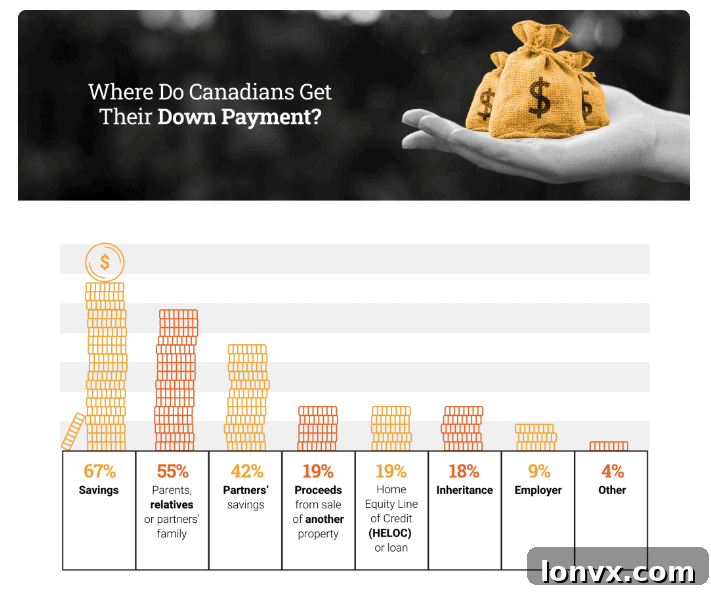
One of the most striking revelations from Zolo’s 2023 Canada Housing Market Report is the undeniable and increasing reliance on familial financial assistance among Canadian homebuyers. In 2022, nearly half of all purchasers, specifically 47 percent of survey respondents, reported receiving monetary aid from family members to bolster their down payments. This trend underscores a significant challenge in the current market: the escalating hurdle of housing affordability, particularly for first-time buyers and those navigating a landscape of high mortgage rates and persistent inflationary pressures.
Beyond direct contributions for down payments, the report also highlights another facet of this intergenerational support, with 24 percent of homebuyers utilizing funds from their partner’s family to facilitate their purchase. These financial gifts, whether from immediate or extended family, are increasingly acting as crucial enablers for homeownership. As housing prices remain elevated and borrowing costs climb, the gap between what an individual can save and what is required for a substantial down payment widens. Family contributions often bridge this gap, transforming what might otherwise be an unattainable dream into a tangible reality.
The implications of this trend are multifaceted. While family support helps individuals enter the housing market, it also raises questions about equity and accessibility for those who do not have access to such resources. It suggests a growing dependence on existing familial wealth to acquire new assets, potentially exacerbating wealth disparities. For real estate professionals, understanding this dynamic is crucial for guiding clients, as it influences financing strategies and eligibility. For the market as a whole, it points to a structural shift where intergenerational wealth transfer plays an ever-larger role in sustaining homeownership rates in expensive urban centers across Canada.

Source: Zolo
Evolving Homebuying Habits: A Generational Divide
The digital age has fundamentally reshaped how consumers interact with products and services, and the real estate sector is no exception. As real estate agents adapt their strategies, understanding the nuanced differences in home-hunting techniques across generations becomes paramount. Zolo’s report distinctly illustrates this generational divide, particularly between younger demographics—Millennials and Generation Z—and their older counterparts, Generation X and Baby Boomers.
The Rise of Social Media in Property Discovery
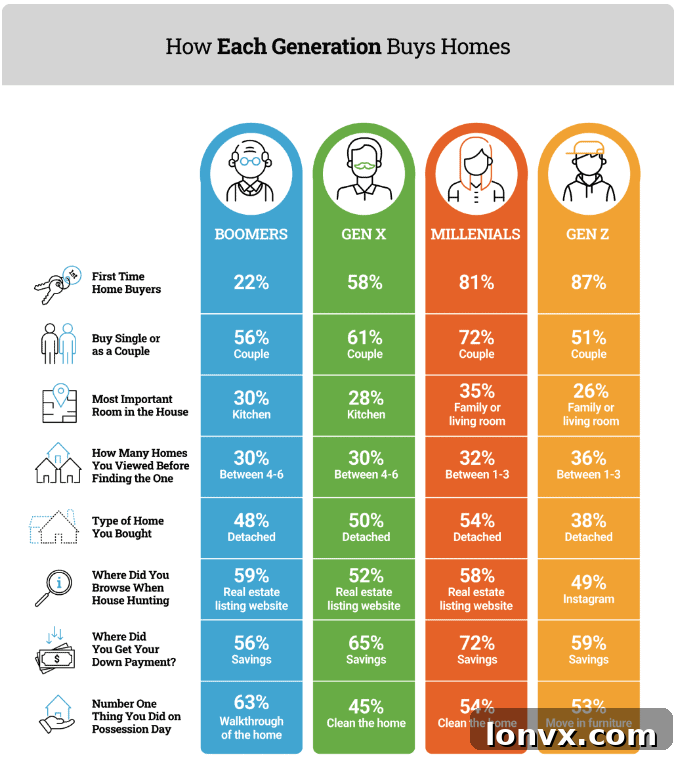
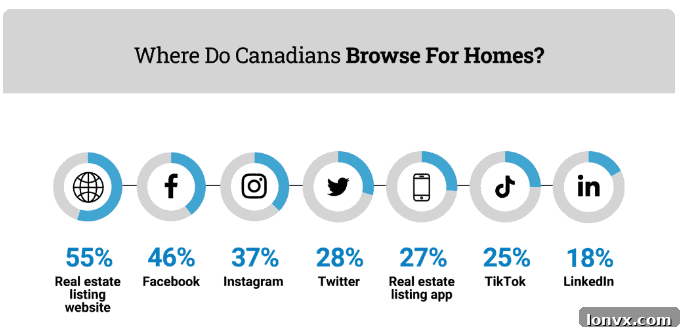
A significant finding from the report is the prominent role of social media among younger homebuyers. Nearly half of Generation Z (49 percent) now actively browse properties on platforms like Instagram. This trend is reflective of a generation that has grown up with digital interaction as a primary mode of discovery and communication. For Gen Z and many Millennials, social media isn’t just for connecting with friends; it’s a dynamic visual catalogue where lifestyle inspiration, aesthetic appeal, and even direct real estate listings converge. Agents and developers who leverage platforms like Instagram, TikTok, and Pinterest with high-quality visuals, virtual tours, and engaging content are better positioned to capture the attention of this digitally native audience. This shift necessitates a re-evaluation of marketing budgets and content strategies, moving beyond traditional listing sites to meet younger buyers where they spend most of their online time.
Traditional vs. Digital Mainstays: Boomers and Gen X
In stark contrast, Baby Boomers and Generation X predominantly rely on established real estate listing websites as their primary source for property searches. Platforms such as Realtor.ca, Zillow, and local brokerage sites remain the go-to for these demographics. Their comfort with, and trust in, these dedicated listing portals reflect a more traditional approach to property discovery, where comprehensive data, detailed filters, and structured search functions are prioritized. While these generations are also online, their digital habits lean towards information-rich, purpose-built sites rather than the more curated and social feeds favored by younger buyers. Real estate professionals must maintain a strong, updated presence on these traditional platforms to effectively engage with this significant segment of the market.
Decisiveness in the Search: A Matter of Generations
Beyond where they search, generations also differ in how many properties they physically view before making a decision. The report indicates that Millennials and Generation Z are notably more decisive, with the majority viewing only one to three homes before settling on a choice. This decisiveness could stem from several factors: extensive online research leading to highly targeted viewings, a clearer vision of what they want (perhaps influenced by aspirational social media content), or simply fewer affordable options, making the decision easier once a suitable property is found. Their digital fluency means they can filter out unsuitable properties virtually, streamlining the in-person viewing process.
Conversely, Generation X and Baby Boomers tend to be less assertive in their initial selections, typically viewing between four to six homes. This extended viewing period might reflect a desire for broader comparison, a more methodical approach to evaluation, or simply more available time to explore options. For agents, this means adapting their viewing strategies: curating highly targeted, pre-qualified options for younger buyers, and offering a wider range of comparative viewings for older generations, emphasizing detailed walkthroughs and neighborhood context.
Source: Zolo
The Extended Home Browsing Period: A New Norm
The journey to homeownership is rarely a sprint; for many Canadians, it’s increasingly becoming a marathon of careful deliberation and extensive preliminary research. Zolo’s report sheds light on this trend, revealing that Canadian homebuyers are now initiating their house-hunting journey significantly earlier than before. A substantial 47 percent of respondents indicated that they spent a considerable period—one to two years—browsing real estate listings online before earnestly commencing their active search for a new home.
This extended browsing period is a fascinating development with several underlying drivers. Firstly, the ubiquitous presence of social media and dedicated real estate websites has transformed property search into an accessible and often recreational activity. Prospective buyers can now passively monitor the market, explore neighborhoods, and identify “ideal” homes long before they are financially or logistically ready to make a purchase. This allows for aspirational viewing, market education, and a clearer understanding of what their budget might afford them in the future.
Secondly, the economic climate plays a crucial role. With fluctuating interest rates, volatile market conditions, and the ever-present challenge of saving for a substantial down payment, many individuals engage in a prolonged observation period. They might be waiting for the “right” time to buy, for specific market corrections, or for their financial circumstances to improve. This preparatory phase is not wasted; it allows buyers to refine their preferences, understand market dynamics, and mentally prepare for one of the largest financial decisions of their lives.
For real estate professionals, this extended browsing period presents both challenges and opportunities. It means that the client engagement process might begin much earlier, sometimes years before an actual transaction. Agents who can provide value and build relationships during this passive browsing phase—through informative content, market updates, and expert advice—are more likely to convert these long-term browsers into active clients when they are finally ready to commit. Understanding this prolonged journey allows for more strategic nurturing and relationship building, fostering trust and loyalty long before a single viewing takes place.
Source: Zolo
The Enduring Significance of In-Person Viewings
Despite the revolutionary advancements in digital real estate tools—including immersive virtual tours, high-definition photo galleries, and even long-distance purchasing options—Zolo’s report emphatically confirms the continued and critical importance of in-person viewings. Even after extended periods of online browsing and utilizing all the conveniences of virtual exploration, the majority of Canadian homebuyers surveyed still viewed their potential homes physically between two and four times before ultimately submitting an offer. This finding strongly suggests that while digital tools are excellent for initial screening and narrowing down options, they cannot fully replace the tangible experience of stepping inside a property.
The “personal touch” and “physical presence” remain highly valued in the homebuying process for a myriad of reasons. A virtual tour, no matter how sophisticated, cannot replicate the feeling of a space, the natural light, the true sense of scale, or the subtle nuances of a home’s condition. Buyers need to physically walk through rooms to imagine their furniture, to gauge the flow of the layout, and to connect emotionally with the property. Furthermore, in-person visits allow buyers to engage all their senses – to note any particular smells, listen for neighborhood sounds, and truly assess the ambiance that will define their daily lives. It’s also an opportunity to meticulously inspect for any potential issues that might not be apparent in photographs or videos, such as minor damages, unique quirks, or the overall maintenance level of the home.
Beyond the property itself, in-person viewings often provide the crucial context of the surrounding neighborhood. Buyers can experience the street’s activity, assess local amenities firsthand, and get a feel for the community’s vibe. This holistic assessment is vital for making a confident and informed decision. For real estate agents, this reinforces the irreplaceable value of their role in facilitating these critical physical interactions. Guiding clients through properties, answering questions on the spot, and offering expert insights during these viewings are essential for building trust and ensuring buyer satisfaction. Ultimately, while technology streamlines the initial search, the final commitment to a home still largely hinges on the profound connection forged through physical presence and personal experience.
In conclusion, the Zolo 2023 Canada Housing Market Report paints a vivid picture of a market in flux, driven by economic pressures and evolving generational preferences. The growing reliance on family support underscores the affordability crisis, while generational differences in search methods highlight the imperative for real estate professionals to embrace diverse marketing strategies. The extended browsing period combined with the enduring importance of in-person viewings points to a hybrid buying journey that blends digital efficiency with a fundamental need for tactile experience. Understanding these intricate dynamics is key for anyone navigating the complex and fascinating world of Canadian real estate.