The Enduring Legacy of Barbados’ Chattel Houses: A Glimpse into Unique Caribbean Heritage
In the vast landscape of real estate terminology, the word “chattel” typically refers to tangible, movable personal property—like furniture or appliances—that is not permanently affixed to land. It’s a common term understood by sales agents globally, signifying items distinct from the immovable structures of a home itself. However, traverse the azure waters to the vibrant Caribbean island of Barbados, and the meaning of “chattel” takes on an entirely unique, historically rich, and deeply cultural significance. Here, “chattel house” doesn’t just refer to an item within a home; it describes the home itself – a complete, often movable, structure that stands as a testament to Barbadian ingenuity and resilience.
Barbados’ chattel houses are far more than mere dwellings; they are living relics, integral to the island’s intricate history and cultural identity. Hundreds of these distinctive homes dot the Barbadian landscape, and variations can be found on a few other Caribbean islands, echoing a shared past. Their origins trace back to the 17th century, a pivotal period during which the island’s sugar plantations thrived, demanding a vast workforce. The country folk, primarily laborers working on these plantations, found themselves in a predicament: they built homes, yet did not own the land upon which these homes stood. This fundamental lack of land ownership spurred the development of an architectural solution as practical as it was ingenious.
Roots in Resilience: The Historical Origins of Chattel Houses
The innovative design of chattel houses was born out of necessity and a resourceful spirit. Built by plantation workers who lacked legal title to the land, these homes were conceived as portable assets. Instead of being anchored to permanent concrete or stone foundations, they were cleverly erected on loose, stacked coral blocks or stone pillars. This seemingly simple construction method offered a profound advantage: mobility. If a laborer faced eviction by a plantation owner, or if economic opportunities beckoned elsewhere, their entire home could be relatively easily dismantled, loaded onto a cart, and relocated to a new plot of land. This intrinsic movability was not merely a convenience; it represented a form of economic security and self-determination for families who otherwise possessed little. It transformed a dwelling from an immovable part of someone else’s property into a cherished, portable asset that belonged solely to its builder and occupants, embodying a deep-seated desire for independence.
Beyond their practical portability, the elevated construction of chattel houses offered another significant benefit, particularly crucial in Barbados’ tropical climate. Raising the home off the ground allowed for natural air circulation beneath the structure. This constant airflow provided an invaluable cooling effect, mitigating the intense heat and humidity characteristic of the Caribbean. It also helped protect the wooden structures from ground-level dampness, termites, and minor flooding, contributing to the longevity and habitability of these homes. This thoughtful integration of design with environmental conditions highlights the profound understanding of local challenges that went into the creation of these iconic Barbadian dwellings.
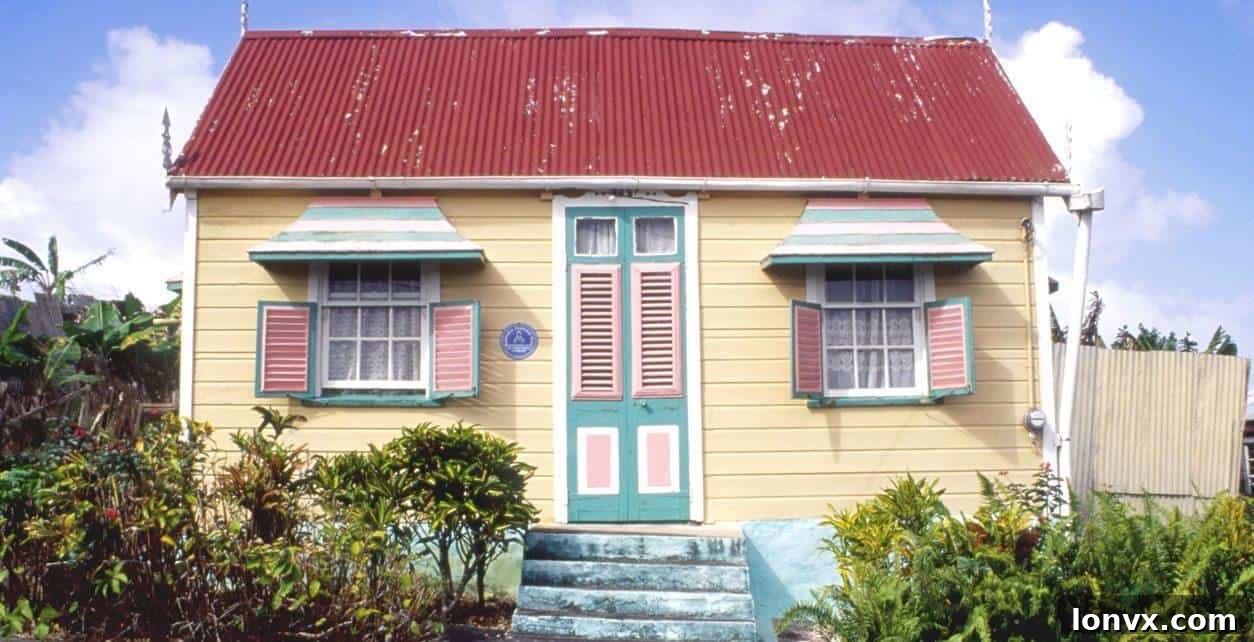
Chattel houses are part of Barbados’ history. No two homes are exactly alike when it comes to colour.
Architectural Distinctives: Features That Define Chattel Houses
While each chattel house boasts a unique personality, reflecting the individual tastes and craftsmanship of its owners, they share a captivating set of characteristic features that make them instantly recognizable. These structures are typically small, boxy, and predominantly built from sturdy wooden panels, often painted in an astonishing array of vibrant hues. A hallmark of their design is a striking symmetry, featuring a central front door flanked by a window on either side. These windows are invariably fitted with shutters, hinged either from the side or from above. This practical design allows homeowners to adapt their living spaces to the prevailing weather conditions, opening wide on breezy, sun-drenched days to invite cooling cross-ventilation, or securely closing tight to offer protection and sanctuary during heavy rains or the island’s hurricane season. This adaptability underscores their inherent resilience and connection to the natural environment.
Perhaps one of the most endearing and visually striking aspects of chattel houses is their exuberant use of color. Walking through a Barbadian village adorned with these homes is like stepping into a vibrant painting. It’s common to see a bright yellow structure accentuated with bold blue trim, or a whimsical purple house outlined in cheerful pink. Many homes push the chromatic boundaries even further, featuring three or more distinct shades, creating a lively patchwork that truly captures the spirit of the Caribbean. The unwritten rule seems to be that no two chattel houses should ever be exactly alike when it comes to their chosen palette, ensuring a perpetual sense of individuality and artistic expression throughout the communities they inhabit. This riot of color not only adds to their aesthetic appeal but also reflects the joyful and spirited nature of Barbadian culture.
Evolving Designs: From Thatch to Modern Adaptations
Over the centuries, chattel house styles, while retaining their core identity, have naturally evolved. The earliest chattel houses would have featured roofs constructed from thatch, a readily available natural material providing excellent insulation. However, as the 20th century progressed, building practices modernized, and corrugated iron became the prevalent roofing material. This change brought enhanced durability, easier maintenance, and better protection against the elements, particularly strong winds. The roofs typically maintain a steep pitch, a design choice that efficiently sheds heavy tropical rainfall and contributes to the overall distinctive profile of the house.
Beyond the fundamental structural changes, chattel houses also embraced decorative flourishes that enhanced their aesthetic charm. As described in historical tourism pamphlets, “decorative wooden tracery carved with intricate designs often adorned the roof overhangs and small front porches, and hooded windows were also sometimes added.” These intricate embellishments, ranging from delicate gingerbread trim to more robust carvings, showcased the skilled craftsmanship of local artisans. They added a layer of ornate beauty to what were fundamentally practical homes, elevating them into architectural gems. These decorative elements provided a focal point, drawing the eye to the craftsmanship and adding a touch of elegance to the often-modest structures.
Initially, a chattel house began as a single, compact unit under one roof. However, as families grew and incomes expanded, the modular nature of their construction allowed for easy expansion. It became a common practice to add additional units to the rear of the original structure. These additions, often smaller and connected seamlessly, demonstrated the inherent flexibility of the chattel house design, allowing it to adapt to changing family needs without compromising its core architectural integrity. This organic growth pattern further speaks to the practical and adaptive nature of these homes. Even in contemporary Barbados, where new homes are predominantly constructed from concrete, the enduring influence of chattel house design is unmistakable. Bajans frequently incorporate many of the beloved details—such as vibrant color schemes, pitched roofs, symmetrical layouts, and decorative wooden elements—into their modern dwellings, ensuring that the spirit and aesthetic of the chattel house continue to shape the island’s architectural landscape.
Experience the Past: Where to Find Chattel Houses Today
For those eager to witness these architectural marvels firsthand and delve deeper into Barbados’ rich cultural tapestry, several locations offer exceptional opportunities. Some of the most pristine and historically significant examples of chattel houses can be discovered in the northern parish of St. Lucy. Visitors to the charming villages of Greenidge and Connel Town, particularly near Archer’s Bay, will be rewarded with picturesque streets lined with these colorful, distinctive homes, many lovingly preserved and still inhabited. These rural settings offer an authentic glimpse into the daily life and architectural heritage of Barbadians.
Another must-visit destination for exploring chattel houses is the Tyrol Cot Heritage Village, nestled in the parish of St. Michael. This meticulously maintained attraction offers more than just a glimpse; it provides a curated experience of Barbadian history. Set within three acres of beautifully landscaped gardens, Tyrol Cot features several exquisite replicas of chattel houses, meticulously crafted to represent the classic design perfected around the 1930s. These replicas are not empty shells; they are furnished with authentic antiques and artifacts from the 1920s, offering visitors a vivid and immersive sense of the home life and social conditions of the majority of Barbadians during that era. The heritage village proudly asserts that “each house is the epitome of perfect Georgian symmetry and harmony,” underscoring the sophisticated yet practical design principles that guided their construction. Tyrol Cot Heritage Village thus serves as a vital educational and cultural hub, preserving and presenting this unique architectural form for future generations and eager tourists alike.
A Cherished Heritage: Preservation and Cultural Significance
The cultural and historical value of chattel houses in Barbados is profoundly recognized and deeply cherished. Their significance transcends mere structural utility; they represent a powerful symbol of resilience, self-reliance, and Barbadian identity. So treasured and valued are some of these unique homes that they have earned a distinguished place on the listings of the Barbados National Trust, an organization dedicated to preserving the island’s natural and architectural heritage. This official recognition highlights their status as irreplaceable elements of the nation’s historical fabric.
Beyond formal preservation efforts, chattel houses are also a popular and recurrent subject matter in local artworks, particularly in paintings. Artists frequently capture their vibrant colors, distinctive silhouettes, and the stories they silently tell, ensuring their image remains etched in the collective consciousness and celebrated through creative expression. Fortunately for preservationists, scholars, and indeed, all who appreciate unique cultural artifacts, the “creative folk architecture of old Barbados,” as these homes are sometimes affectionately called, is far from fading into history. Instead, they remain a vibrant and integral part of the island’s contemporary landscape, easily found and admired throughout Barbados. Their continued presence stands as a powerful testament to the enduring spirit and artistic ingenuity of the Barbadian people, making them a source of immense national pride.
Conclusion: More Than Just Homes
From their humble beginnings on sugar plantations to their current status as cherished national symbols, Barbados’ chattel houses offer a compelling narrative of adaptation, survival, and cultural richness. They are more than just structures; they are architectural expressions of a people’s journey, embodying practical solutions to complex social and economic challenges. Their inherent mobility, clever climatic adaptations, vibrant aesthetics, and enduring influence on modern Barbadian design underscore their remarkable legacy. As tangible links to the past and vibrant elements of the present, chattel houses continue to fascinate and inspire, inviting all who encounter them to appreciate the depth of Barbadian history and the ingenuity embedded in its unique folk architecture. They stand as a colorful, resilient, and utterly charming reminder of the enduring power of human spirit and creativity.