
The Rise of the Solo Homebuyer: Redefining Canadian Homeownership
The dream of homeownership, once predominantly a shared pursuit for couples, is undergoing a significant transformation in Canada. While purchasing a single-family home has historically been a significant financial undertaking often requiring two incomes, a compelling new trend is reshaping the Canadian real estate landscape. Recent data indicates a growing inclination among Canadian renters to venture into the housing market independently, a shift that redefines traditional notions of property acquisition.
A comprehensive Point2 survey sheds light on this emerging phenomenon, revealing that a remarkable four in 10 Canadian renters are prepared to apply for a mortgage on their own. This marks a departure from the established norm, where securing a mortgage with a spouse was almost a prerequisite for many. The paradigm is shifting, and independent home buying is increasingly taking center stage.
Andra Hopulele, the author of the study, articulates the essence of this change: “Young adults and single people are starting to separate two ideas that truly seemed inseparable: Buying a home doesn’t necessarily mean they need to find a partner and get married, and getting or being married isn’t a prerequisite for home ownership. Although the reasons vary depending on the generation, the number of Canadians living alone is increasing, and they are increasingly becoming comfortable with the idea of taking up the challenge of home ownership on their own.” This statement highlights a profound societal evolution, where personal autonomy and financial independence are increasingly prioritized in major life decisions.
Generational Perspectives on Solo Home Buying
The Point2 study offers invaluable insights into how different generations are approaching the prospect of solo homeownership. While the overall trend is clear, the motivations, challenges, and readiness levels vary across age groups.
Across Most Generations: A Shared Ambition with Common Hurdles
A significant 42 percent of renters across nearly all generations are actively considering applying for a mortgage independently. This widespread interest underscores a collective desire for homeownership that transcends age. However, this ambition is tempered by practical concerns. The most frequently cited obstacle, impacting 39 percent of respondents, is the soaring cost of homes. Following closely, 27 percent express worries about accumulating a sufficient down payment, a perennial challenge for prospective buyers in Canada’s competitive market.
Gen Z and Millennials: The Driving Force of Independent Homeownership
The youngest demographic of renters, Gen Z, demonstrates an impressive level of ambition and foresight. A striking 72 percent of Gen Z individuals plan to purchase a home within the next 12 months, with many having already saved up to $30,000 for their down payment. This generation, often characterized by its entrepreneurial spirit and digital savviness, is clearly not waiting for traditional milestones to pursue their property dreams.
Similarly, younger Millennials are also highly motivated, with 57 percent aiming to buy within a year. A substantial 76 percent of this group has accumulated savings of up to $50,000, showcasing a strong financial commitment to homeownership. In contrast, roughly half of their older Millennial counterparts still express a preference for buying with a spouse, indicating a generational divide even within the broader Millennial cohort. For this older Millennial group, concerns about down payments (35 percent) slightly outweigh worries about high home prices (34 percent), a subtle but notable difference from the general consensus.
Gen X and Baby Boomers: Diverse Motivations and Unique Concerns
Gen X renters, those aged 45-54, also exhibit a strong desire for independent homeownership, with 47 percent planning to buy alone. Their primary concern, however, diverges from younger generations; Gen X is notably more worried about their credit scores than other age groups. This might reflect a different stage of life with varied financial histories or a greater awareness of the importance of credit health in securing favorable mortgage terms.
Baby Boomers, defined as those over 60, are also part of this solo buying trend, though their motivations often differ. This demographic is primarily seeking smaller single-family homes, suggesting a desire for downsizing or managing properties more easily in retirement. Interestingly, many Baby Boomers remain uncertain about the exact timing of their move, indicating a more flexible or less urgent approach compared to their younger counterparts.
The Evolving Definition of Homeownership: Autonomy and Independence
The concept of homeownership is undeniably being redefined by young adults and single individuals across Canada. The once deeply entrenched belief that marriage is a prerequisite for buying a home is steadily eroding. This cultural shift is vividly supported by the increasing number of Canadians choosing to live alone and, crucially, feeling confident enough to undertake the significant challenge of homeownership independently.
Despite persistent anxieties surrounding escalating home prices and rising mortgage rates, the fundamental desire among renters to own a home remains robust. Interestingly, student debt, often a major financial burden for younger generations, appears to be the least of their concerns when contemplating homeownership, even though a bachelor’s degree frequently involves substantial financial obligations. This suggests a prioritization of immediate housing goals over longer-term debt repayment for many prospective solo buyers.
In a contemporary culture that increasingly values autonomy and individual agency, significant life decisions are more often perceived as personal pursuits. This evolving mindset extends profoundly to financial commitments such as applying for a mortgage. The decision to buy a home is now viewed through a lens of individual empowerment rather than collective partnership.
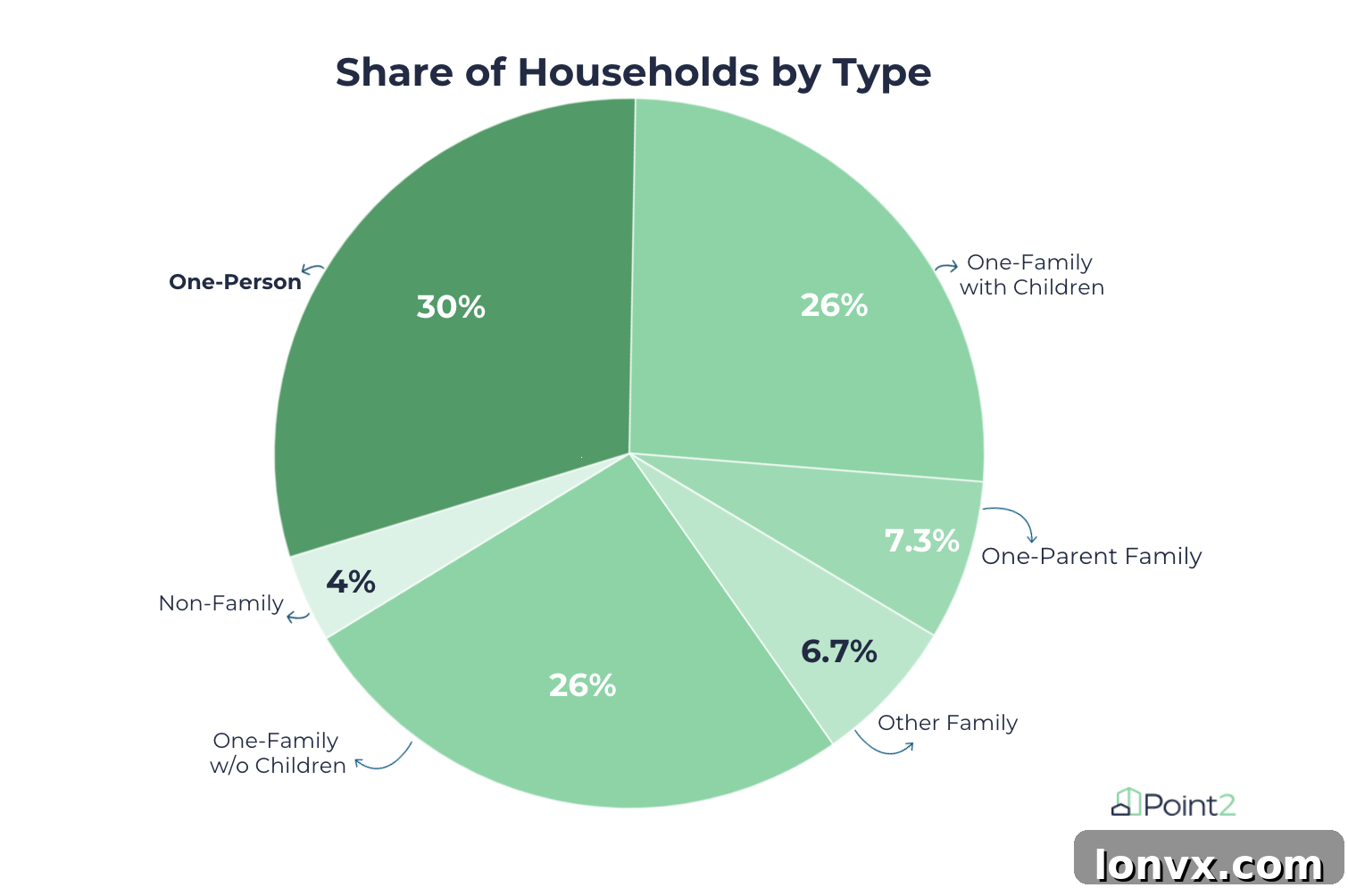
Supporting this sociological shift, Statistics Canada data reveals that single-person households have, for the first time in history, become the most common household type, constituting 30 percent of all households. This remarkable increase represents more than a doubling of such households since 1981, providing a robust statistical foundation for the observed surge in solo home buying. This demographic trend directly correlates with the growing comfort and capability of individuals to navigate the housing market on their own.
Ambitious Aspirations: The New Homebuyer’s Goals
The survey findings clearly illustrate that the new Canadian homebuyer possesses ambitious goals. A significant eight out of 10 Canadian renters aspire to acquire a single-family home, often preferring larger properties. This preference indicates a strong desire for space and traditional home characteristics, even among those entering the market alone.
Both the youngest renters (Gen Z) and the oldest (Baby Boomers over 65) exhibit a particularly strong determination to purchase property within the coming 12 months. This shared urgency, despite their vastly different life stages, highlights a common thread of proactive engagement with the housing market. Many in these demographics have substantial savings specifically earmarked for a down payment, underscoring their readiness and commitment.
Despite the intensely competitive nature of the current housing market, Canadian renters, particularly solo buyers, remain undeterred. Their unwavering commitment to achieving homeownership, even if it means navigating the complexities alone, speaks volumes about the enduring appeal and perceived necessity of owning property in Canada. This resilience in the face of market challenges is a defining characteristic of the new wave of independent homebuyers.
Navigating the Canadian Real Estate Market as a Solo Buyer
While the ambition to buy alone is strong, the path for a solo homebuyer in Canada is fraught with unique challenges. The affordability crisis, characterized by persistently high property values and volatile interest rates, impacts single-income earners disproportionately. Without a second income to bolster mortgage applications or down payment savings, solo buyers often face stricter lending criteria and a more limited range of accessible properties.
However, opportunities do exist. Condominiums, for instance, often serve as a more accessible entry point into the market for single individuals, offering a stepping stone to property ownership without the immediate financial burden of a detached home. Strategic savings, meticulous financial planning, and a strong credit history become even more critical for solo buyers aiming to overcome these hurdles. The psychological aspect of making such a significant financial decision independently also plays a role, requiring a high degree of self-reliance and conviction.
The Future Landscape of Canadian Homeownership
The increasing prominence of the solo homebuyer and single-person households carries profound implications for the future of the Canadian housing market. This trend will likely continue to influence demand for certain types of properties, potentially increasing the appeal of smaller single-family homes, townhouses, and condominiums tailored for individual living.
Developers and urban planners may need to adapt their strategies to cater to this growing demographic, designing communities and housing units that better suit the needs and preferences of single occupants. Furthermore, the societal implications extend beyond real estate; an increase in independent living can impact community structures, social services, and even the broader economy. The evolving definition of family and household, with the solo individual at its forefront, is fundamentally reshaping the fabric of Canadian society and its approach to one of life’s most significant investments: homeownership.
Conclusion: A New Era of Independent Homeownership
The Canadian housing market is witnessing a fundamental shift, propelled by the rise of the solo homebuyer. Driven by a desire for autonomy and an evolving understanding of life’s milestones, more and more Canadians are embracing the challenge of purchasing a home independently. From ambitious Gen Z individuals saving diligently to Baby Boomers seeking smaller, manageable properties, the trend of single-person homeownership is pervasive across generations.
Despite formidable obstacles such as high home prices and significant down payment requirements, the resolve of these independent buyers remains unshaken. This shift reflects broader societal changes, where personal independence is increasingly valued, and traditional prerequisites for major life decisions are being reevaluated. As single-person households become the norm, the Canadian real estate landscape will continue to adapt, marking a new era where homeownership is not just a shared dream, but an increasingly attainable individual pursuit.