
Canadian Home Sellers Prioritize Size Over Affordability in 2024, Survey Reveals
The Canadian housing market is often characterized by discussions around high living costs, fluctuating interest rates, and affordability challenges. However, a recent and insightful survey by Wahi presents a compelling, perhaps surprising, counter-narrative. The Wahi 2024 Homebuyer Intentions survey, which delves into the motivations of Canadians planning to sell their homes, found that the primary reasons for listing a property are predominantly related to the home’s size – whether it’s the need for more space or less. This revelation suggests that for a significant portion of the market, personal life stages and space requirements are more influential drivers than the prevailing economic climate.
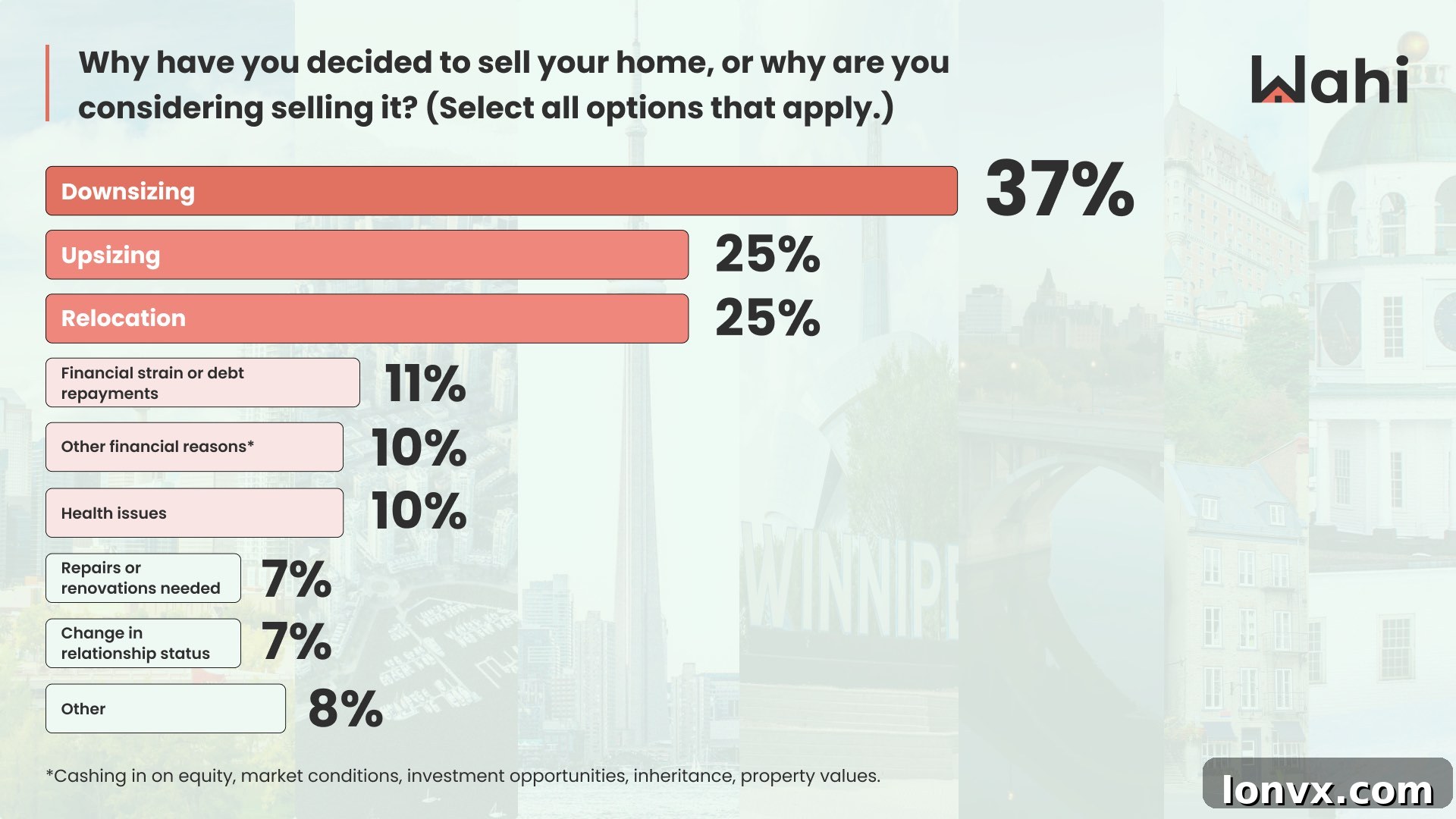
While financial strain and debt repayment (including mortgage debt) do play a role for some, the survey indicates this is not the overwhelming factor. Specifically, 11 percent of homeowners planning to sell within the next five years cited financial pressure as at least a partial reason. This figure, though significant for those affected, points to a broader market where other considerations hold greater sway. Benjy Katchen, CEO of Wahi, highlighted this perspective: “While it’s a challenging time whenever someone is forced to sell their home, the survey results indicate that this remains relatively uncommon in the Canadian housing market compared to other reasons for selling.” Katchen also optimistically noted that “The Bank of Canada’s recent rate cut should also provide some relief for homeowners,” hinting at a potential easing of some financial pressures, though it wasn’t a top motivator for selling.
Understanding these underlying motivations is crucial for anyone navigating the Canadian real estate landscape, be it a prospective seller strategizing their move or a buyer attempting to gauge market supply. The insights from the Wahi survey paint a picture of a dynamic market driven by diverse personal circumstances rather than a singular, economically imposed necessity.
Downsizing: The Leading Catalyst for Home Sales Across Canada
When respondents were given the opportunity to select multiple reasons for selling their homes, a clear leader emerged: downsizing. A substantial 37 percent of Canadian homeowners identified downsizing as their primary motivation for putting their property on the market. This trend is particularly pronounced among older demographics, reflecting Canada’s aging population and the natural progression of life stages.
The survey’s demographic breakdown for downsizers underscores this point vividly. Only 1 percent of those planning to downsize were aged 18 to 34, indicating that young adults rarely seek smaller living arrangements unless perhaps relocating. The 35 to 54 age group accounted for 30 percent of downsizers, often representing individuals whose children are growing up or leaving home, leading to a reduced need for expansive living spaces. However, the majority, an overwhelming 69 percent, were aged 55 and up. This group typically comprises empty-nesters, retirees, or individuals looking to simplify their lives, reduce maintenance, and potentially free up equity for retirement or other investments.
Downsizing is not merely about moving to a smaller house; it often signifies a shift in lifestyle and financial planning. For many, it means trading a large family home for something more manageable, potentially single-level, and with lower upkeep costs. This move can significantly reduce expenses such as property taxes, utilities, and insurance, thereby enhancing financial flexibility in retirement. Furthermore, by selling a larger, potentially higher-valued property and purchasing a smaller one, downsizers can unlock substantial capital, which can be reinvested, used for travel, or provide a financial cushion. This strategic financial maneuver, combined with the desire for less maintenance and a simpler living environment, firmly positions downsizing as the leading reason for selling in the current Canadian market.
Upsizing and Relocation: Tied as the Second Most Common Selling Motivations
Following closely behind downsizing, upsizing and relocation each accounted for 25 percent of seller motivations, tying as the second most popular reasons to sell a home. These two categories represent distinct life changes, each with its own set of drivers and demographic profiles.
The Drive to Upsize: Growing Families and Evolving Needs
Upsizing is predominantly a concern for younger to middle-aged demographics, often driven by the expansion of families or the need for increased functional space. The Wahi survey found that approximately 94 percent of those looking to upsize were between 18 and 54 years old. This age bracket typically encompasses couples starting families, those with growing children needing individual rooms, or professionals requiring dedicated home office spaces. The demand for more square footage can also stem from a desire for better amenities, a larger yard, or simply more room for hobbies and entertaining. While a smaller percentage (6 percent) of individuals aged 55 and up also sought to upsize, this could be attributed to specific needs like accommodating multi-generational living or desiring more accessible features in a larger, purpose-built home.
Upsizing in today’s market often comes with its own set of challenges, particularly in competitive urban centres where larger homes command significant premiums. Sellers looking to upsize must carefully evaluate their financial capacity, potential mortgage increases, and the availability of suitable properties that meet their expanding needs.
Relocation: Seeking a Better Quality of Life
Relocation, tying with upsizing at 25 percent, highlights a broader trend of Canadians seeking new environments. For those planning to relocate, the primary driving force, cited by 53 percent of respondents, was the pursuit of a better quality of life. This encompasses a wide array of factors, from desiring a slower pace of life, access to nature, or more affordable living, to proximity to family, better job opportunities in a new city, or a change in climate.
Interestingly, the inclination to relocate for a better quality of life showed a notable distinction between urban and rural dwellers. A higher percentage of rural community residents (62 percent) cited this as their reason for moving, compared to 51 percent of urban dwellers. This suggests that for many in rural areas, relocation might involve moving to a different rural setting or a smaller town that better aligns with their lifestyle aspirations, or perhaps even moving to a city for amenities. Conversely, urban dwellers might be seeking the tranquility and often lower cost of living found in suburban or rural areas, a trend that has been amplified by the rise of remote work opportunities allowing greater geographical flexibility.
The pursuit of a better quality of life often involves a comprehensive assessment of various factors, including community safety, access to healthcare and education, recreational opportunities, and overall cost of living. This motivation signifies a deeper, more personal evaluation of one’s environment and aspirations beyond just the physical structure of a home.
Achieving the Desired Sale Price: Market Conditions Reign Supreme
For Canadian homeowners planning to sell within the next five years, achieving their desired sale price is a critical objective. The Wahi survey asked respondents to identify their top three priorities from a list of seven steps to maximize their property’s value. The responses provided valuable insights into seller strategies and what they perceive as most impactful in a competitive market.
The overwhelming top priority, chosen by 23 percent of sellers, was “waiting for the right market conditions.” This emphasizes that market timing is considered paramount. Sellers understand that external factors like supply and demand, economic stability, and buyer confidence play a significant role in their property’s valuation. They are often willing to delay their sale if they believe waiting will yield a better return, showcasing a strategic patience rather than an urgent need to sell. This priority suggests sellers are actively monitoring market trends and are prepared to adapt their timelines based on prevailing conditions, such as a seller’s market characterized by low inventory and strong buyer competition.
Tied for second place, each at 16 percent, were “renovations or repairs” and “finding a good realtor.” The importance of renovations and repairs highlights the recognition that a well-maintained and updated home can significantly enhance its appeal and value. This could range from essential repairs that prevent buyer concerns to cosmetic upgrades that modernize the space and attract a broader range of potential buyers. Smart renovations, focusing on areas with high return on investment such as kitchens and bathrooms, or ensuring critical systems like roofing and HVAC are in good order, are seen as direct contributors to a higher sale price.
Equally valued is the role of a skilled real estate agent. “Finding a good realtor” underscores the understanding that professional guidance is indispensable. A proficient realtor brings invaluable market knowledge, negotiation expertise, a robust marketing strategy, and an extensive network of potential buyers. Their ability to accurately price a home, showcase its best features, and navigate the complexities of offers and counter-offers is seen as a direct lever for achieving the desired sale price.
Other factors, while important, were cited less frequently as top priorities. Only 15 percent of sellers considered “waiting for appealing interest rates” as most important. While interest rates undeniably affect buyer affordability and thus market demand, sellers appear to view broader market conditions as more influential on their ultimate sale price. Factors such as “home staging” (9 percent), “seasonality” (7 percent), and “enhancing curb appeal” (7 percent) were also identified as important but ranked lower. These elements, though crucial for presenting a property in its best light and creating a strong first impression, are often considered secondary to overall market timing, physical condition, and professional representation.
In conclusion, the Wahi 2024 Home Seller Intentions survey offers a multifaceted view of the Canadian housing market, revealing that personal life circumstances, particularly the need for changes in living space, are often more powerful motivators for selling than economic pressures alone. Sellers are also strategically minded, prioritizing market conditions and professional assistance to maximize their return. These insights are invaluable for understanding the supply side of Canada’s dynamic real estate landscape and anticipating future market trends.
Enjoying this article?
Get the latest real estate insights and market updates delivered directly to your inbox 3x a week, so you stay ahead in the Canadian real estate industry.