The Greater Toronto Area (GTA) real estate market navigated a complex landscape over the past year, characterized by a unique blend of challenges and emerging opportunities. Initial optimism for a robust spring rebound largely gave way to a more subdued reality, as declining prices, moderate home sales activity, and a notable increase in the average number of days properties spent on the market became the defining characteristics. While glimpses of renewed buyer interest emerged in the latter half of the year, particularly fueled by discussions around potential interest rate adjustments, these were insufficient to ignite substantial growth across the board.
However, this shift proved advantageous for prospective buyers. A significant influx of inventory into the market provided them with unprecedented choice, fostering a more competitive environment that ultimately helped to keep prices in check. This period marked a crucial transition, moving away from the frenetic seller’s markets of previous years towards a more balanced, and at times buyer-friendly, environment. According to Wahi’s comprehensive 2024 Housing Market Snapshot, which meticulously analyzed TRREB data from January 1 to November 30 and compared it to the same period in the preceding year, the market’s performance reflected a profound re-calibration.
Understanding these dynamics is crucial for anyone involved in the GTA’s property landscape, whether as a buyer, seller, or investor. The following analysis delves into the specifics of this transitional period, highlighting key trends across prices, sales volumes, market segments, and regional variations.
GTA Market Overview: Prices Adjust, Sales Stabilize, and Inventory Grows
Across the entire Greater Toronto Area, the median sales price experienced a modest but significant dip, settling at $965,000. This represented a 2 percent year-over-year decline, signaling a market adjusting to new economic realities. In a notable trend, the total number of home sales remained largely unchanged from the previous year, holding steady at 62,651 transactions. While this might suggest stability, it occurred amidst a backdrop of increased inventory, indicating that buyer caution or affordability constraints continued to temper demand.
One of the clearest indicators of the market’s shift was the extended time homes spent awaiting sale. The average days on market (DOM) rose to 24 days, an increase of five days compared to the previous year. This extended timeline provided buyers with more time for due diligence, negotiation, and reflection, a stark contrast to the rapid-fire bidding wars that once dominated the market.
Regional Insights: A Diverse Picture Across the GTA
While the overall GTA statistics paint a broad picture, a closer look at individual regions reveals nuanced variations:
- Toronto: The City of Toronto observed a 2 percent decrease in its median sales price, reaching $888,000. Total sales also saw a marginal decline of 2 percent, with 24,017 transactions recorded. This suggests a relatively consistent, albeit slightly softer, performance within the city core compared to the broader region.
- Durham: East of Toronto, Durham Region recorded a 3 percent price drop, with the median price at $860,000. Interestingly, despite the price adjustment, sales in Durham experienced a 3 percent increase, reaching 8,862 units. This uptick in sales, potentially driven by relatively more affordable pricing, highlights Durham’s appeal to buyers seeking value outside the immediate urban center.
- Halton: Known for its affluent communities, Halton Region saw its median sale price fall by 2 percent to $1.08 million. Similar to Durham, Halton also experienced a 3 percent increase in sales, totaling 7,713 transactions. This suggests that even in higher-priced markets, adjusted pricing could stimulate sales activity among discerning buyers.
- Peel: In Peel Region, the median sales price mirrored the overall GTA trend, dropping 2 percent to $970,000. The number of sales in Peel also declined by 2 percent, reaching 11,363, indicating a more direct reflection of the broader market’s cautious sentiment.
- York: York Region, home to some of the GTA’s most expensive properties, also faced price adjustments. Its median price fell 3 percent to just under $1.22 million. Sales activity in York saw a marginal 1 percent decline, with 11,457 homes sold.
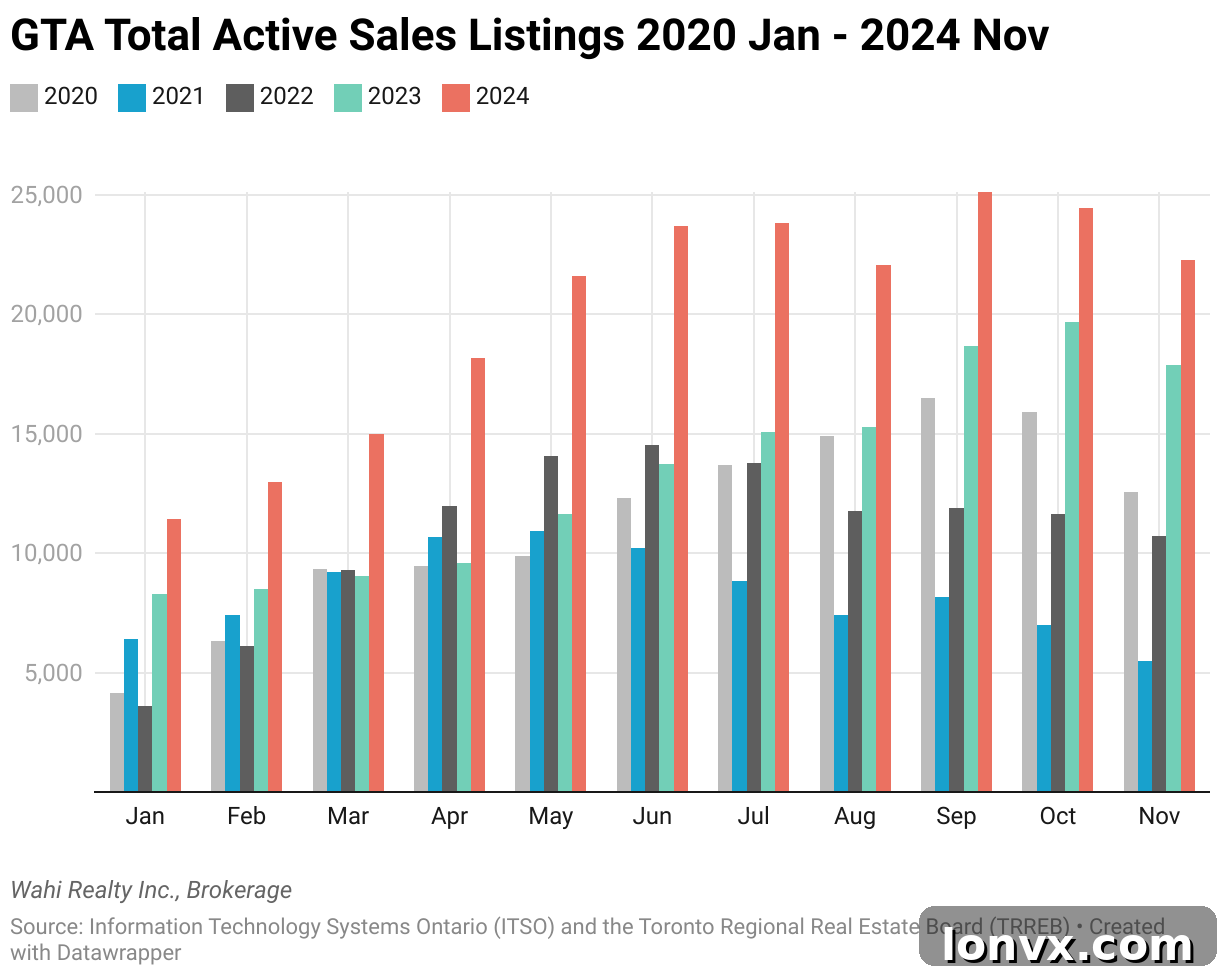
A consistent theme throughout these regional analyses was the undeniable advantage for buyers, largely attributable to sustained high inventory levels. From May onwards, the number of homes actively listed on the market consistently remained above 20,000. This sustained supply provided ample choice, empowering buyers with greater negotiating leverage and reducing the urgency often associated with previous market cycles.
The Condo Market: Navigating Headwinds Amidst High Inventory
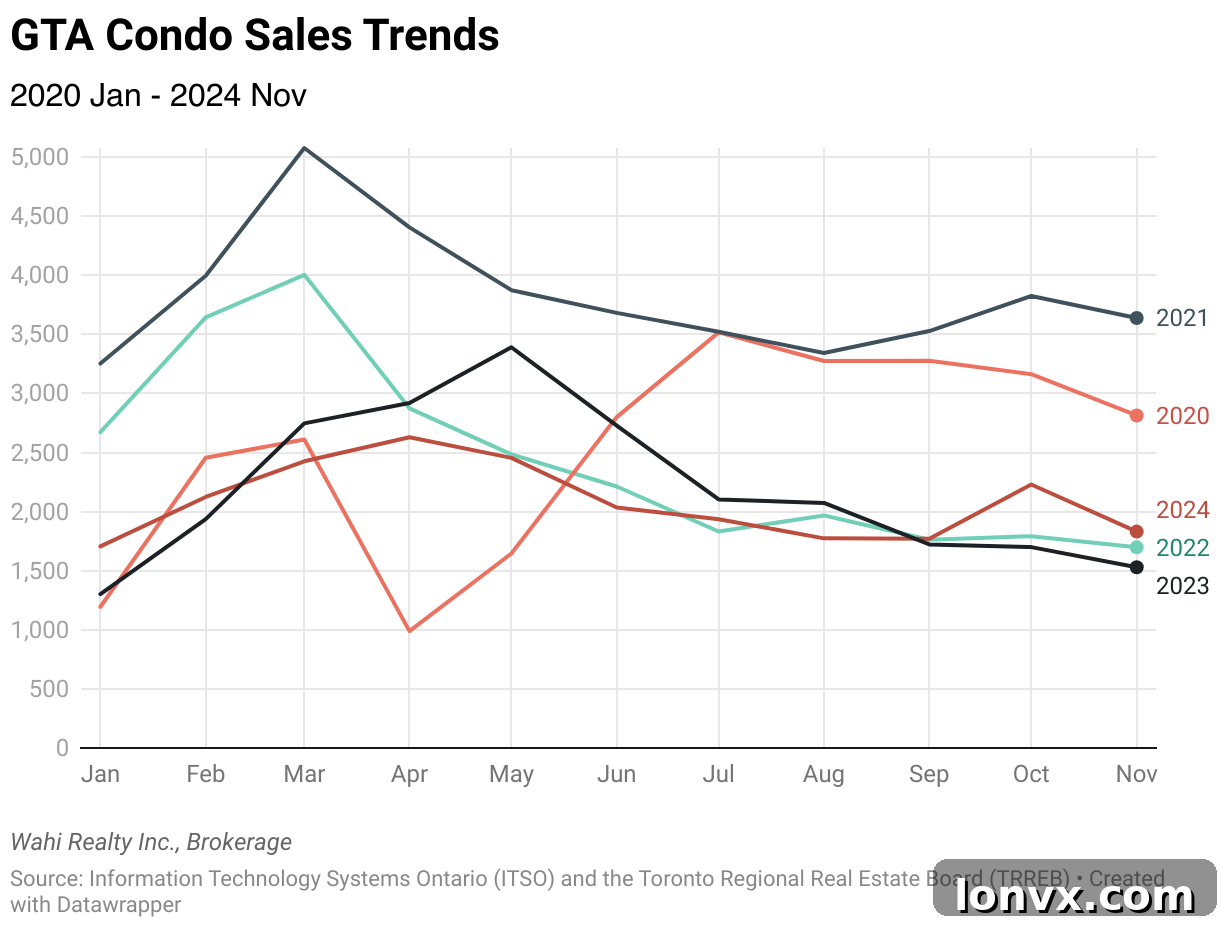
The condominium market within the GTA experienced more pronounced pressures compared to its single-family home counterpart. It underperformed the broader market, registering a 5 percent decline in sales volume and a 3 percent drop in median prices, which settled at $655,500. Condos also spent a significantly longer time on the market, with an average DOM of 30 days—a notable seven-day increase year-over-year.
This increased pressure on the condo sector can be attributed to several factors. High inventory levels played a crucial role, driven by the completion of numerous new developments and a tendency among some investors to offload properties. This confluence of factors led to a buyer’s market within the condo segment, allowing purchasers more flexibility and contributing to the downward pressure on prices. Wahi’s data further highlighted this disparity, noting that condos, on average, took nine days longer to sell than single-family homes.
Despite these challenges, the condo market did exhibit signs of resilience and renewed interest towards the end of the year. Wahi’s report indicated a significant surge in GTA condo sales during September, October, and November, reaching their highest levels in three years. This late-year momentum suggests that as prices adjusted and buyer confidence potentially improved, the inherent value and urban convenience of condominiums began to re-attract a segment of the market, perhaps those priced out of the single-family segment or drawn by the evolving affordability dynamics.
Single-Family Homes: A Pillar of Relative Stability
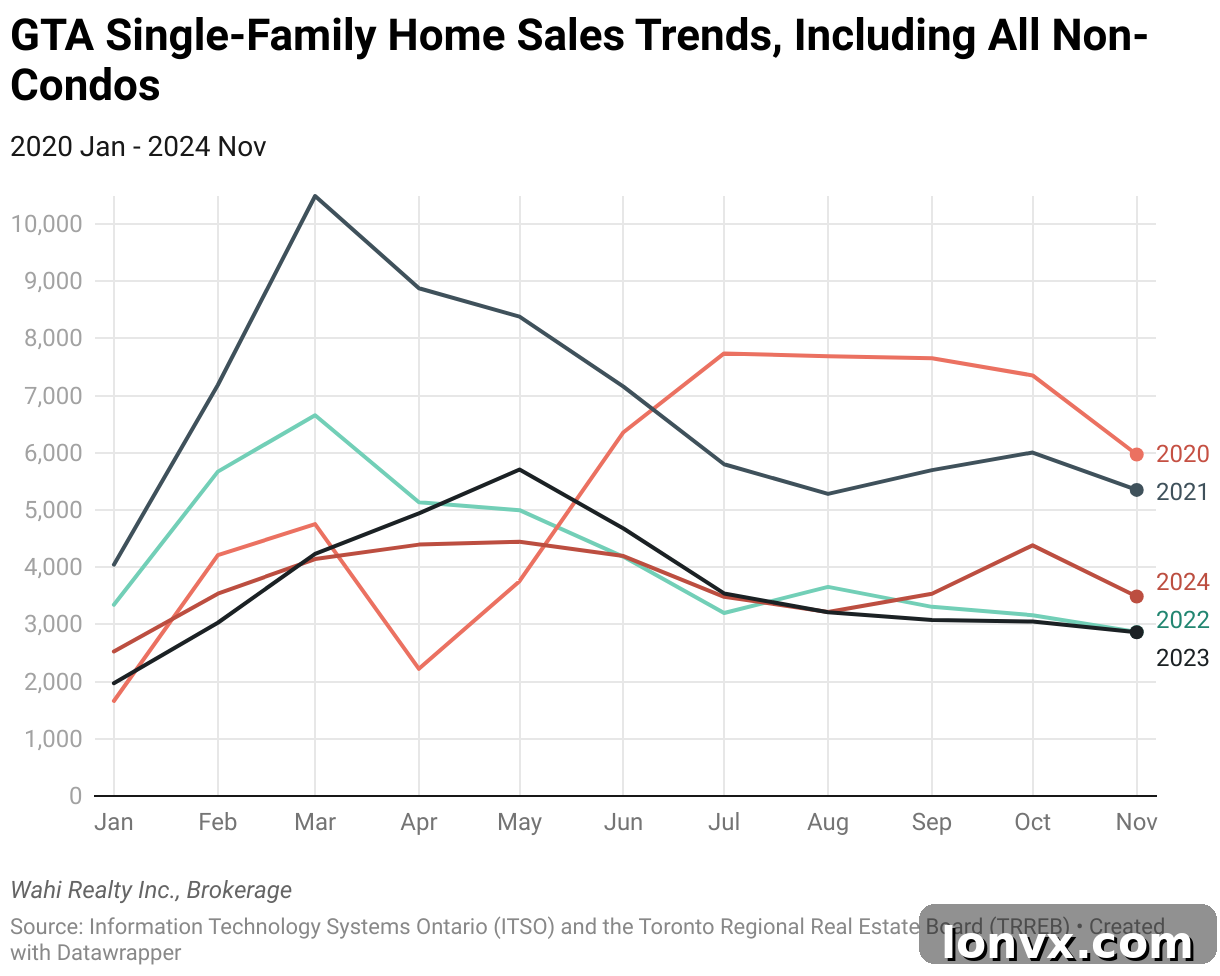
In contrast to the condo market, single-family homes demonstrated relatively greater stability throughout the year. This segment experienced a more moderate 2 percent year-over-year decline in median prices, reaching nearly $1.9 million. Encouragingly, sales for single-family homes actually saw a 2 percent increase, with 39,576 units sold. This resilience underscores the enduring demand for detached properties in the GTA, often considered a long-term investment or a preferred lifestyle choice for many families.
Furthermore, the single-family home market exhibited a sharper and more pronounced recovery during the fall months. Sales activity gained considerable momentum throughout September, October, and November, suggesting a return of buyer confidence for this property type. This could be attributed to a variety of factors, including potential buyers waiting for market corrections, a stronger underlying demand for space and privacy, or perhaps a more limited supply compared to the rapidly expanding condo inventory. The stability in this segment provided a counter-balance to the broader market adjustments and highlighted the diverse preferences and financial capacities within the GTA’s real estate landscape.
Spotlight on Popular Communities and Neighbourhoods
Wahi’s report also shed light on which communities and neighbourhoods captured the most interest from buyers, based on website search volume and actual sales data. This provides valuable insight into where demand is currently concentrated.
Most Searched Neighbourhoods (Indicating High Interest):
- Bowmanville (856 homes sold): A community in Durham Region, its high search volume coupled with significant sales indicates strong overall appeal, likely driven by affordability and family-friendly amenities.
- The Danforth (253 homes sold): This vibrant Toronto neighbourhood continues to attract interest, showcasing a balance between urban living and community charm.
- Jane and Finch (155 homes sold): High search volume here might point to evolving perceptions or interest in areas with more accessible price points within Toronto.
- Bridle Path (seven homes sold): Despite very low sales volume, its presence on the “most searched” list underscores its perennial status as a highly aspirational, luxury enclave.
- Mount Pleasant, Brampton (481 homes sold): This Brampton community highlights the continuous appeal of suburban areas within Peel Region.
GTA Neighbourhoods with the Most Sales (Indicating High Transaction Volume):
- Willowdale (1,134 homes sold): A large and diverse neighbourhood in North York, its high sales volume reflects its density, variety of housing, and excellent amenities.
- Neighbourhood of Newmarket (922 homes sold): This York Region town continues to be a hub of activity, offering a blend of suburban lifestyle with good connectivity.
- Bowmanville (856 homes sold): Appearing on both lists, Bowmanville’s high sales figures solidify its position as a highly desirable and active market.
- Entertainment District (792 homes sold): The robust sales here underscore the ongoing demand for urban condominium living in downtown Toronto’s vibrant core.
- Neighbourhood of Aurora (754 homes sold): Another strong performer in York Region, Aurora’s consistent sales volume speaks to its attractiveness for families and professionals.
The Evolving Pace of Sales: From Rapid Turnaround to Measured Decisions
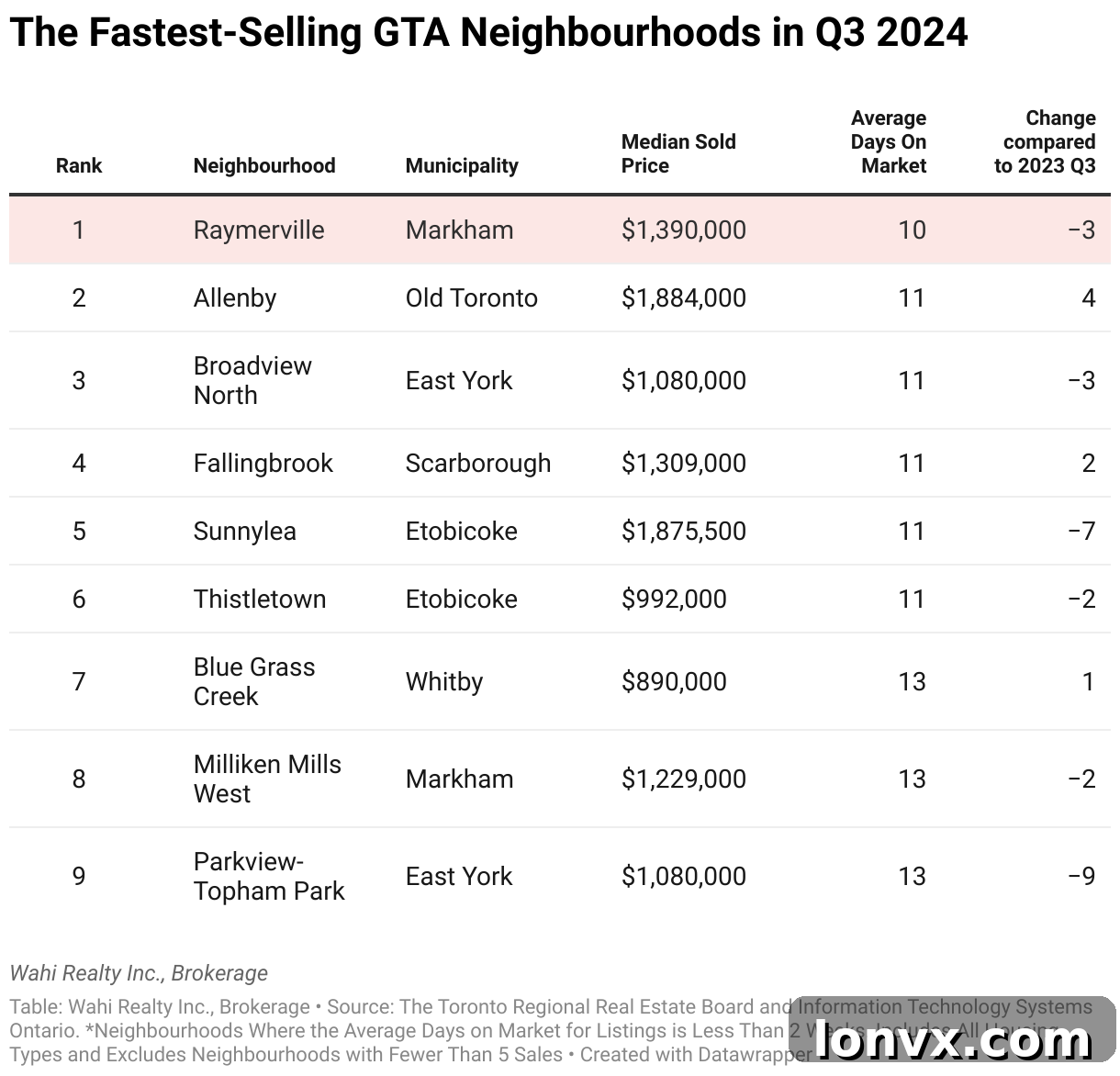
The shift in market dynamics was perhaps most acutely felt in the time it took for properties to sell. Wahi’s data revealed that in the third quarter of the year, homes took longer to sell in a staggering 86 percent of neighbourhoods across the GTA, compared to the same period in 2023. This widespread increase in average days on market (DOM) signals a broader trend of buyers taking more time to evaluate options, conduct due diligence, and negotiate prices, rather than feeling pressured into hasty decisions.
However, even within this trend, pockets of exceptional demand emerged. In certain high-demand or unique areas, the average DOM remained remarkably low, sometimes as little as 10 days. These fastest-selling neighbourhoods often possess specific attributes such as excellent schools, unique architectural styles, desirable amenities, or strategic locations that continue to attract swift buyer interest, even in a cooling market.
A Clear Shift: The Decline of Overbidding Trends
One of the most defining characteristics of the previous market boom was the prevalence of overbidding, where properties frequently sold above their asking price. The past year saw a dramatic reversal of this trend. For much of the year, the majority of the GTA’s approximately 400 neighbourhoods experienced a significant decline in overbidding. As of November, an overwhelming 91 percent of GTA neighbourhoods were firmly in “underbidding territory,” meaning that homes were more often selling for less than their original asking price, or at least without intense bidding wars. This figure represents an increase from 88 percent in October, further cementing the shift in negotiating power. This fundamental change empowers buyers, allowing for more strategic offers and a greater opportunity to negotiate on price and terms, effectively bringing an end to the era of rampant bidding and offering a more transparent transaction process.
The GTA Housing Market: A Buyer’s Market in Transition and Transformation
Wahi’s 2024 report provides a clear and compelling picture of a Greater Toronto Area housing market in a profound state of transition. The defining features of this period have been a notable increase in market inventory and moderate, yet consistent, price declines across various segments and regions. This combination has fundamentally reshaped the landscape, moving it decisively away from the seller-dominated conditions that characterized much of the preceding decade.
As Benjy Katchen, CEO of Wahi, eloquently summarizes in the report, “In 2024, Toronto homebuyers had more choice in the market than they have in years, with listings piling up to the highest level in recent memory.” This statement perfectly encapsulates the essence of the past year: an environment where choice, rather than scarcity, became the guiding principle for buyers. This abundance of listings afforded prospective homeowners the luxury of time, empowering them to conduct thorough research, evaluate multiple options, and negotiate from a stronger position.
Looking ahead, the implications of this transition are significant. While the market has seen price adjustments, the fundamental demand for housing in the GTA remains robust. The easing of inflationary pressures and the potential for future interest rate cuts could further stimulate buyer activity, potentially stabilizing prices or leading to modest gains in specific segments. However, the experience of the past year suggests that the days of unchecked price escalation are likely behind us for the foreseeable future. The market is evolving towards a more balanced and sustainable trajectory, where careful analysis, strategic decision-making, and an understanding of nuanced regional trends will be paramount for all participants. This transformed market offers both challenges and distinct opportunities, heralding a new chapter for real estate in the Greater Toronto Area.
Enjoying this article?
Get the latest REM articles in your inbox 3x week so you stay up to date on the latest in the Canadian real estate industry