
Americans Eye Canada: A Surge in Interest Amidst U.S. Election Volatility
As the United States presidential election cycle intensifies, a recurring phenomenon is once again taking hold: a significant number of Americans are casting their gaze northward. Recent data from Royal LePage, a prominent Canadian real estate firm, reveals a remarkable surge in website traffic originating from south of the border, indicating a burgeoning interest in Canadian property and potentially, a new life.
The indicators began to surface strongly in June, coinciding with the ramp-up of the U.S. election season. Royal LePage reported an astounding 104 percent week-over-week increase in visits from American users to their royallepage.ca website during mid-June. This figure also represents a substantial 67 percent rise compared to the same period last year. The momentum only grew following the first highly anticipated presidential debate between incumbent President Joe Biden and Republican nominee Donald Trump. Post-debate, U.S. traffic saw an additional 4 percent boost, culminating in an impressive 112 percent jump over early summer metrics. This heightened curiosity, far from being a fleeting trend, has shown remarkable persistence.
Phil Soper, President and CEO of Royal LePage, articulated the enduring appeal of Canada, stating, “Canada consistently ranks among the world’s most desirable places to live, naturally making it a top choice for international relocation. The country’s inherent stability, exceptional quality of life, universal healthcare system, and high-quality educational institutions render it particularly attractive to Americans. The added advantages of geographical proximity and the absence of a language barrier in most regions further solidify its allure.” This confluence of factors creates a compelling narrative for those seeking an alternative to the political and social climate often perceived as tumultuous in the United States.
Connecting Political Tensions to Real Estate Curiosity
The link between U.S. political events and spikes in Canadian real estate interest is undeniable. July recorded the highest levels of American traffic to the Royal LePage website over the past year, highlighted by a significant single-day surge on July 15th. This particular date coincided precisely with Donald Trump’s official nomination as the Republican candidate, following a series of impactful campaign rallies. Such patterns are not unprecedented. Similar surges in U.S. interest were prominently observed during the 2016 election cycle. In the immediate aftermath of Trump’s victory, Royal LePage documented a staggering 329 percent spike in American web traffic, followed by a continued 210 percent increase in the subsequent week. These historical precedents firmly establish a pattern where pivotal moments in U.S. politics directly correlate with amplified American consideration of Canada.
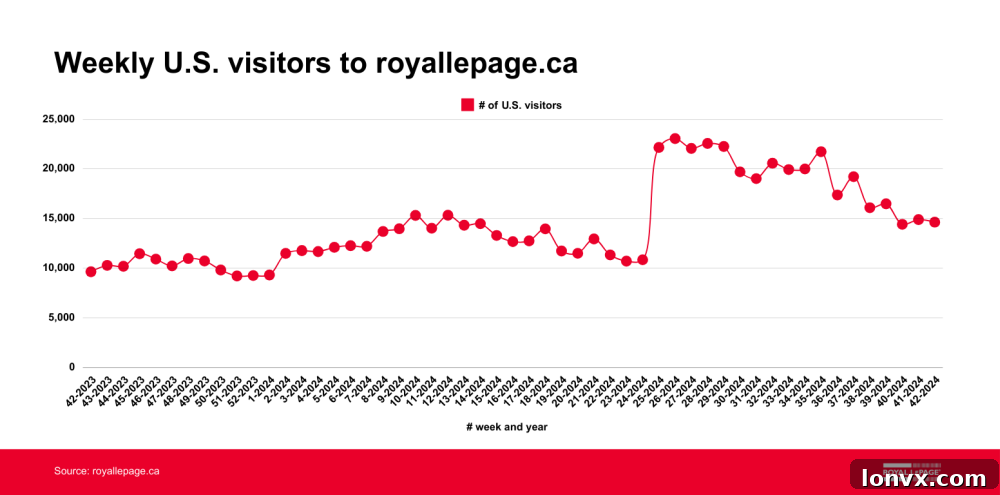
Figure: U.S. Web Traffic to Royal LePage.ca during key election events.
Soper explains this pronounced interest as, in part, a response to the inherent uncertainties that often accompany U.S. election periods. He elaborates, “While Americans constitute a relatively small fraction of the total newcomers Canada welcomes annually, election seasons invariably ignite a heightened level of interest in their northern neighbor. It is crucial to distinguish, however, between merely browsing real estate listings and actually committing to a move. Given Canada’s robust and rigorous immigration process, coupled with recent adjustments and cuts to federal immigration targets, only truly serious and well-qualified applicants will ultimately be able to make the transition.” This highlights the significant difference between aspiration and the practicalities of international relocation, underscoring that while interest is high, the barrier to entry remains substantial.
Key U.S. Regions Fueling Canadian Real Estate Interest
An in-depth analysis of Royal LePage’s data offers fascinating insights into the geographical origins of this American interest. The majority of American visitors to the site hail from traditionally Democratic-leaning, or “blue,” states. This trend suggests that individuals who may feel politically disenfranchised or concerned about the direction of U.S. policy under certain administrations are more actively exploring alternatives. However, a notable exception emerged: South Carolina, a state with a strong Republican leaning, surprisingly led in website visits since June. This anomaly suggests that motivations for considering a move to Canada are not solely tied to political affiliation but may also encompass economic factors, lifestyle preferences, or even the allure of specific Canadian regions for recreational purposes, transcending traditional political divides.
Canada’s largest and most vibrant markets have, predictably, garnered the lion’s share of attention from these U.S. viewers. The provinces of Ontario, British Columbia, and Quebec collectively accounted for a remarkable 70 percent of all page views originating from American users. Ontario, with its economic powerhouse cities like Toronto and its diverse industries, emerged as the frontrunner, attracting 38 percent of regional searches. British Columbia, renowned for its stunning natural beauty, outdoor lifestyle, and burgeoning tech sector centered around Vancouver, followed with 17 percent. Quebec, with its unique French-Canadian culture, European charm, and relatively more affordable urban centers like Montreal compared to Toronto or Vancouver, captured 16 percent of American interest. These provinces offer a broad spectrum of opportunities and lifestyles, catering to varied American aspirations.
Soper elaborates on the historical context of cross-border real estate transactions, observing, “Historically, Americans have maintained an active presence in Canada’s recreational property markets, mirroring the trend of Canadians investing in the U.S. recreational sector. However, the current volatile political climate appears to be prompting Americans to look beyond mere vacation homes, exploring more permanent residential opportunities here in Canada.” This shift signifies a deeper, more profound consideration of Canada as a long-term home rather than just a seasonal escape, reflecting a potential desire for greater stability and a different social or political environment.
Canada’s Enduring Appeal: Beyond the Political Landscape
While U.S. political events clearly act as a catalyst, Canada’s appeal is rooted in fundamental strengths that consistently draw international attention. Its universal healthcare system, widely admired globally, offers peace of mind to potential immigrants accustomed to a complex and often costly private healthcare landscape. Canada’s commitment to quality education, from primary schools to world-class universities, provides excellent opportunities for families. Furthermore, the country’s progressive social policies, commitment to multiculturalism, and generally welcoming attitude towards immigrants contribute to a stable and inclusive society, which is a powerful draw for many. The vast natural landscapes, from the Pacific to the Atlantic, offer unparalleled opportunities for outdoor recreation and a high quality of life, whether one seeks vibrant urban centers or tranquil rural escapes.
Navigating the Path to Permanent Residency
Despite the magnetic pull, the journey from online browsing to actual relocation is multifaceted and requires diligent effort. Canada’s immigration system, while welcoming, is highly structured and merit-based. Programs like Express Entry, Provincial Nominee Programs (PNPs), and various skilled worker streams require applicants to meet specific criteria related to education, work experience, language proficiency, and age. Recent adjustments to immigration targets, while aimed at managing population growth and infrastructure, mean that the process remains competitive. Prospective immigrants must be prepared for a comprehensive application process, including detailed documentation, medical exams, and security checks. Financial planning is also crucial, as establishing oneself in a new country involves significant costs, including housing, initial living expenses, and understanding the local job market. This practical reality often filters out casual inquiries, ensuring that those who do make the move are genuinely committed and well-prepared for life in Canada.
Diverse Motivations for a Northward Move
The motivations behind this burgeoning interest are undoubtedly diverse. For some, it is a pursuit of political stability, a desire to live in a country perceived as more moderate or less polarized. For others, the draw is Canada’s robust social safety net, including universal healthcare and publicly funded education. Economic opportunities, particularly in flourishing tech hubs like Toronto, Vancouver, and Montreal, also play a significant role. Professionals seeking a different career trajectory, or entrepreneurs looking to tap into Canada’s innovative ecosystem, see the country as fertile ground. Additionally, the appeal of Canada’s natural beauty and slower pace of life for those seeking a change in lifestyle cannot be overstated. From the bustling multiculturalism of its major cities to the pristine wilderness of its national parks, Canada offers a wide array of environments to suit various preferences, making it a multifaceted destination for potential newcomers.
The Canadian Real Estate Market: What American Buyers Can Expect
For Americans contemplating a permanent move, understanding the Canadian real estate market is paramount. While some major Canadian cities, particularly Vancouver and Toronto, have experienced significant price appreciation, other regions offer comparatively more affordable options. The market dynamics differ from those in the U.S., influenced by factors such as interest rates set by the Bank of Canada, provincial housing policies, and specific regional economic conditions. Potential buyers would need to familiarize themselves with Canadian mortgage regulations, tax implications for non-residents, and local market nuances. Investing in a permanent home represents a substantial commitment, far beyond the casual purchase of a recreational property, necessitating thorough research and professional guidance. The shift from considering a vacation home to a primary residence highlights a deepening intent among American inquirers, reflecting a genuine desire to integrate into Canadian society and its economy.