
GTA Housing Market Faces Historic Slowdown Amid Economic Uncertainty
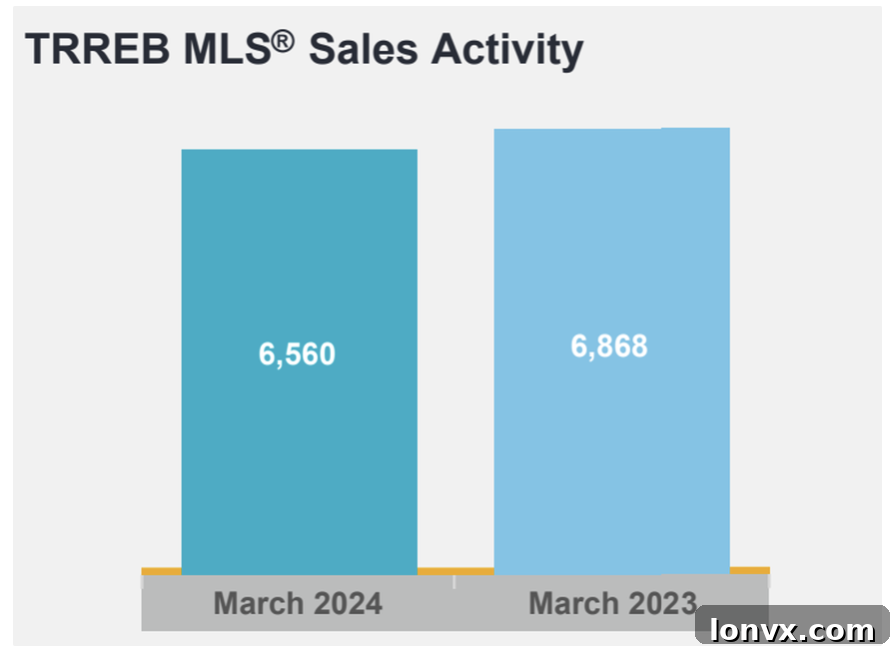
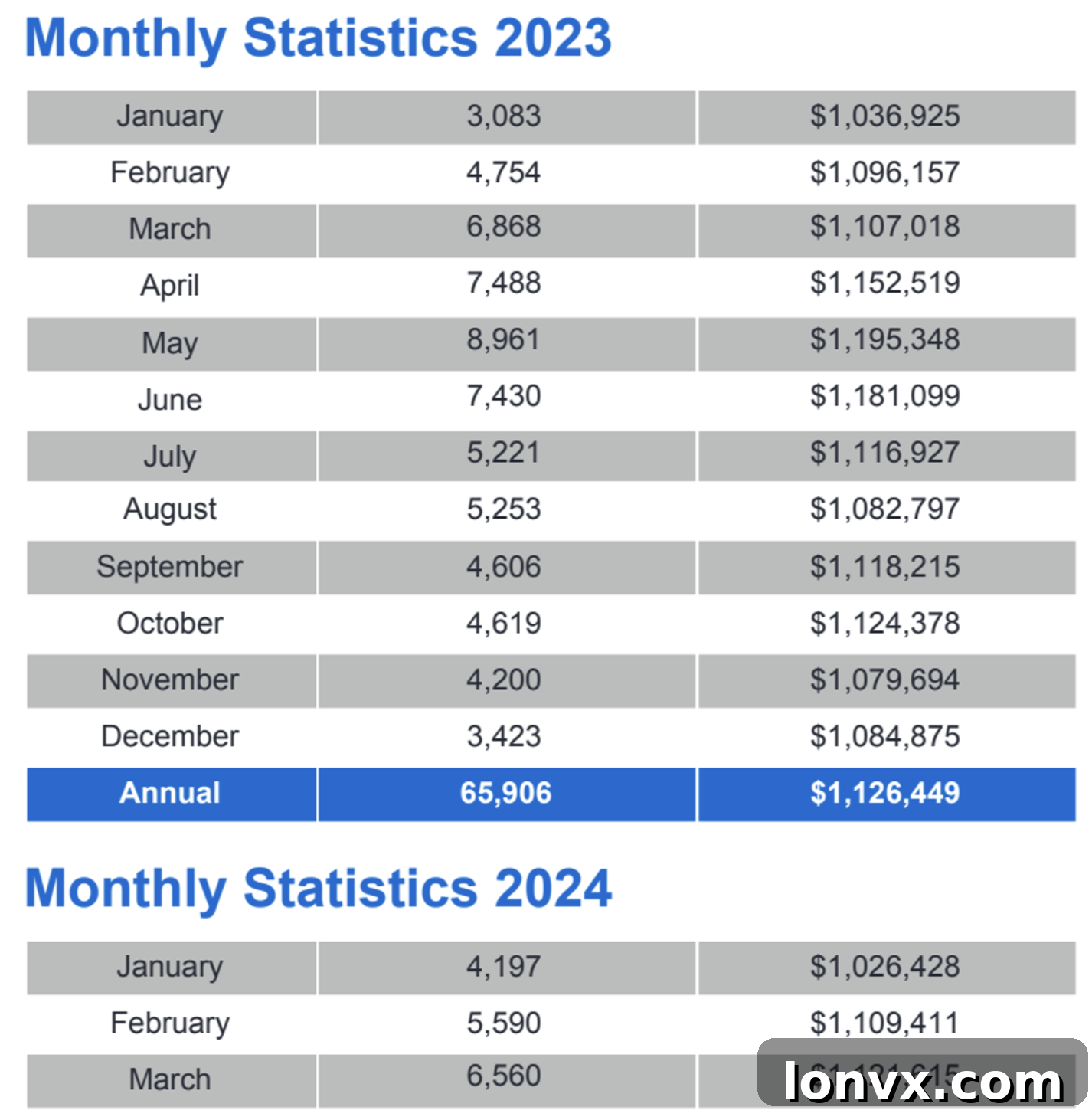
The Greater Toronto Area (GTA) housing market is currently navigating a challenging landscape, marked by a significant deceleration in activity. March of this year saw the fewest home sales recorded for that month since 2009, a period deeply entrenched in the aftermath of the global financial crisis. This stark comparison underscores the severity of the current market conditions. Remarkably, even against the backdrop of 2023 being one of the slowest years on record for GTA real estate, the spring market of 2024 has witnessed even fewer transactions. While the spring of 2023 experienced a relative surge in activity, that momentum quickly dissipated towards the latter half of the year, setting a subdued tone for the current period.
Signs of potential acceleration emerged at the beginning of 2024, yet much of this initial impetus has been muted. The primary driver behind this subdued sentiment is the persistent deferral of anticipated interest rate cuts. Hopes for lower borrowing costs, which could inject much-needed vitality into the market, continue to be pushed further into the future, leaving both buyers and sellers in a state of prolonged uncertainty.
Source: Toronto Regional Real Estate Board
The fluctuating interest rate environment and the resulting impact on affordability have created a delicate balance within the GTA real estate market. Potential homeowners are grappling with higher borrowing costs, while sellers are hesitant to list, hoping for more favorable conditions. This wait-and-see approach has contributed to the observed slowdown in sales volume, painting a picture of a market treading water rather than surging forward.
Source: Toronto Regional Real Estate Board
Some Optimism, But Concentrated First-Time Buyer Demand Could Impact Overall Prices
Despite the prevailing caution, a measured dose of optimism has been introduced into the market through a recent federal government initiative. The decision to increase Canadian Mortgage Bond issuance by 50 percent, equivalent to an additional $20 billion, aims to bolster liquidity, particularly at the lower end of the housing market. This influx of capital is designed to support the availability of funds for mortgage lending, making it easier for certain buyer segments to secure financing. The effects of this policy are already becoming evident, with an uptick in bidding wars observed for entry-level properties, especially those priced under the CMHC insurance cutoff of $1 million.
It’s tempting for market observers to view first-time buyers as a crucial pillar for propping up the housing market and establishing a price floor. Indeed, their potential influence is significant, especially considering the Bank of Canada’s finding that first-time buyers constitute nearly 50 percent of the entire purchaser market. Their active participation, particularly in the most accessible segments, can create localized demand pockets and support property values in those areas.
However, while their enthusiasm is vital, a potential caveat arises. If buyer demand continues to be heavily concentrated within the lower echelons of the market, it could inadvertently exert downward pressure on the average and median home prices across the GTA. Such a scenario would not only impact statistical benchmarks but could also further dampen overall market sentiment. This dynamic creates a delicate balance: while encouraging first-time homeownership is positive, an over-reliance or skewed distribution of demand could have broader implications for the perceived health and stability of the entire Greater Toronto Area housing market.
Modest Price Gains Fall Short of 2023’s Spring Surge
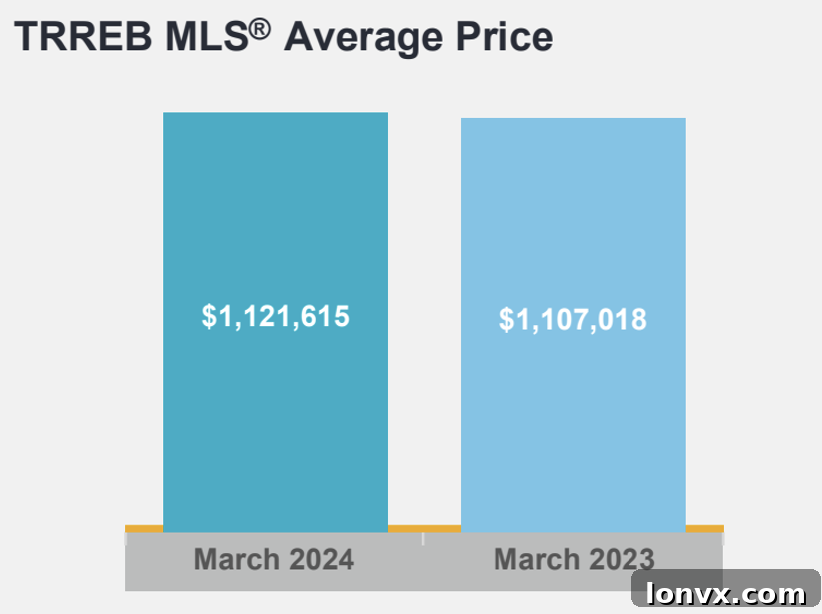
Despite a discernible improvement in market supply, with more homes available for sale, buyer competition in certain segments did lead to a slight uptick in the average home price. However, this modest increase pales in comparison to the robust, record-setting price growth witnessed during the spring market of 2023. The GTA reported a 4.5 percent decrease in sales activity in the recent period, juxtaposed with a significant 15 percent increase in new listings. This imbalance suggests that while more properties are entering the market, the absorption rate is not keeping pace with the new inventory.
On a seasonally adjusted basis, which accounts for typical fluctuations throughout the year, sales experienced a marginal drop of 1.1 percent compared to the preceding month of February. New listings also saw a slight decrease of 3 percent in the same period. Looking at the broader picture of the first quarter, the market concluded with an 11.2 percent increase in sales year-over-year, alongside an 18.3 percent increase in new listings year-over-year. These figures indicate a slow but steady increase in market activity and inventory compared to the previous year, yet the overall sentiment remains cautious.
Source: Toronto Regional Real Estate Board
Over the past quarter, market conditions have gradually shown signs of improvement, albeit subtle, as a growing number of buyers adjust their expectations and financial strategies to accommodate higher interest rates. This adaptation is a crucial factor in the market’s ability to stabilize. Furthermore, many homeowners are anticipating a more robust market improvement as the spring season progresses, a belief that is translating into a willingness to list their properties, thus contributing to the increase in new listings observed across the region.
The Divergent Paths: Two Camps of Market Outlook
The future trajectory of the GTA real estate market is currently the subject of intense debate, broadly dividing experts and participants into two distinct camps. The optimistic perspective, articulated by figures such as Toronto Regional Real Estate Board (TRREB) President Jennifer Pearce, posits that a reduction in borrowing costs would be the catalyst for a significant market upswing. According to this view, lower interest rates would invariably lead to a further increase in sales volumes, as more buyers enter the market or existing buyers find greater affordability. This heightened demand would, in turn, efficiently absorb the available new listings, creating tighter market conditions. In such an environment, the fundamental principles of supply and demand would inevitably push selling prices higher, signaling a robust recovery and growth phase for the housing sector.
Conversely, a more cautious, if not pessimistic, camp holds a starkly different outlook. This perspective suggests that the GTA and broader Canadian real estate market face significant structural challenges that transcend the immediate impact of interest rates. Proponents of this view point to a confluence of persistent headwinds, including the looming threat of an economic recession, a potentially reduced rate of effective population growth (even amidst overall population increases, the quality and type of growth relative to housing demand are scrutinized), and the entrenched “higher-for-longer” interest rate narrative. These factors, they argue, present a formidable obstacle to market appreciation, challenges not seen since the tumultuous period of the 1990s.
The 1990s serve as a particularly sobering historical parallel for the pessimistic camp. That era saw a protracted recovery period for the Canadian housing market, which took an arduous 12 years to merely reach its previous nominal house price peak. When adjusted for inflation, the recovery stretched even longer, a staggering 22 years, highlighting the profound and lasting impact of such a downturn. The concern is that if current economic conditions, combined with policy responses, mirror certain aspects of the 1990s, the path to a healthy and sustainable recovery could be similarly prolonged and arduous.
From an analysis of the current data and prevailing economic indicators, it is difficult to ignore the weight of the arguments presented by the latter camp. While federal interventions and the resilience of first-time buyers offer some support, the overarching macroeconomic pressures and the sustained uncertainty surrounding interest rates suggest a more challenging period ahead for the GTA housing market. The cautious stance appears well-founded, advocating for vigilance and a realistic assessment of potential risks rather than relying solely on the hope of imminent rate cuts.
Ultimately, the Greater Toronto Area real estate market finds itself at a critical juncture. The interplay of government policy, central bank decisions, consumer confidence, and broader economic forces will dictate its future. While a significant downturn is not a foregone conclusion, the parallels to past challenging periods, coupled with present economic headwinds, warrant a prudent and circumspect approach for all stakeholders involved.
Enjoying this article?
Get the latest REM articles in your inbox 3x week so you stay up to date on the latest in the Canadian real estate industry