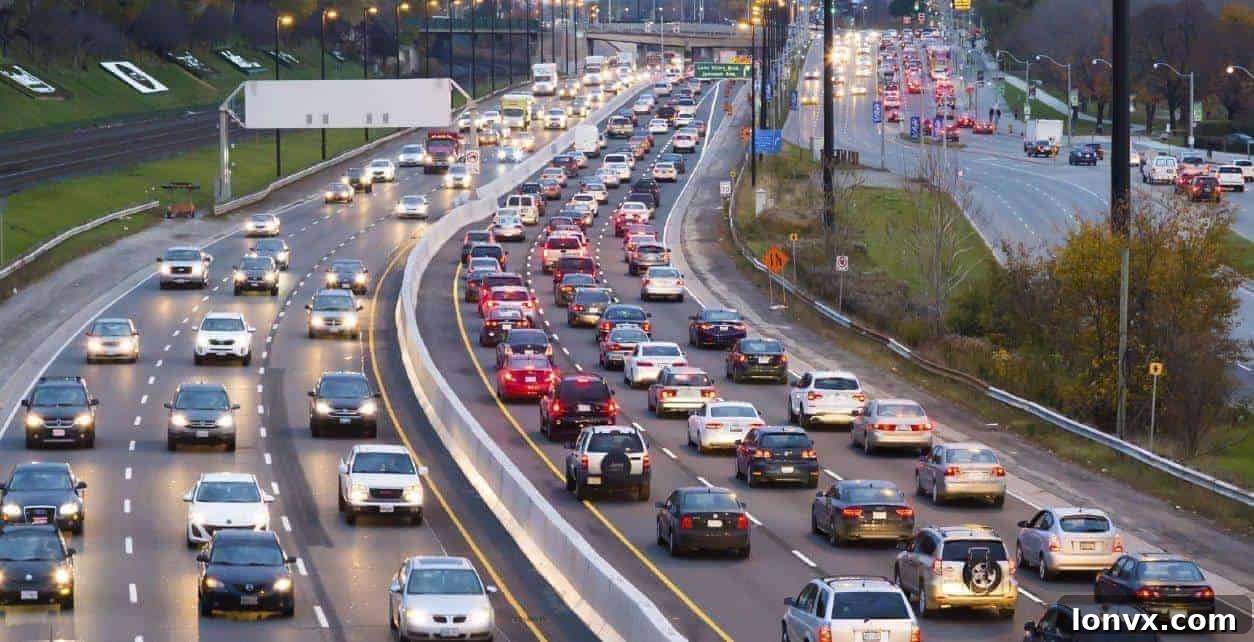
Toronto, like many bustling metropolises, grapples with the intricate dance of urban traffic. From my vantage point overlooking a busy thoroughfare, a familiar drama unfolds daily at the intersection of a minor side street and this major roadway. Signs explicitly prohibit turns onto the main road during peak rush hours, a critical measure designed to safeguard our high-density neighbourhood from becoming a shortcut for thousands of vehicles and thus preventing overwhelming traffic congestion. Yet, this crucial regulation often goes unenforced, creating a cycle of frustration and risk that mirrors challenges faced by countless communities across Canada.
The daily disregard for these prohibited turns by a knowing cohort of rush-hour commuters highlights a systemic breakdown in urban traffic management. Residents frequently voice their anger and concerns at community meetings, demanding stricter enforcement from local police officials. The narrative is always the same: a plea for safety, a desire for order, and a growing sense of helplessness as their pleas often fall on deaf ears.
The Staggering Cost of Traditional Traffic Enforcement
Recently, police authorities have been more candid about the significant hurdles preventing consistent enforcement. The core issue, they admit, is the prohibitive cost. Effective policing of this single intersection, to genuinely deter illegal turns, would necessitate a substantial deployment: at least two, possibly three, police cruisers, manned by a crew of five to six officers. Their mandate would include managing the ongoing flow of traffic on the already busy street while simultaneously pulling over offending drivers, issuing citations, and processing documentation. This extensive operation, while critical for maintaining order, paradoxically creates significant traffic jams on the main artery, further exacerbating rush-hour gridlock and adding immense stress to commuters.
The financial implications are staggering. A single day of rigorous enforcement at this one intersection could easily cost the city upwards of $100,000. Such an expense is simply not sustainable within current municipal budgets, forcing a difficult choice between enforcement and other critical public services. This fiscal constraint means that the safety and tranquility of an entire neighbourhood are compromised, not by a lack of will, but by a lack of funds. This isn’t an isolated incident unique to our street; it’s a recurring theme playing out in cities and towns nationwide, illustrating a widespread challenge in urban governance and resource allocation.
Automated Solutions: A Path to Smarter Urban Management
The solution to this specific traffic dilemma, and many like it, seems remarkably straightforward and technologically accessible: the installation of automated traffic cameras. Imagine a system where strategically placed cameras could capture the license plates of vehicles making illegal turns, automatically generating and dispatching traffic violation notices and fines to the registered owners. Such a system offers a multitude of benefits: it eliminates the need for expensive police patrols, prevents the creation of additional traffic jams caused by manual enforcement, and significantly reduces the inherent dangers posed to neighbourhoods during rush hour. With automated enforcement, the problem could be effectively solved, ensuring compliance and enhancing safety with minimal human intervention.
Moreover, beyond just enforcement, these smart city solutions could even generate revenue, transforming a costly problem into a self-sustaining or even profitable endeavour. The technology is readily available, proven, and deployed successfully in numerous cities globally. However, despite its obvious advantages and potential for efficiency, the funding required for purchasing and installing these systems consistently remains absent from municipal budgets. Police departments have reportedly advocated for these technological upgrades for years, only to be met with resistance from politicians. The underlying fear is a widespread political aversion to increasing budgets, which could subsequently lead to a rise in property taxes.
The Sacred Cow of Property Taxes: A Political Paralysis
In Canada, property taxes have attained an almost sacred status among politicians. The mere suggestion of an increase, even a modest two percent, can induce a palpable dread among elected officials. The political landscape is fraught with tales of careers ended and elections lost over property tax hikes, leading to an entrenched culture of avoidance. Politicians, driven by short-term electoral cycles, often declare sanctimoniously that property taxes will not rise on their watch, prioritising immediate public approval over long-term fiscal prudence. This shortsighted approach, while seemingly politically expedient, is ultimately a disservice to the communities they represent and a mark of profound political foolishness.
This self-centred political stance has cast a long, destructive shadow over our cities and provinces, leading to a profound and escalating infrastructure deficit. Our vital public transit systems, including subways, have fallen decades behind in necessary improvements and expansions, failing to keep pace with rapid urban growth. Roads are crumbling, repairs are perpetually delayed, and the foundational underground water systems, many over a century old, are disintegrating. The consequences are dire and often catastrophic. In one alarming instance, thousands of tons of raw sewage were discharged into a pristine freshwater body, a direct result of neglected infrastructure and the failure to construct essential new systems. These are not isolated incidents; they are symptoms of a pervasive systemic issue where our urban and provincial infrastructures are literally falling apart, victims of decades of political unwillingness to raise property taxes and invest in the future well-being of the populace.
A Call for Fiscal Courage and Responsible Governance
The stark reality is that unless we elect politicians who possess genuine honesty and fiscal courage, our cities are headed for troubles far greater than we can currently imagine. Effective and responsible governance, particularly in a period of extensive infrastructure decay, demands a bold and comprehensive approach to funding. This begins with a universal increase in property taxes—at least 10 percent, if not double that figure—solely to address the myriad problems inherited from six decades of chronic underinvestment and mismanagement. To suggest otherwise, or to deny the necessity of such a measure, demonstrates a level of naiveté as profound as that exhibited by the very politicians who currently oversee our declining urban landscapes.
It is particularly astonishing and deeply concerning that while politicians balk at raising essential property taxes, they simultaneously find ways to extract revenue from the housing market through other means. We see egregious land transfer taxes, various new home taxes, and the application of GST/HST on new constructions, alongside a host of other convoluted and often ridiculous charges imposed on home buyers. These regressive taxes not only burden individuals and families but also actively threaten the robust health of our national economy. Our economy, which has the potential to be a global leader, is being undermined by these counterproductive fiscal policies, demonstrating a fundamental misunderstanding of economic drivers by our political class.
The Housing Market: The Undeniable Engine of Our Economy
The Canadian economy is multifaceted, encompassing diverse sectors such as technology development, raw material management, the automotive industry, and the often-controversial oil and gas sector. However, the foundational importance of none of these compares to the critical role played by the housing market, particularly the act of people buying and selling homes. In fact, the combined impact of all other sectors often pales in comparison to the sheer economic vitality generated by an active housing market.
The ripple effect of home sales is vast and all-encompassing. It directly fuels a multitude of industries and creates countless jobs: furniture manufacturing, carpentry, architectural and engineering services, a wide array of construction trades, carpet manufacturing, roofing, waste management, landscaping, appliance sales, interior design, and even specialized services like driveway sealing. The entire ecosystem of a modern economy benefits tremendously from a buoyant and accessible housing market. Therefore, any policy that intentionally or unintentionally restricts people from purchasing homes—be it exorbitant land transfer taxes, punitive new home taxes, or excessive GST/HST on housing—is not just fiscally irresponsible; it represents a profound failure of governance. Such politicians demonstrate an alarming lack of understanding regarding basic economic principles and cannot be trusted with the stewardship of our government. It is time for our political leaders to dismantle these outrageous money-grabbing schemes that target homeownership.
The message is clear and unequivocal: raise property taxes, you must. Do not, under any circumstances, hinder the fundamental right and economic necessity of people buying homes.